About this place
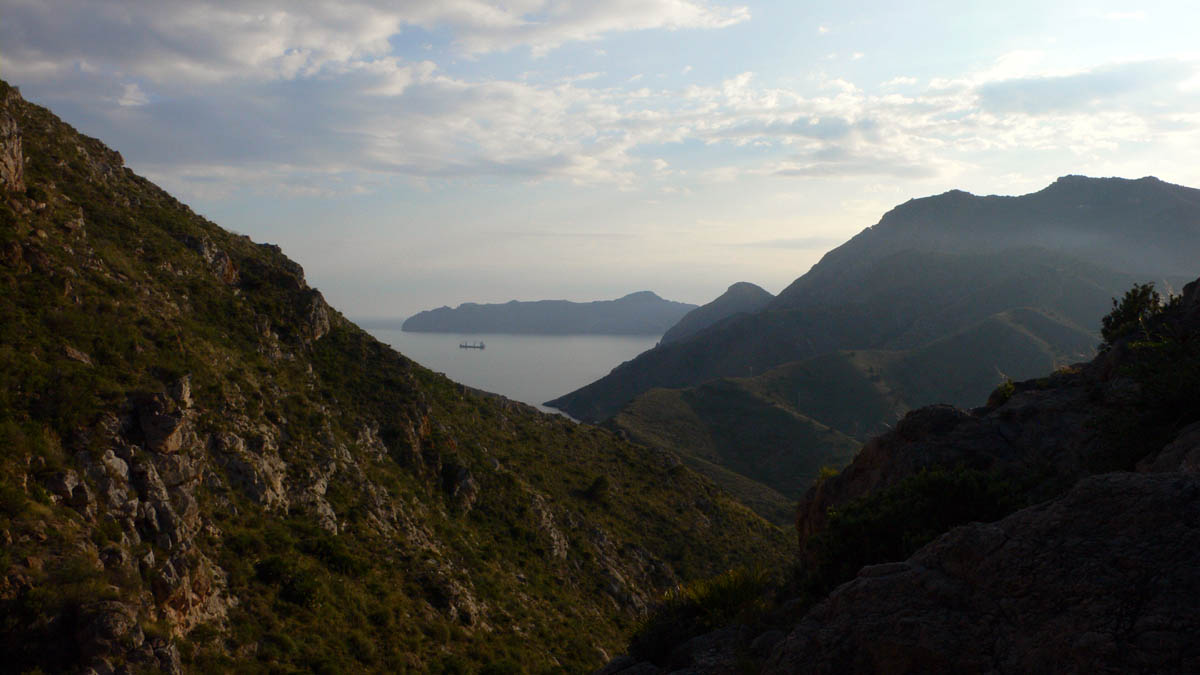
Cabo Cope y Puntas de Calnegre is a regional park in Spain that protects one of the last nearly untouched stretches of Mediterranean coastline in the Murcia region. It runs along more than 17 kilometres of shoreline on the Bay of Mazarrón, between the municipalities of Lorca and Águilas, covering just over a thousand hectares in total. Here, steep cliffs drop straight into the sea, and dry, rocky hills meet the deep blue of the Mediterranean.
What makes this park worth knowing about?
The park was created to preserve a landscape that has largely disappeared elsewhere along Spain's coast under decades of tourist development. Its name joins two landmarks: Cabo Cope headland in the east and the Puntas de Calnegre headland in the west, with a stretch of largely undeveloped beaches, coves and rocky shores lying between them.
What plant life grows here?
The vegetation of Cabo Cope y Puntas de Calnegre stands out for its variety and the number of endemic species, many typical of southeastern Spain and the wider Ibero-African region, some of which reach the edge of their limited range right here. Coastal scrubland is made up of species such as prickly saltwort, spiny broom, black thorn and wild olive, mixed with lower-growing plants like cotton thistle, lavender, thyme and wild asparagus. Of particular natural value is the population of black sabina (a type of juniper) found at Cabo Cope, cut off from the rest of its natural distribution range elsewhere.
What animals live in the park?
The dry, rocky terrain suits reptiles well — ocellated lizards, red-tailed lizards and Iberian skinks all live here, alongside the threatened spur-thighed (Moorish) tortoise. Mammals include rabbits, foxes and wild boar. The coast is home to gulls, cormorants and shearwaters, while the inland areas around Marina de Cope shelter crested larks, short-toed larks and stone curlews. The scrubland, in turn, hosts stonechats, Sardinian warblers and trumpeter finches.
What history lies behind this place?
Traces of human presence here go back to the Neolithic period — remains from that era have been found in caves at Cabo Cope, while the hill of Cerro de la Cruz was once home to an Argaric settlement. The area's best-known landmark is the Tower of Cope (Torre de Cope), built in the 16th century as a watchtower to warn of and defend against raids by Barbary pirates, who threatened Mediterranean coastal communities for centuries. The park was granted regional park status under the 1992 law on the organisation and protection of the territory of the Region of Murcia.
Frequently asked questions
Where exactly is the park located? It lies on the coast of the Region of Murcia in southeastern Spain, between the municipalities of Lorca and Águilas, on the Bay of Mazarrón.
What makes this park stand out for visitors? Above all, its coastline has been kept in a near-natural state — wild beaches, cliffs and coves that are increasingly rare along Spain's heavily developed Mediterranean shore.
What is the park's main historical landmark? The 16th-century Tower of Cope, built as a lookout and defensive point against Barbary pirate raids.
Are there any endangered species in the park? Yes, including the threatened spur-thighed tortoise and a unique, isolated population of black sabina juniper.
Nearby places

Earn badges for the places you visit
Download NextOnTrip, discover new places and check off your trails.