About this place
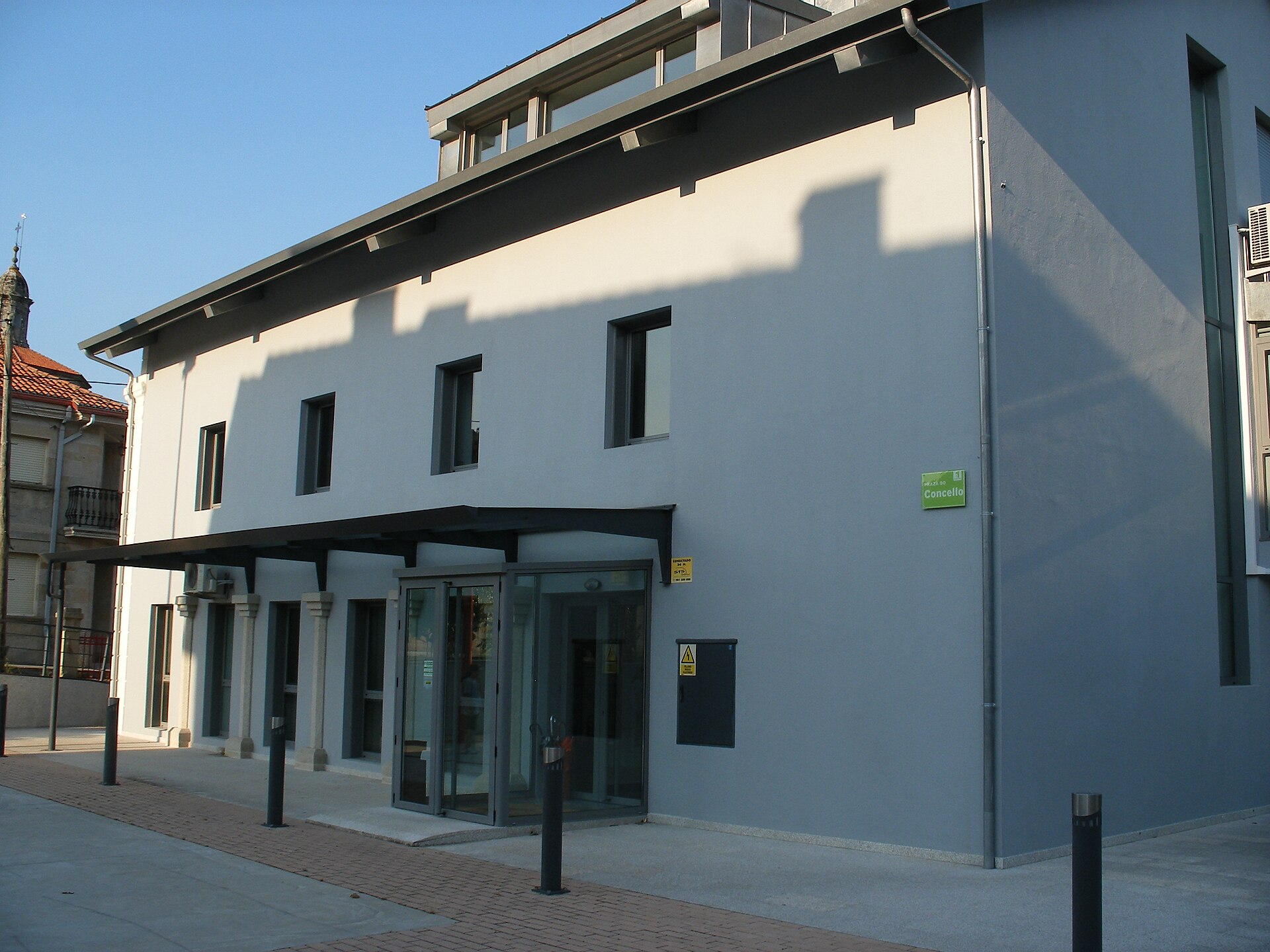
Brión town hall (Concello de Brión) is the seat of local government for a small rural municipality in the province of A Coruña, Galicia, roughly 13 kilometers west of Santiago de Compostela toward the coast. The building sits at Praza do Concello 1, postal code 15865, and works as a useful landmark for anyone exploring the countryside just off the Camino routes into Santiago.
Where is Brión and what kind of municipality is it?
Brión covers just under 75 km², split between two distinct landscapes: the Amaía valley, drained by the Sar river, and the Tambre river watershed. Elevation ranges from around 30 meters near the Sar up to more than 525 meters on the hills in the south of the municipality. About 7,100 people live here, spread across 106 villages organized into 9 parishes, with three main population centers. The town hall administers this scattered rural territory, which explains why the building itself is modest and functional — an active administrative office rather than a monument built for show.
What is the history behind Brión's local government?
The first record of a municipal authority in Brión dates to August 6, 1811, during the Cortes of Cádiz, when the feudal lordship tied to Altamira was abolished and the so-called Constitutional Municipality of Altamira was created — the forerunner of today's Brión administration. The municipal coat of arms, meant to sum up this history, was only commissioned in 1984, from heraldist Jaime Bugallal y Vela. Earlier, in the Middle Ages, the area was under the influence of the Moscoso family, who controlled Altamira Castle; its ruins are now managed by the A Coruña provincial government. In 2021 the municipality marked the 500th anniversary of the so-called Battle of Altamira, a clash between ecclesiastical and noble forces that remains a reference point in local identity.
What is there to see around the town hall?
The town hall building itself is not a tourist attraction, but the municipality it governs has substantial heritage on the ground. Brión has roughly a dozen baroque parish churches built mainly in the 17th and 18th centuries, plus more than sixty cruceiros — the stone crosses typical of the Galician countryside — scattered across its villages. A chapel holding the relics of Saint Minia draws a steady stream of visitors. The area also includes the Barrié de la Maza reservoir, built in 1945, and several pazos, the traditional Galician manor houses. History buffs can visit the Castro Lupario archaeological site, evidence of earlier Celtic settlement in the region.
How do you get there, and when is the best time to visit?
Brión sits close to the main roads linking the coast with Santiago de Compostela, so it is easy to reach by car — the drive from central Santiago typically takes only a matter of minutes. The town hall serves residents and visitors Monday to Friday, from 7:45 AM to 3:15 PM. Spring and early autumn are the best times to come, when Galician weather is milder and the surrounding villages and parish churches can be explored at a relaxed pace.
Frequently asked questions
Can you visit Brión town hall as a tourist site? No — it is a working administrative office, open during business hours, not a heritage building set up for visits.
How far is Brión from Santiago de Compostela? About 13 kilometers toward the coast, usually just a few minutes' drive.
What else is worth seeing in the Brión municipality? Baroque parish churches, numerous cruceiros, the ruins of Altamira Castle, the chapel of Saint Minia, and the Barrié de la Maza reservoir.
How many parishes and villages make up the Brión municipality? The municipality has 106 villages organized into 9 parishes, home to about 7,100 people.
Nearby places

Earn badges for the places you visit
Download NextOnTrip, discover new places and check off your trails.