Save this place and discover nearby attractions with NextOnTrip
In the app you can add it to your favorites, see what else is worth visiting nearby on the map, and earn a badge for your visit.
The app is available for iPhone and Android.
About this place
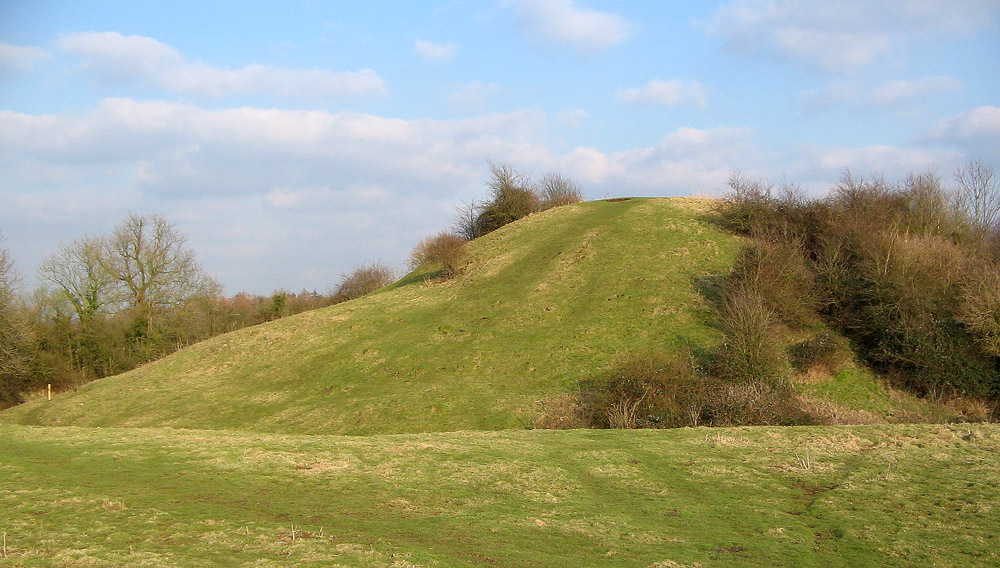
Brinklow Castle in Brinklow, near Rugby in Warwickshire, is a Norman motte-and-bailey earthwork that locals call "the Tump". Don't expect stone walls or towers. The castle was built of timber, and only its mound and banks remain. It suits history fans and anyone who likes a short country walk.
What is Brinklow Castle?
The site sits in the village of Brinklow, between Coventry and Rugby, right beside the line of the Roman Fosse Way. It lies roughly midway between Warwick and Leicester. Some sources date it to about 1069, during William the Conqueror's campaigns in the north. Others say Aubrey de Coucy reworked it in the late 11th century.
The castle was never rebuilt in stone. It served for a fairly short time and was abandoned in the 13th century. Today it is a scheduled monument (Historic England list entry 1011368).
What can you see?
The star feature is the tall, steep motte. Sources give its height as 12 to 15 metres, with a flat top about 15 metres across. Around it you can trace two enclosures, each protected by a bank and ditch: a smaller inner court and a larger outer one. The summit gives views over the village and surrounding countryside.
Access: there are no formal paths and no ticket is needed, as the site is public open space. You cross rough grassland that can turn muddy after rain, so wear sturdy footwear. The climb up the mound can be hard for visitors with limited mobility.
How do you get there?
A small car park on Ell Lane has an information panel and a gate that leads straight to the motte. Buses between Rugby and Coventry stop on Broad Street in Brinklow, and footpaths lead on from there.
When should you visit?
The site is open all year and free. Dry weather in spring, summer or early autumn is best, when the grass is firm. Allow 30 to 45 minutes. You can combine it with a stroll through the village and a look at the neighbouring church of St John the Baptist.
Frequently asked questions
Is there an entry fee? No. The site is public and free to visit year-round.
Are any castle walls left? No. It was a timber-and-earth castle. The mound and earthworks are what survive.
Can I use a metal detector? No. The monument is protected, and metal detecting and unauthorised digging are not allowed.
Is there parking? Yes, a small area on Ell Lane next to the information panel and the gate to the mound.
Nearby places

Earn badges for the places you visit
Download NextOnTrip, discover new places and check off your trails.