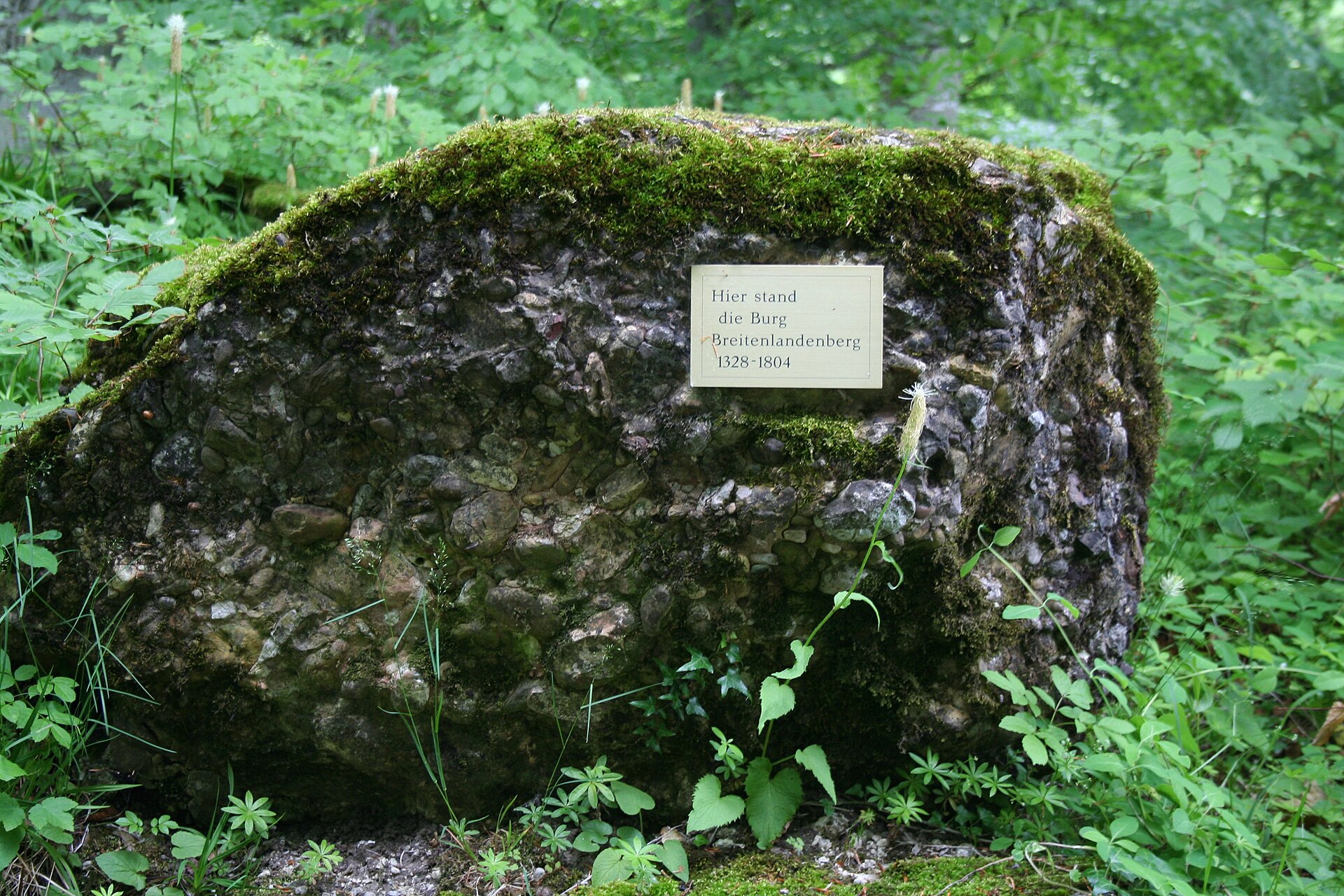
About this place
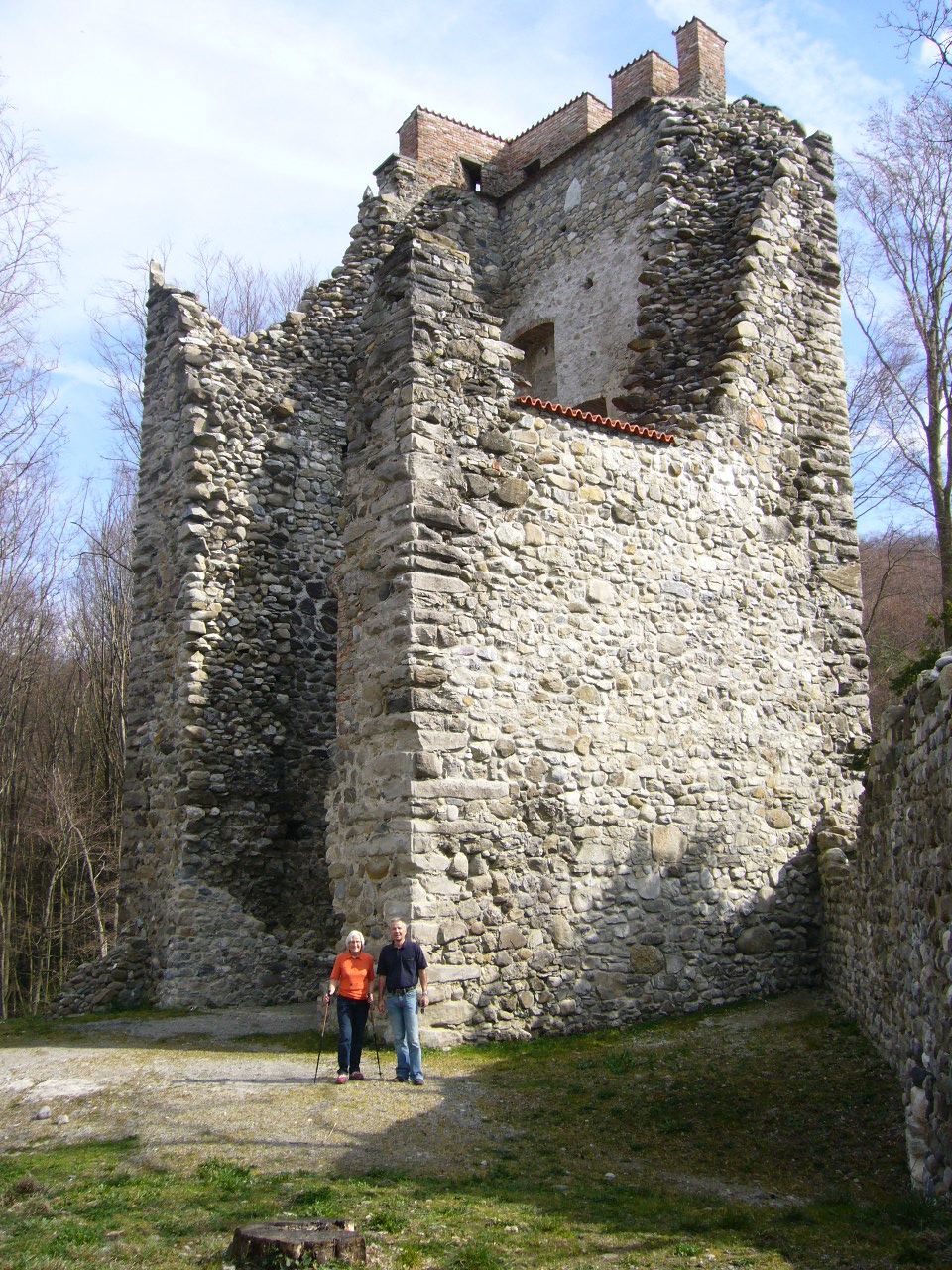
Breitenlandenberg ruins are the remains of a medieval castle standing about 150 metres above the village of Turbenthal in the canton of Zürich, Switzerland. Little is left today: a few wall fragments, the old moat and a deep neck ditch that cut the castle off from the rest of the hill. Even so, it makes a rewarding short outing for anyone interested in regional history and quiet walks in the green Töss valley.
Where are the ruins and how do you find them?
The ruins sit on a hill south-east of Turbenthal's centre. The castle once overlooked the settlement and the route through the valley. The walk up from the village is short, and the surviving moat and neck ditch show clearly how the defenders secured the one approachable side of the hill.
Who built the castle?
The castle was built in the first half of the 14th century by Beringer II and Hugo I of the Landenberg family, on land held as a fief of the Abbey of St. Gallen. The Landenbergs, Habsburg retainers, built up a judicial lordship around Turbenthal during the 14th century, and it came to be called Breitenlandenberg after their seat above the village. From 1328 Hermann von Landenberg took his name from this very castle.
What did the fortress look like?
The complex had a square keep and a courtyard measuring roughly 20 by 24 metres, enclosed by a wall up to two metres thick. In the later 16th century Hans Rudolf von Breitenlandenberg (1542–1608) had multi-storey residential buildings added, turning the stronghold into a more comfortable residence.
Why did the castle disappear?
In 1710 the estate passed by marriage to Heinrich Werdmüller. After his financial decline it was auctioned off for demolition around the turn of the 19th century. The stones were reused to build Turbenthal's first cotton spinning mill, a neat illustration of how a medieval seat gave way to the valley's early industry. Sources give slightly different dates for the demolition (1801 or 1804), and one notes that a servants' building of the outer bailey survived.
Archaeological work
During the winter of 1924–1925 excavations uncovered the foundations of the buildings. That work revealed the castle's layout, even though only a small part of it is visible above ground today.
Frequently asked questions
Is much of the castle left? No. You will mainly see low wall remains and traces of the moat and neck ditch.
Who owned it? First the Landenberg family as vassals of the Abbey of St. Gallen, then the Werdmüller family after 1710.
What was built from the castle's stones? Turbenthal's first cotton spinning mill.
Is it worth visiting? Yes, if you enjoy the history of Swiss knightly families and want a short, peaceful excursion not far from Winterthur and Zürich. Do not expect developed tourist facilities; this is a place for a quiet moment with the region's past.
Practical tips
Wear sturdy shoes, as the path climbs the hill and can be damp after rain. The ruins combine well with a stroll through Turbenthal and the surrounding woods. Spring and autumn are especially scenic, and the low walls are easier to see when the trees are not in full leaf.
Nearby places

Earn badges for the places you visit
Download NextOnTrip, discover new places and check off your trails.