About this place
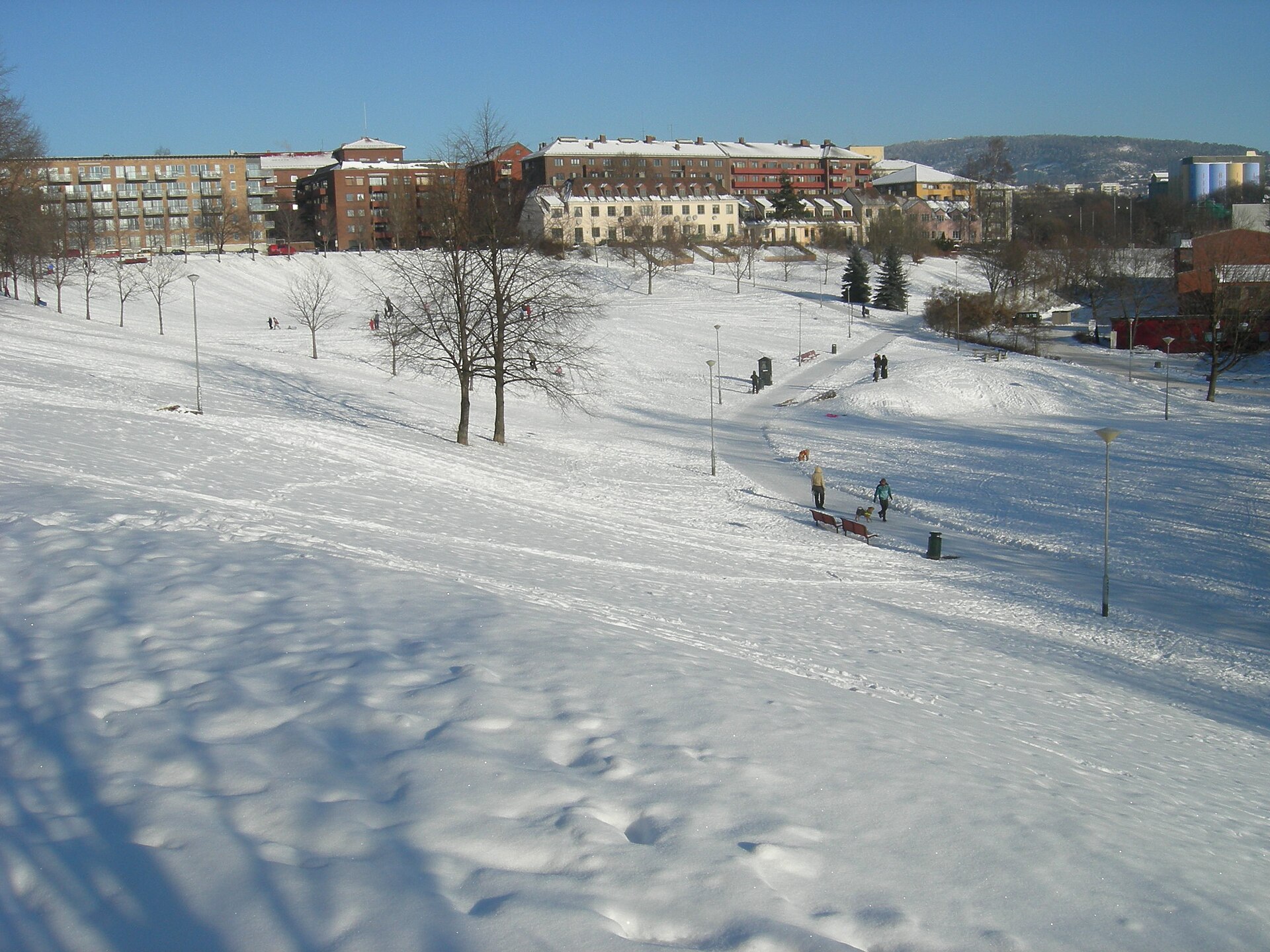
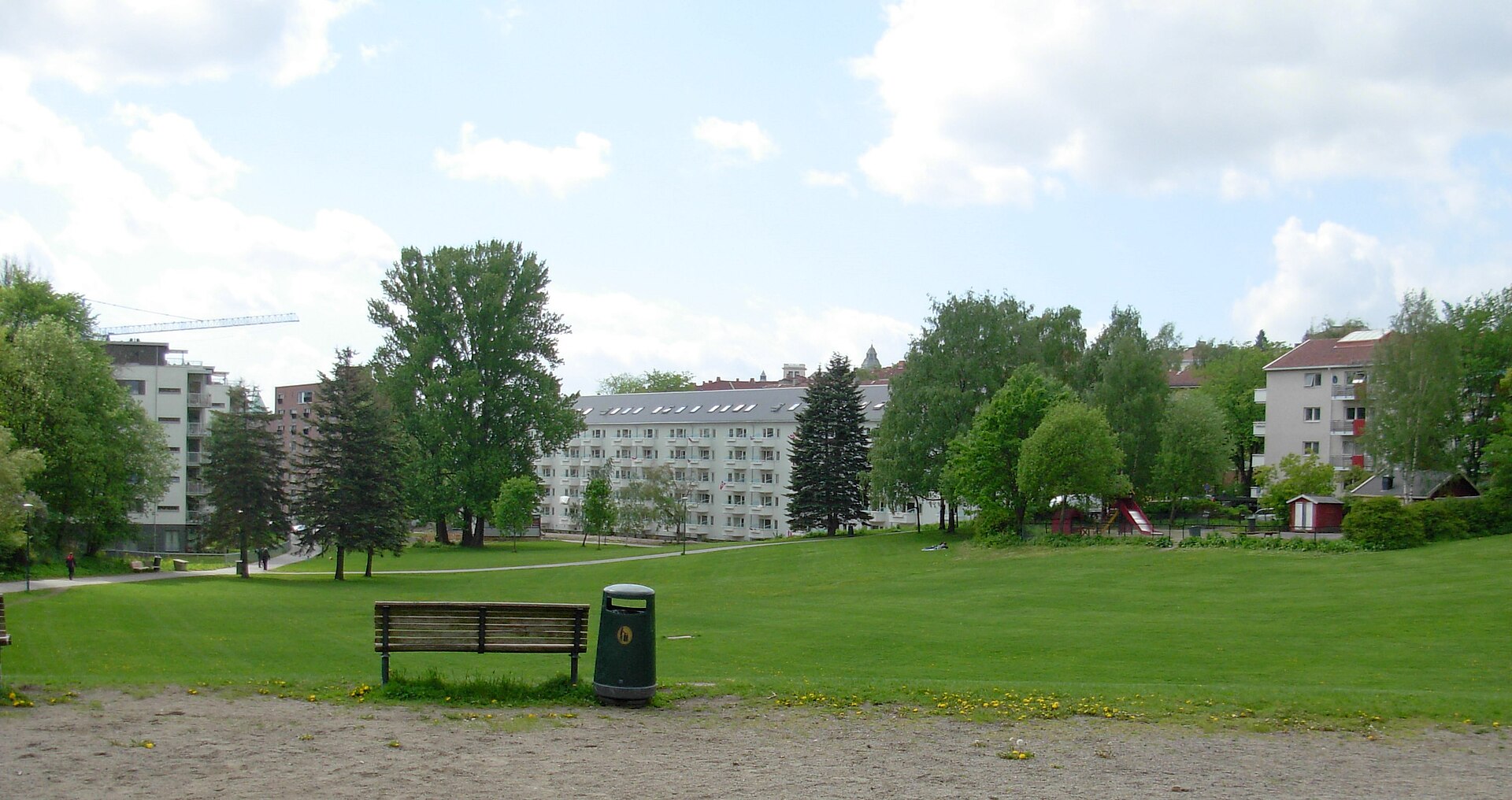
Bjølsenparken is a neighbourhood park in Oslo's Sagene district, a few kilometres north of the city centre. Locals treat it as the green living room of the area: in summer people sprawl on the grass, in winter the sports ground turns into a skating rink, and in August a music festival draws crowds. For visitors it is a rewarding stop away from the main sights, showing how everyday life in Oslo really looks.
How did Bjølsenparken come to be?
The land belonged to Søndre Bjølsen farm, mentioned as far back as the 1300s, and was originally the farm's manor garden. In spring 1899 the owners offered the ground to the city at 10 kroner per square metre, but the price was turned down. A year later the two sides agreed, and the municipality bought about 34 decares at 4 kroner per square metre. In 1901 the garden was fenced in and named Bjølsenparken.
At first the park was closed in winter and after dark in summer, and electric lighting only arrived in 1938. During the Second World War, several German barracks stood on the grounds, another reminder of the city's turbulent past.
What is there to see in the park?
The best-known feature is the lime tree alley running along the highest ridge. Most of the trees were planted around 1800. The alley once ended at the main house of the old Bjølsen farm, which was demolished in the 1970s. After 1900, Sarpsborggata was built along the northern end and cut the alley off from the former farmstead.
In the south you will find the hill Ormehaugen. From its top you can see the whole park, and its sunny slope is a favourite spot for sunbathing. A music pavilion used for concerts stands in this part too. An earlier pavilion was removed and replaced by an open-air stage.
Are there events in the park?
Yes. The Bekkerock music festival takes place in Bjølsenparken in August. If you visit Oslo in summer, check the current programme: an open-air concert here feels very different from the tourist attractions downtown.
What do locals use it for?
In the south-eastern corner, next to Bjølsen school, there is a sports ground that serves as a skating rink in winter, along with a youth club building. Two small artificial-turf pitches are nearby. Kindergartens stand at the northern end and to the east and south-east, so you will often hear children during the day. West of the lime alley lie the Hjemmets Kolonihage allotment gardens, founded in 1912. A stroll along them shows another, more homely side of Oslo.
Frequently asked questions
Where is Bjølsenparken? In the Sagene district of Oslo, in the northern part of the city, around the Bjølsen neighbourhood.
When was the park created? The city bought the land in 1900, and the park was fenced and named in 1901.
Is there an entrance fee? No, it is a public city park. It used to be closed after dark, but today it is an open space for residents and visitors alike.
What is most interesting for visitors? The old lime alley, the Ormehaugen hill with its view over the park, and the summer Bekkerock festival.
Is it a good place for a picnic? Yes, the sunny slope of Ormehaugen is popular with people who want to relax on the grass.
Is it worth visiting in winter? In winter the sports ground by the school works as a skating rink, so the park remains an important part of local life in the colder months.
Bjølsenparken is not a must-see on every itinerary, but as a calm, historic park with a lime alley and a local atmosphere it complements a trip to Oslo well. Combine it with a walk around Sagene and along the nearby Akerselva river.
Nearby places

Earn badges for the places you visit
Download NextOnTrip, discover new places and check off your trails.