About this place
Bílovice Castle
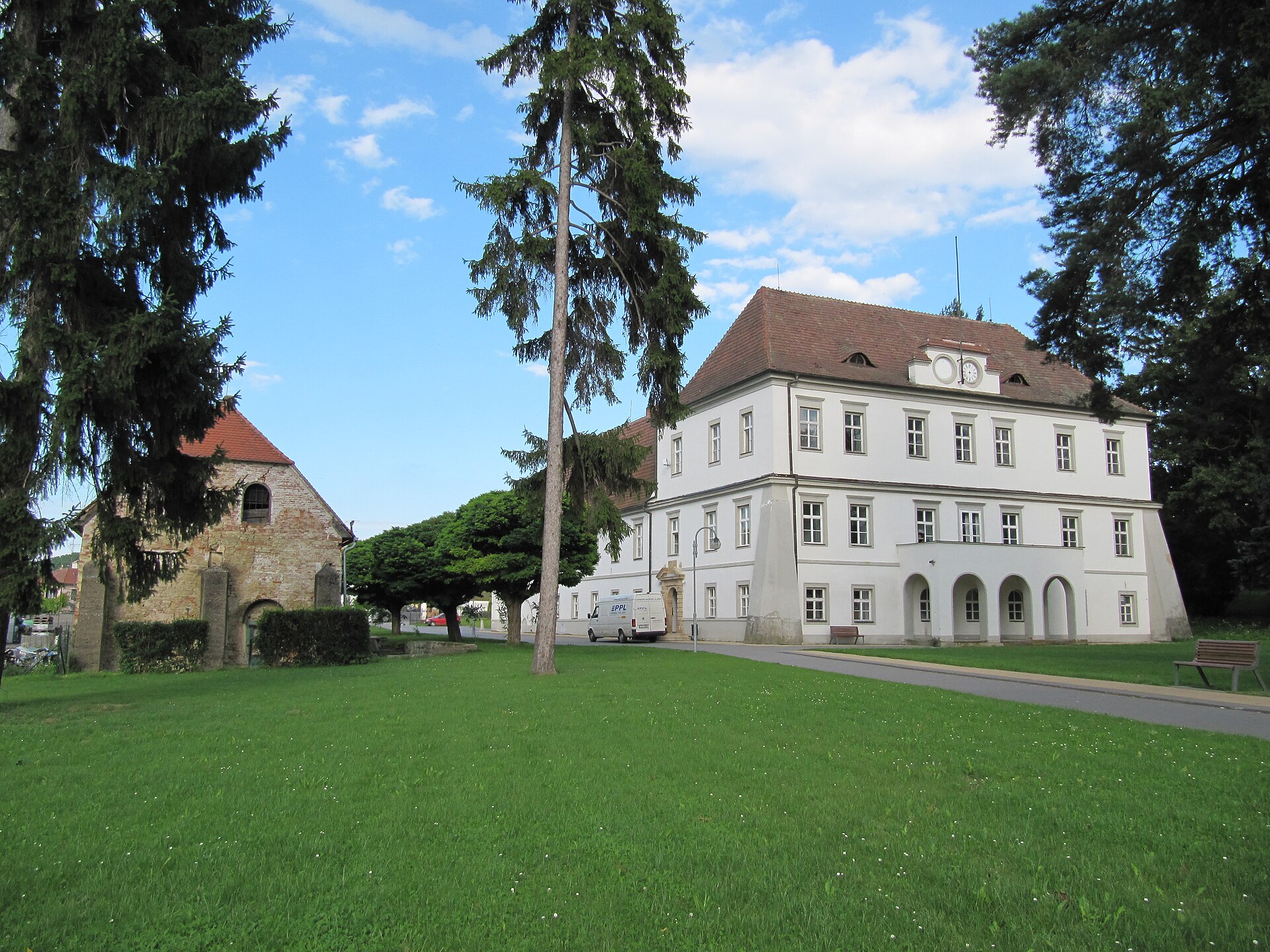
Bílovice Castle stands in the center of the village of Bílovice in Moravia, in the Uherské Hradiště district, roughly 7–8 km northeast of the district town. Včelary, once a separate village, was merged into Bílovice in 1960, so the two now form a single municipality — and the castle is the largest historical monument in that combined community.
What stood here before the castle?
The site originally held a medieval fortified tower, a so-called tvrz. It was converted into a castle in the 16th century, but the building visitors see today is much younger: it was constructed at the very end of the 18th century.
Where does the castle's current Empire-style look come from?
The building acquired its present appearance during a renovation carried out in the first quarter of the 19th century, commissioned by Count Ferdinand of Laurencin-Beaufort and executed in the Empire style. It was during this same building campaign that the adjoining castle park was laid out, and the two — house and park — have formed a single composition ever since.
How did the Logothetti family shape the castle?
From 1831 the Bílovice estate passed into the hands of the Logothetti family, a noble line of Greek origin, who turned the castle into a social and cultural hub for the surrounding area for decades. Vladimír Emanuel Logothetti (1822–1892) added a western wing containing a ballroom, considerably enlarging the building's representative space. Around the turn of the 20th century, Hugo II Logothetti (1852–1918) had the facade restored: the clock that had sat in the entrance tympanum was replaced with the family coat of arms, and a statue of St. Wenceslaus was added at the northwest corner.
What happened to the castle after the Second World War?
The Logothetti family's property was confiscated after the war ended, and in 1947 the castle passed into municipal ownership, where it has remained ever since. Since 1958 it has been listed as a protected cultural monument, a status that safeguards its historical value for the wider region.
What is the castle used for today?
The castle is not run as a museum with a guided tour route. For decades it has housed the Bílovice municipal office along with other services for the local community, so the building remains a working part of village life rather than a preserved relic. From the outside, though, visitors can freely take in the Empire-style facade, the Logothetti coat of arms above the entrance, and the St. Wenceslaus statue, and can walk through the surrounding park that was laid out alongside the 19th-century renovation.
Frequently asked questions
Where is Bílovice Castle located? In the center of the village of Bílovice, Uherské Hradiště district, about 7–8 km northeast of the town of Uherské Hradiště. Včelary, merged into Bílovice in 1960, is part of the same municipality today.
When was the current castle building constructed? The structure in its present form dates from the end of the 18th century, and it gained its Empire-style appearance during a renovation in the first quarter of the 19th century under Count Ferdinand of Laurencin-Beaufort.
Who owned the castle during the 19th and early 20th centuries? From 1831 the estate belonged to the Logothetti family. Vladimír Emanuel Logothetti added a wing with a ballroom, while Hugo II Logothetti restored the facade and added the family coat of arms and the St. Wenceslaus statue.
Can the castle be visited with a guide? No — the building currently serves as the seat of the municipal office and other local institutions, so it does not operate as a museum with a visitor route.
Since when has the castle been a protected monument? Since 1958, when it was entered on the Czech list of protected cultural monuments.
Nearby places

Earn badges for the places you visit
Download NextOnTrip, discover new places and check off your trails.