About this place
Barrios de San Juan y San Francisco form the historic heart of Telde, the second-largest city on Gran Canaria, recognized in 1981 as a protected heritage ensemble (Bien de Interés Cultural). These two neighboring districts grew up on the southern slope of the Barranco Real de Telde ravine, while the old aboriginal settlement remained on its northern side. Together they make up one of the two founding cores from which the city developed after the conquest of the island.
Why are San Juan and San Francisco treated as one heritage site?
Although administratively separate neighborhoods, their histories are intertwined from the start. San Juan grew into the home of local nobility and large landowners, while San Francisco was settled by craftsmen and laborers who worked the surrounding land. That social divide shaped the layout and architecture of both areas, and it's still visible today.
What makes San Juan distinctive?
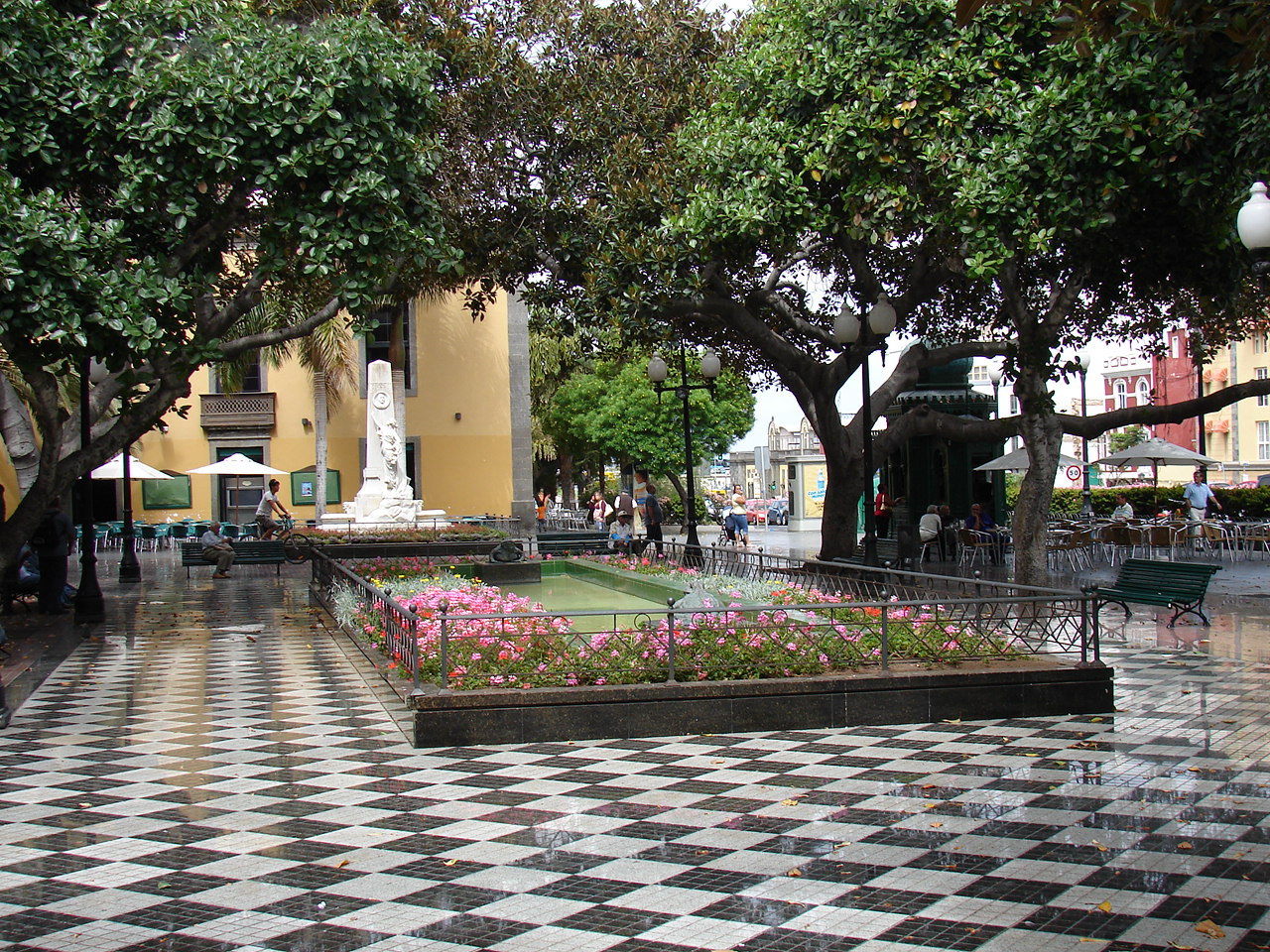
Over time, San Juan became the administrative and cultural center of Telde. Its urban layout reflects that role: wide streets and large, stately houses give the district a representative character befitting its former status as home to the town's elite. It was here, at the end of the 15th century, that a small hermitage was founded — the seed from which the Basilica of San Juan Bautista later grew, itself separately listed as a protected architectural monument.
What does San Francisco look like?
In contrast, San Francisco kept a humbler, more popular character. The neighborhood took shape on ground covered by malpaís — rugged volcanic rock — which forced its streets to stay narrow and winding, following the terrain. The buildings follow traditional rural Canarian style: low, white-walled houses with gabled roofs, far more modest than the grand residences of San Juan.
What's worth seeing on a walk through the district?
Exploring both neighborhoods is essentially a walk through the historic urban fabric of the city — the contrast between San Juan's broad avenues and San Francisco's maze of narrow lanes lets you read the old social structure of Telde almost by feel. Look out for architectural details on the houses, wooden balconies and courtyards typical of traditional Canarian building, and make the Basilica of San Juan Bautista the natural high point of the route.
Frequently asked questions
What's the legal status of the two neighborhoods? Together they form a single protected heritage ensemble — a Bien de Interés Cultural in the Conjunto Histórico category, listed in 1981. They are not two separate, independent heritage assets but one combined designation.
Are there additional protected landmarks within the ensemble? Yes — the Basilica of San Juan Bautista, which grew out of a 15th-century hermitage, holds its own separate listing as a Monumento within the heritage protection categories.
Which district better reflects Telde's history — San Juan or San Francisco? Both, in different ways: San Juan shows the city's elite and administrative side, while San Francisco reflects the everyday life of craftsmen and laborers. Together they give the full picture of old Telde's social structure.
Where exactly are these neighborhoods located? They sit within the city of Telde, on the southern slope of the Barranco Real de Telde ravine, close to the historic center, in the northeastern part of Gran Canaria.
Nearby places

Earn badges for the places you visit
Download NextOnTrip, discover new places and check off your trails.