About this place
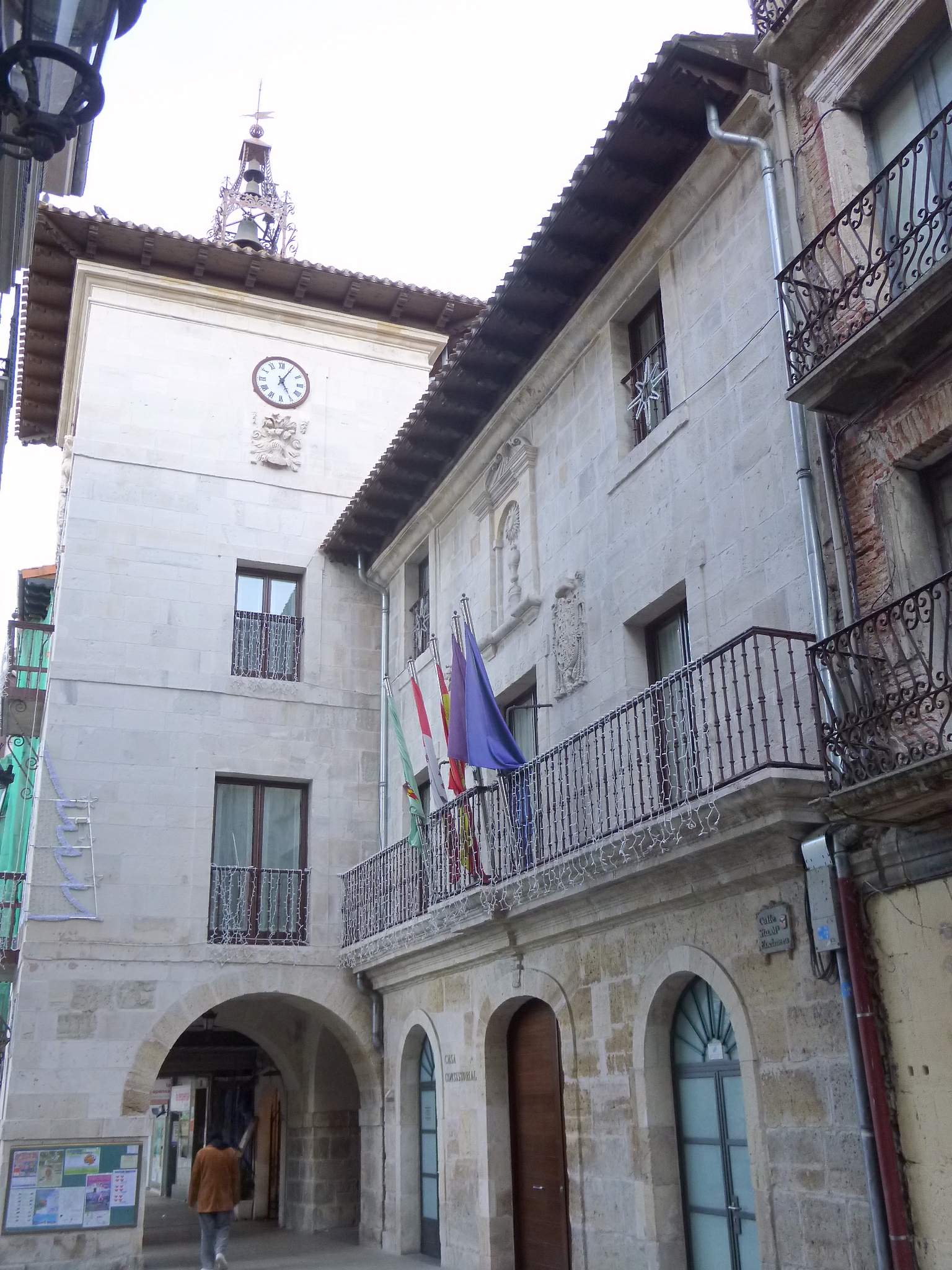
Ayuntamiento de Salinillas de Bureba is the town hall of the small village of Salinillas de Bureba, set in the La Bureba region of Burgos province, Castile and León. The building stands on C/ Mayor, right at the heart of a village with only a few dozen residents, making it a natural starting point for anyone exploring the surrounding countryside on foot.
How do you get to Salinillas de Bureba?
Salinillas de Bureba lies roughly 50 km northeast of the city of Burgos, within the judicial district of Briviesca. The municipality is made up of Salinillas itself, which acts as the administrative capital, plus two smaller hamlets, Buezo and Revillalcón, spread across barely 23 km² of farmland and gentle hills. Driving is the only realistic option: local roads connect the village to Briviesca and Oña along what has long served as a historic route through this part of La Bureba. There is no train station and no regular bus service, so a car is essential for reaching the area. Once you arrive, park near the town hall and continue on foot — the old quarter is compact enough that everything worth seeing is within a short walk.
What is there to see around the town hall?
The town hall building itself handles day-to-day administration, and it is also the best place to ask locals about the village's landmarks. The real reasons to stop in Salinillas de Bureba lie just a few minutes away.
The church of Santa Eugenia
At the top of the village stands the church of Santa Eugenia. Its most notable feature is a Romanesque doorway, austere and carved in low relief, topped with a carved lamb's head. It is a modest but distinctive example of the plain, stone-built religious architecture typical of the Burgos countryside, where solid construction mattered more than ornament.
The sanctuary of Santa Casilda
A short distance from the village center, perched on a limestone crag, sits the sanctuary of Santa Casilda. Built in the 16th century, its Renaissance chapel with three naves is associated with the circle of Diego de Siloé, one of the leading architects of the Spanish Renaissance who worked extensively in Burgos. The dramatic clifftop setting makes the sanctuary worth the trip both for its architecture and for the views over the surrounding valley.
A history built on salt
For centuries, Salinillas de Bureba, like neighboring Poza de la Sal, drew its livelihood from salt extraction and trade — a resource that once supplied the Kingdom of León. That history fits into the wider story of La Bureba as a crossing point since the Middle Ages, criss-crossed by trade and pilgrimage routes tied to nearby monasteries and local noble estates.
When is the best time to visit?
Spring and early autumn bring the mildest weather on this stretch of the Castilian plateau, and the fields and low hills around the village look their best in those seasons. Summers can turn hot and dry, while winters in La Bureba are cold and windy, which is worth factoring in if you plan to walk out to the sanctuary of Santa Casilda.
Frequently asked questions
Where exactly is Salinillas de Bureba? In the northeastern part of Burgos province, in the La Bureba region, about 50 km from the city of Burgos, within the judicial district of Briviesca.
Is there anything to see in Salinillas de Bureba besides the town hall? Yes — the church of Santa Eugenia, with its Romanesque doorway in the upper part of the village, and the nearby sanctuary of Santa Casilda, built in the 16th century on a limestone crag.
How many people live in the municipality? The municipality currently has just over 50 residents and covers three settlements: Salinillas, the capital, plus Buezo and Revillalcón.
Can you reach the village by public transport? No — there is no train station or regular bus line, so the most practical way to arrive is by car via the local roads from Briviesca or Oña.
Nearby places

Earn badges for the places you visit
Download NextOnTrip, discover new places and check off your trails.