About this place
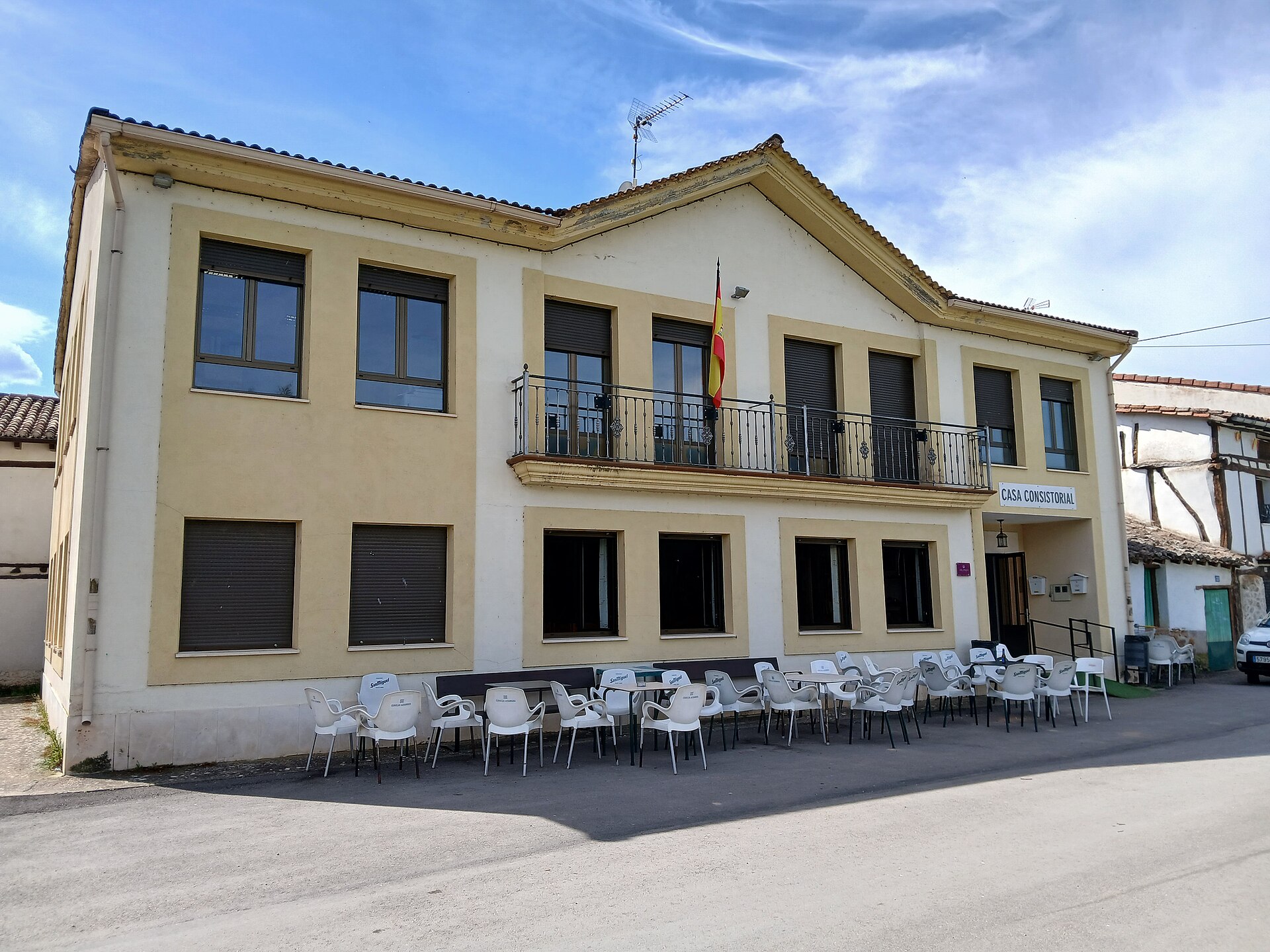
Ayuntamiento de Pinilla de los Moros is the town hall of the small village of Pinilla de los Moros, in the province of Burgos, within the Sierra de la Demanda area. The building sits on Calle de las Huertas and serves as the administrative seat for a community of only a few dozen residents, while also acting as a natural landmark for anyone exploring this corner of Castile and León.
Where is Pinilla de los Moros located?
The village lies southeast of the city of Burgos, in the judicial district of Salas de los Infantes, roughly 54 km from the provincial capital. It sits within the mountainous terrain of the Sierra de la Demanda, a landscape of stone villages scattered among hills and river valleys typical of this part of the region.
How did the village get its name?
Settlement here goes back a long way — Neolithic hand axes have turned up by chance in the area, pointing to human presence as early as the Stone Age. Later, the territory was occupied in turn by the Turmodigi, the Romans, and the Visigoths. The village's name dates from the period when Moorish forces took control of the area, sharply reducing the local population. The town was subsequently repopulated under Count Fernán González, one of the defining figures of medieval Castile.
How has its administrative status changed over time?
By the 16th century, Pinilla appeared as a village under the authority of the Benedictine monastery of Santo Domingo de Silos, one of the region's most important monastic centers. That arrangement held until 1789, when the village gained the status of a settlement under the jurisdiction of Salas de los Infantes, as part of a lordship. In 1854, a law ordering the dissolution of municipalities with fewer than 150 inhabitants led to the neighboring village of Piedrahíta de Muñó being merged into Pinilla, forming the joint municipal unit that still exists today.
What is worth seeing near the town hall?
The village's principal monument is the parish church of San Román Mártir, built in a late Renaissance style. It features a rectangular apse with pilasters running up to the eaves and topped with small pinnacles, plus a classical portal with a round arch, pilasters, decorative spheres, and a pediment crowned by a large cross. The bell tower takes the form of an espadaña with three molded tiers finished in spheres, holding openings for two bells and a small signal bell. Inside, a Romanesque font decorated with vegetal motifs and fluting has survived, alongside a Baroque Solomonic main altarpiece made up of five painted panels. Nearby stands the hermitage of Santa Ana, the focus of a local celebration held every year on July 26th.
What does the village's architecture look like?
Pinilla's streets are lined with traditional "casa serrana" houses, marked by chimneys tucked under small hoods, wide entryways once built to let wooden carts pass through, and walls combining adobe and stone with timber beams. This building style, common across Sierra de la Demanda villages, can still be seen on a short walk around the town hall.
Frequently Asked Questions
Where exactly is the Ayuntamiento de Pinilla de los Moros located? It stands on Calle de las Huertas, in the center of the village of Pinilla de los Moros, in the province of Burgos, within the Sierra de la Demanda area.
Why is the village called "de los Moros"? The name refers to the period when Moorish forces occupied the area; the settlement was later rebuilt under Count Fernán González.
Are there other landmarks worth visiting nearby? Yes — the church of San Román Mártir, notable for its late Renaissance architecture, and the hermitage of Santa Ana, where a local festival takes place on July 26th.
How many people currently live in Pinilla de los Moros? The village has only a few dozen residents today, making it one of the smallest municipalities in the province of Burgos.
Nearby places

Earn badges for the places you visit
Download NextOnTrip, discover new places and check off your trails.