About this place
Ayuntamiento de Jaca is the town hall of Jaca, the historic capital of the Aragonese Pyrenees in the province of Huesca. The building stands on the town's main street and has served as the seat of local government for centuries.
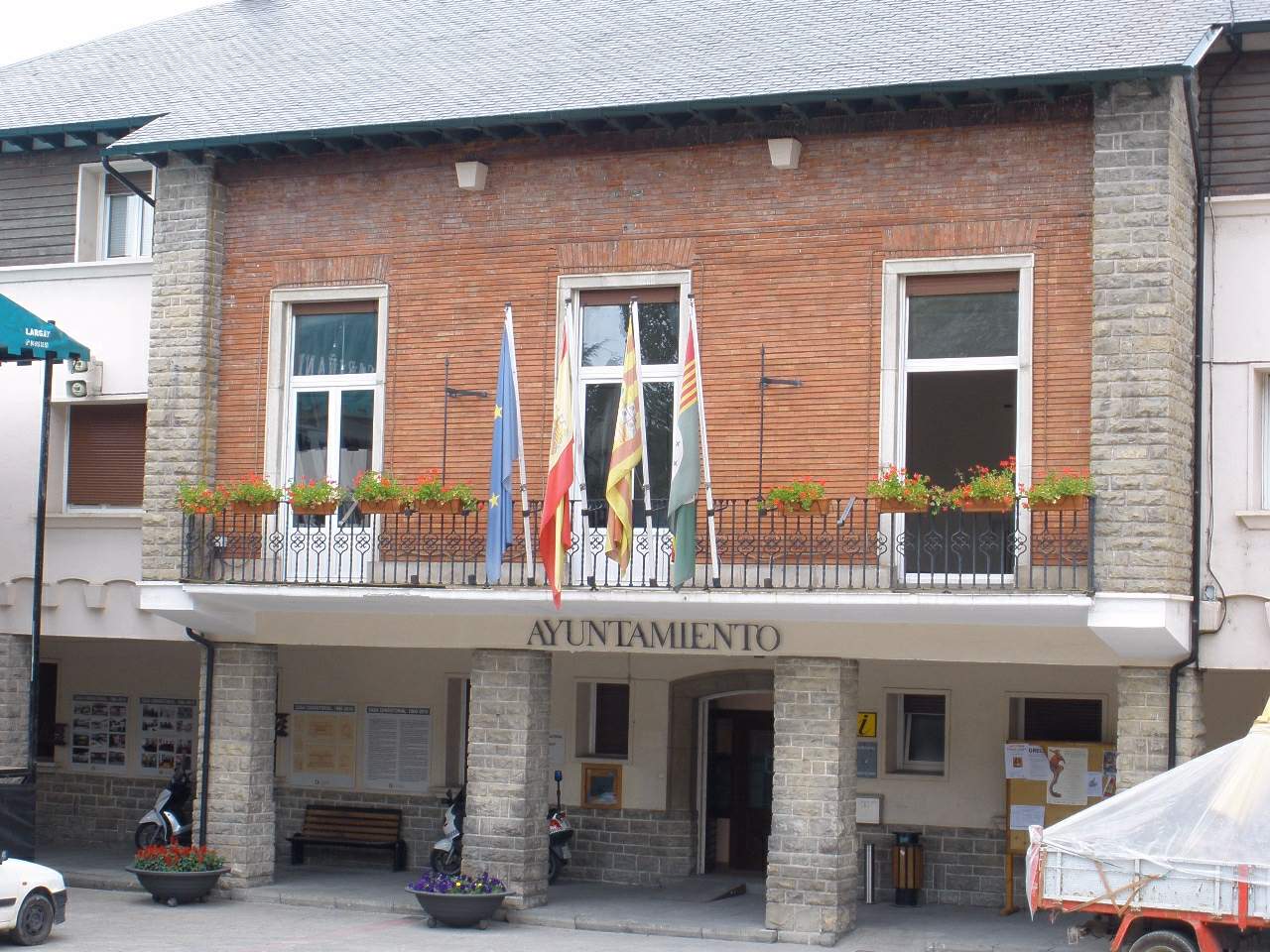
What does the town hall of Jaca look like?
The current building is Renaissance in style and dates back to the 16th century. Its façade features ground-floor arcades, a large civic coat of arms, and balconies on the upper floor — a layout typical of Aragonese civic architecture from that era. The town began purchasing land on Calle Mayor for a municipal building as early as 1486, which shows local government had a foothold here long before the present structure went up.
What is kept inside the building?
The town hall houses several pieces of real historical weight. Among them is a carved tympanum from the Romanesque hermitage of Sarsa, dating to the 12th century — a rare surviving trace of the region's early religious art. Another highlight is the so-called Chain Book (Libro de la Cadena), a 13th-century document considered one of the most significant records in the city's administrative history. The building also still holds bells that were cast in 1595.
Where does Jaca's tradition of self-government come from?
The roots of the town council go back to 1212, when King Pedro II set up a council of four "good men" in Jaca — judges elected one per neighborhood, later known as "paceros." That same year, the king added six more judges to the group, with the whole council renewed every year around Christmas through a drawing of lots. It's one of the more distinctive examples of a medieval election system on the Iberian Peninsula.
The council's structure kept evolving over time. By the 17th century it included roles such as the Justicia, the Prior of Judges, the Noble Judge, the Third and Fourth Judge, and the Prior of the Twenty-Four. After the Bourbon Nueva Planta decrees standardized local government across Spain, Jaca's council adopted the same Bourbon-style model used elsewhere in the country.
Why is this building worth seeing on a visit to Jaca?
The town hall sits right in the heart of the old town, so it naturally fits into a walking route alongside the Romanesque cathedral and other landmarks nearby. It's a spot where Renaissance architecture meets centuries of continuous civic tradition — a combination of that scale is not common in towns of this size in Aragon.
Frequently Asked Questions
When was the current town hall building in Jaca built? The present Renaissance-style building dates from the 16th century, though the town started acquiring land on Calle Mayor for a municipal building as far back as 1486.
What can visitors see inside the town hall? The interior preserves a 12th-century carved Romanesque tympanum from the hermitage of Sarsa and the 13th-century Chain Book, one of the oldest surviving municipal documents in the region.
When was Jaca's first town council established? As early as 1212, when King Pedro II created a council of judges chosen every year by a drawing of lots — one of the earliest known systems of local self-government in this part of Spain.
Can the town hall only be seen from the outside? The arcaded façade, coat of arms, and balconies can be viewed from the street at any time; access to the interior depends on the office's current opening hours, which are worth checking locally before a visit.
Nearby places

Earn badges for the places you visit
Download NextOnTrip, discover new places and check off your trails.