About this place
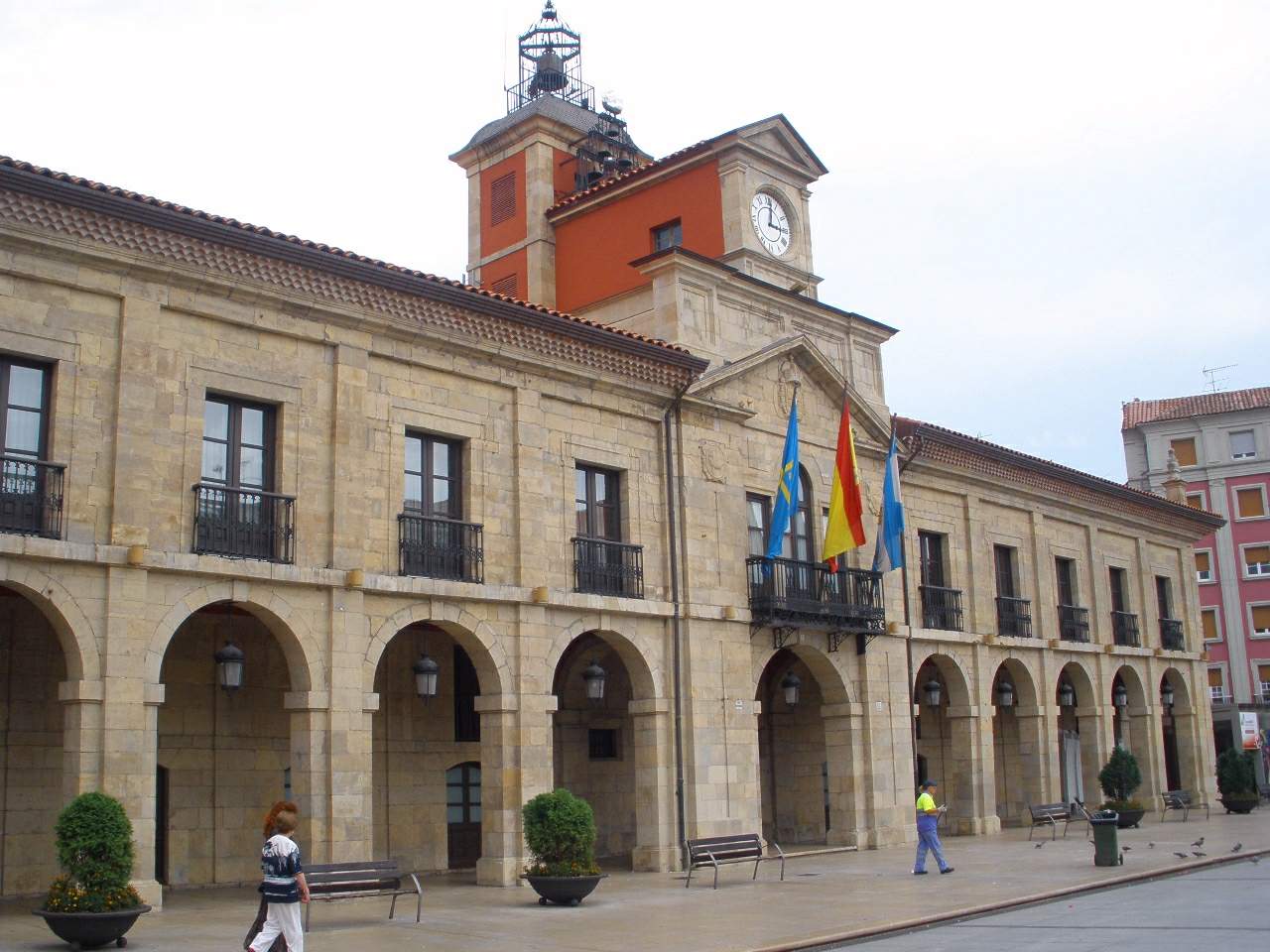
Avilés town hall stands on Plaza de España, the main and most emblematic square of the old town in Avilés, Asturias, and has served as the seat of local government here for more than three centuries.
Where does the building come from?
The town hall, known locally as the Casa Consistorial, is a product of a 17th-century expansion of the town. Once Avilés outgrew its medieval walled core, the authorities laid out a new, grander square just outside the old fortifications. Architect Juan de Estrada drew up the plans around 1670, and construction was carried out by master builder Marcos Martínez, with the building finished in 1677. It didn't rise alone: two more mansions, the Palacio de Llano Ponte and the Palacio de Ferrera, went up on the same square around the same time, and together the three buildings still define the character of this part of town.
What will you see on the façade?
The town hall is built from carved sandstone in the Baroque style typical of Asturian civic architecture of the period. The ground floor opens onto an arcaded portico, with wide semicircular arches resting on sturdy Tuscan-style pillars. For generations this covered walkway served a practical purpose: it was rented out to merchants and craftsmen who ran their stalls underneath it. Above, the upper floor is marked by rectangular windows and wrought-iron balconies, while two slightly projecting side pavilions, each topped with a slate roof, frame the façade and give the building its symmetrical silhouette. That upper floor also houses — and always has housed — the large assembly halls where the town council met and still meets. A clock tower was added in the 19th century, and it has set the visual rhythm of the square ever since, becoming one of the most recognizable landmarks on the Avilés skyline.
How do you get there, and what's nearby?
The town hall sits right in the pedestrian heart of the old town, so walking is by far the easiest way in — from the harbor or from the main shopping streets in the centre, it's a short stroll. The square itself, Plaza de España, is popularly nicknamed "El Parche." The name dates back to 1893, when the council paved just one section of the square for the town band to perform on, leaving the rest muddy; locals joked that the result looked less like a proper square and more like a single patch (parche) stitched onto the ground. The nickname stuck and is still used today, even though the whole square has long since been fully paved. It's worth lingering here: the neighbouring Baroque palaces, the cafés under the arcades, and the narrow lanes of old Avilés make the square a natural base for exploring further.
When is the best time to visit?
The façade and the square can be enjoyed all year round, but the atmosphere is liveliest in spring and summer, when the arcade cafés fill up and the square hosts local events and open-air gatherings. In the evening, after dark, the lighting brings out the texture of the sandstone façade and the clock tower, making it a rewarding spot for photos. It's worth timing a visit to combine the town hall with the other Baroque palaces on the same square — this is a corner of the city best explored slowly, ideally with a stop at one of the terrace cafés.
Frequently asked questions
Can you go inside the town hall? The building is still in active administrative use, so public access is limited to the areas serving residents; the council chambers aren't generally open to tourists, but the exterior architecture can be viewed freely at any time.
Why is the square in front of the town hall called "El Parche"? The nickname comes from 1893, when only part of the square was paved for the town band while the rest stayed muddy — residents likened the uneven result to a patch sewn onto fabric, and the name never went away.
Who designed the town hall building? The plans were drawn up by architect Juan de Estrada around 1670, with construction carried out by master builder Marcos Martínez; the building was completed in 1677.
What architectural style does it represent? It's a 17th-century Baroque civic building typical of Asturias, defined by its arcaded portico, Tuscan-style pillars, and wrought-iron balconies, with a 19th-century clock tower added later.
Nearby places

Earn badges for the places you visit
Download NextOnTrip, discover new places and check off your trails.