About this place
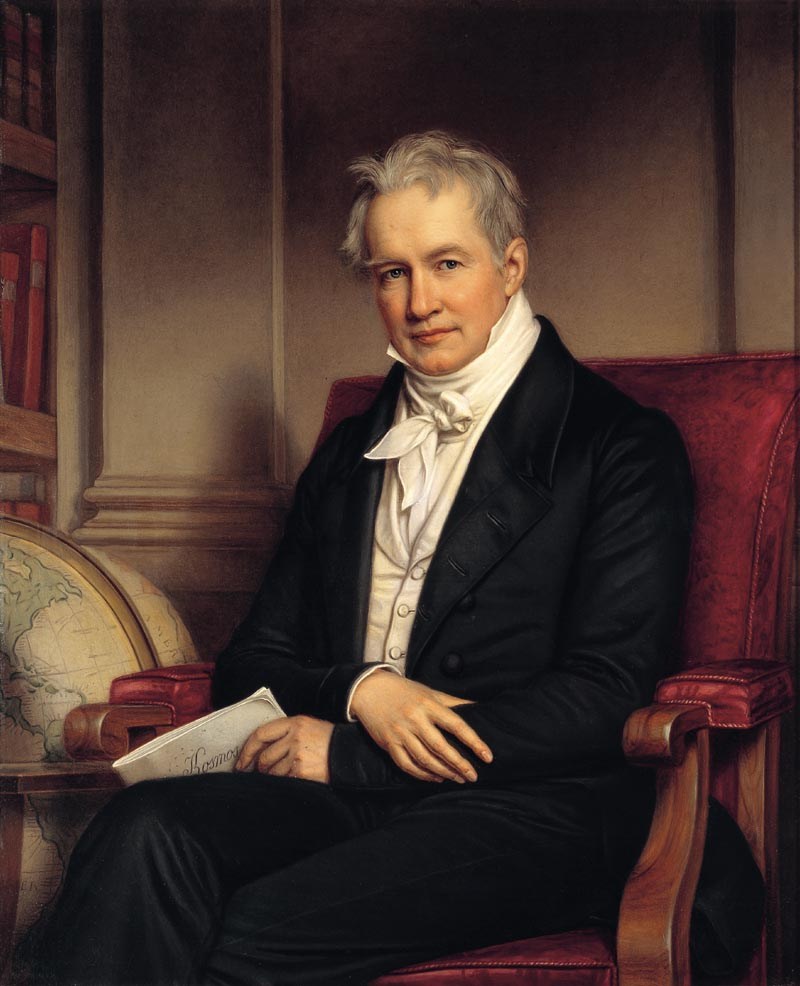
Alexander von Humboldt is a memorial site in Puerto de la Cruz, Tenerife, honoring one of the most influential naturalists in the history of science. The name recalls the German scholar who stopped in the Canary Islands on his way to South America and left a lasting mark on the island's history and on how its landscape came to be described.
Who was Alexander von Humboldt?
Friedrich Wilhelm Heinrich Alexander von Humboldt was born in Prussia and was the younger brother of the philosopher and linguist Wilhelm von Humboldt. He became famous as a naturalist, geographer and explorer whose work on plant geography laid the groundwork for biogeography as a distinct scientific field. Together with Carl Ritter, he is regarded as one of the founders of modern geography as an independent discipline. Humboldt was also a pioneer of systematic, long-term geophysical measurement, work that helped establish modern meteorology and the study of the Earth's magnetic field. His contribution to science was recognized with, among other honors, the prestigious Copley Medal.
Why does this site bear his name?
Alexander von Humboldt stopped on Tenerife during his major research expedition at the turn of the 19th century, on his way to the American continent. The island, and particularly the area around Puerto de la Cruz and the Orotava valley, left a strong impression on him: he was struck by the richness of the vegetation, the volcanic geology, and the sweeping views toward the Teide volcano. His observations from this short but significant leg of the journey later fed into his scientific writings and helped bring wider attention to Tenerife as a place of exceptional natural value. The site in Puerto de la Cruz named after him stands as a nod to the attention he gave the island and to his broader role in shaping the modern earth sciences.
How do you get there?
The site is located within Puerto de la Cruz, one of the main tourist hubs on Tenerife's northern coast. The easiest way to reach the town is by car via the TF-5 motorway, which connects Puerto de la Cruz with the island's capital and with Tenerife North Airport, or by local TITSA buses running from most towns on the island. The site itself is open to the public and requires no advance booking or ticket.
What will you see there?
Visitors can read an information panel or marker outlining Humboldt's life and his connection to Tenerife. It's a good spot to pause for a moment while exploring Puerto de la Cruz and to link a walk through the town with the history of scientific discovery that, in this case, began with a brief but meaningful stop on a much longer journey. Nearby, it's worth combining the visit with a stroll through the old town, the seafront pools, or the lookout points that offer views similar to those that impressed Humboldt more than two centuries ago.
When is the best time to visit?
Puerto de la Cruz enjoys a mild climate year-round, so the site can be visited in any season. The most comfortable conditions for sightseeing are in spring and autumn, when temperatures are pleasant and the streets are less crowded than at the height of summer. Morning hours are worth planning for, as the light is best for photographing the surrounding views.
Frequently asked questions
Who was Alexander von Humboldt, and why is he honored specifically in Puerto de la Cruz? He was a German naturalist and explorer, one of the founders of modern geography. He visited Tenerife during his expedition to South America, and the area around Puerto de la Cruz and the Orotava valley made a strong impression on him, later reflected in his scientific work.
Is there an entrance fee? No, the site is open to the public and free to visit.
How long does a visit take? Seeing the site itself takes only a few minutes, but combining it with a walk through Puerto de la Cruz can easily stretch the visit to an hour or more.
Is it worth pairing with other attractions in town? Yes, Puerto de la Cruz's old town, seafront pools, and lookout points are all nearby, offering scenery similar to what Humboldt once described.
Nearby places

Earn badges for the places you visit
Download NextOnTrip, discover new places and check off your trails.