About this place
Alameda Park is the main city park of Santiago de Compostela, spread across Santa Susana hill right against the walls of the old town. Residents have used it as their favorite walking ground for close to two centuries, and it's best known for delivering the single most photographed view of the cathedral in the entire city.
Where does the park come from?
The land underneath today's park was handed over to the city in 1546 by Rodrigo de Moscoso Osorio y Álvarez de Toledo, 4th Count of Altamira, a local nobleman who donated agricultural ground for the use and enjoyment of Santiago's residents. For roughly three centuries the plot stayed largely undeveloped. The real shift toward the park visitors see today began in 1835, when the city council started laying out Campo da Estrela (Field of the Star) together with the curved promenade that wraps around the Santa Susana oak grove. Half a century later, in 1885, two stone lion statues that had previously stood at the old Porta Faxeira city gate were moved to the entrance of that promenade — since then this stretch has carried the name Paseo de los Leones, the Lions' Walk.
What are the three parts of the park?
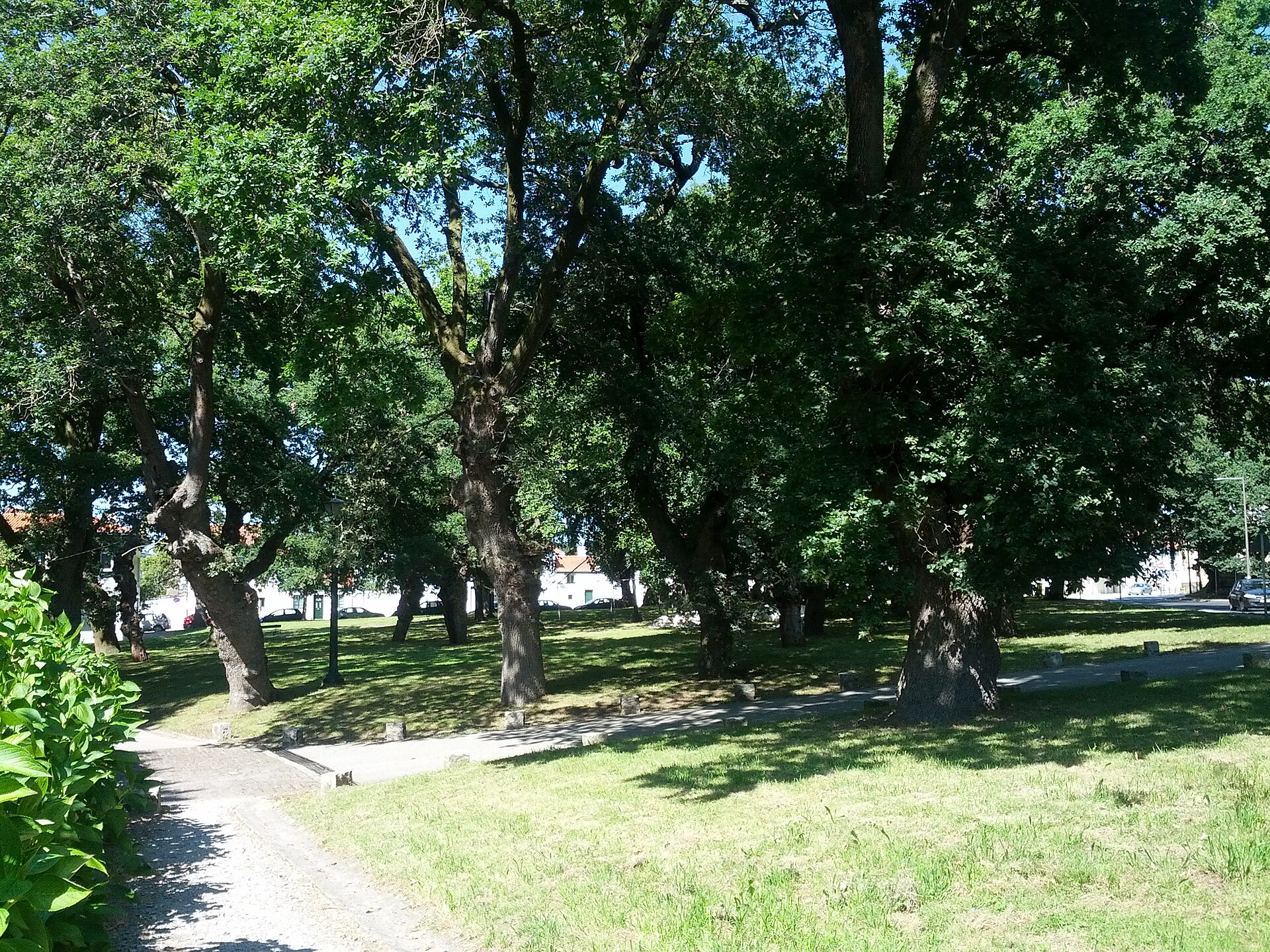
Alameda splits into three clearly distinct sections worth exploring on their own terms. Paseo da Alameda is the open, leafy main promenade that reads as a natural extension of the old town. Carballeira de Santa Susana is a shaded grove of mature oaks, quiet and cool, offering a deliberate contrast to the tidier avenues nearby — it's the spot locals pick when they want distance from the crowds. The third section is Paseo da Ferradura, the horseshoe-shaped path that curves around the hill's eastern slope and doubles as the park's best-known viewpoint.
Why does everyone head to Paseo da Ferradura?
This is the exact spot that has supplied postcards and traveler photos for decades: a head-on view of the cathedral's western façade, its most monumental side, rising above the rooftops of the old town. Reached from a modest rise on the eastern slope of Santa Susana hill, this angle has long been treated as the definitive image of Santiago and is considered close to essential for anyone who wants to see the city from something other than street level.
What else should you know before visiting?
Since the 19th century the park has served as the main outdoor gathering spot for Santiago's residents, and its position — bordering the old town while opening onto a sweeping view of its western side — turned it into the natural reference point for walks, meetings, and everyday downtime. It's worth timing a visit to Paseo da Ferradura for good light, since the cathedral view shifts character through the day. Walking through all three sections — the open promenade, the shaded oak grove, and the scenic terrace — usually takes under an hour, but it's enough to feel the city's rhythm away from the crowds gathered near the cathedral itself.
Frequently asked questions
Where exactly is Alameda Park located? The park sits on Santa Susana hill, right against the walls of Santiago de Compostela's old town, a short walk from the cathedral.
Where does the name Paseo de los Leones come from? It comes from two stone lion sculptures moved in 1885 from the former Porta Faxeira city gate to the entrance of Paseo da Ferradura.
Why is the view from Paseo da Ferradura so famous? It offers a frontal view of the cathedral's western façade, widely regarded as the most iconic and most photographed image of Santiago de Compostela.
What are the park's three sections? The main promenade Paseo da Alameda, the oak grove Carballeira de Santa Susana, and the scenic Paseo da Ferradura.
Nearby places

Earn badges for the places you visit
Download NextOnTrip, discover new places and check off your trails.