About this place
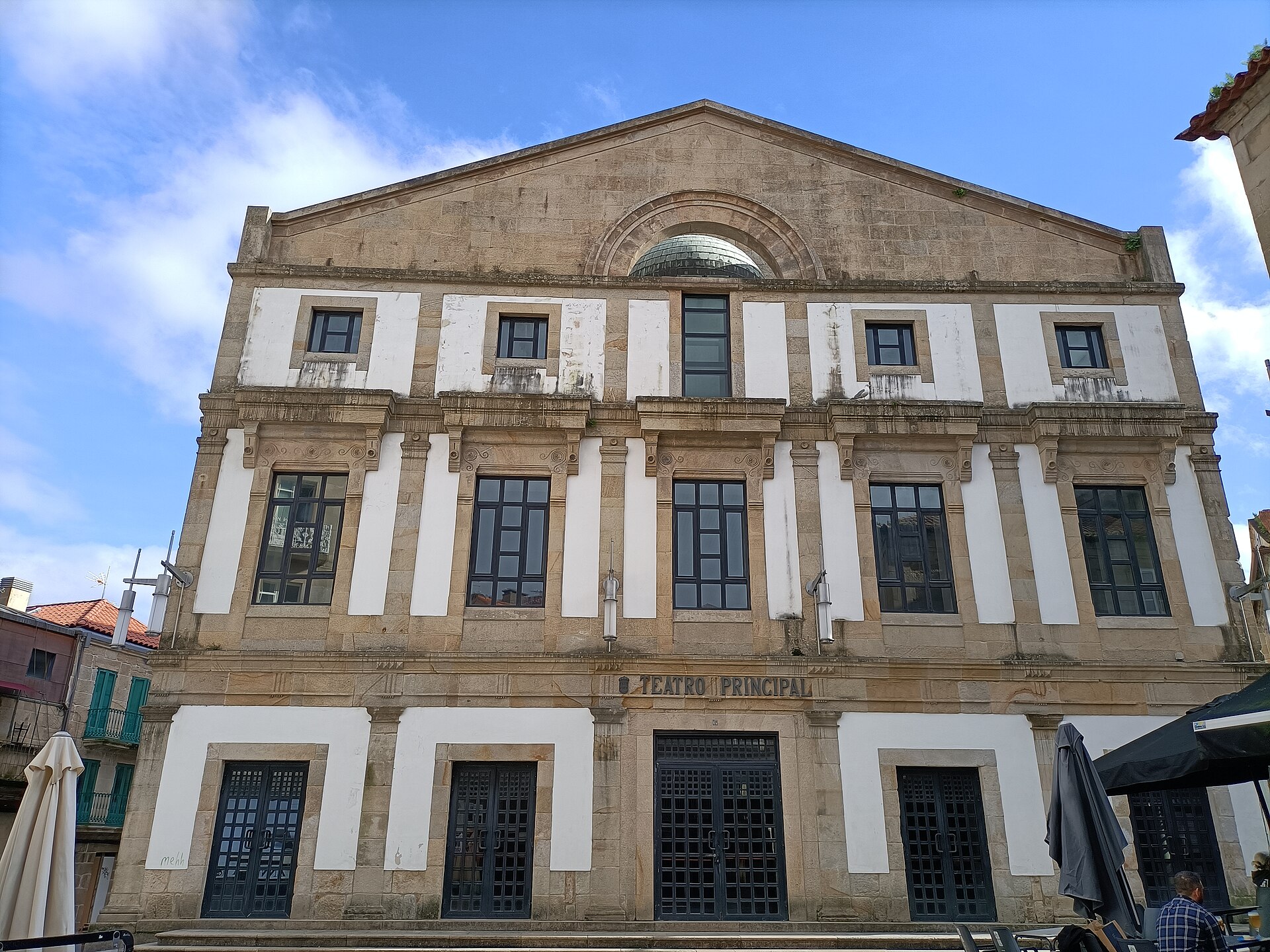
Afundación Theatre, known locally as Teatro Afundación, is one of the leading cultural venues in Vigo, a city in Spain's Pontevedra province, in the region of Galicia. The building's grand granite facade has anchored the city centre for more than a century, first as a theatre, then as a savings-bank cultural centre, and today as a foundation-run stage for opera, music and drama.
Where did the building's story begin?
At the start of the 20th century, a local businessman named García Barbón bought the existing Teatro Rosalía de Castro on this site, wanting to guarantee the people of Vigo a permanent home for the performing arts. He died in 1910, and roughly a year later a fire gutted the building completely. Rather than abandon the site, his heirs decided to rebuild.
Who designed the theatre that stands today?
The commission went to architect Antonio Palacios, whose work across Galicia is recognisable for blending academic eclecticism with sweeping curves and counter-curves. For this theatre he drew on the Palais Garnier in Paris as a reference point, translating that sense of grandeur into a facade cut from white granite quarried nearby at Castrelos. That pale stone still sets the building apart from its neighbours on the same street today.
How did the venue change in the 1980s?
In 1982 ownership passed to Vigo's municipal savings bank, later known as Caixanova, which set out to turn the old theatre into a cultural centre open to the whole city. Architect Desiderio Pernas led the renovation, keeping the historic exterior largely intact while rebuilding the interior and technical facilities behind it. The refurbished centre reopened on 22 March 1984, a date now treated as the start of the theatre's current era.
How large is the auditorium, and what happens there?
The main hall seats 994 people, making it one of the larger cultural venues in the region. Across the four decades since its 1984 reopening, roughly 10 million people have attended performances and events held inside. Programming leans heavily on opera and visiting symphony orchestras from around the world, alongside theatre productions and other cultural events.
Who runs the theatre now?
The venue is managed by Afundación, the social and cultural foundation of the ABANCA banking group, itself the successor to Caixanova and NovaCaixaGalicia. The theatre's current name comes directly from this foundation.
What should visitors look out for?
The exterior is the main draw for passers-by: a monumental, all-granite facade carrying the curved detailing typical of Antonio Palacios, an architect also known for landmark buildings elsewhere in Galicia and in Madrid. Inside, the auditorium still carries something of the atmosphere of the pre-1980s theatre, even though the technical equipment behind the scenes is entirely modern.
Frequently asked questions
Is this the same building as the old Teatro García Barbón? Yes. It occupies the same site and retains much of the structure designed by Antonio Palacios, though the interior was thoroughly modernised during the 1982-1984 renovation.
How many seats does the theatre have? The main auditorium holds 994 seats.
Who manages the theatre today? It is run by Afundación, the cultural foundation linked to the ABANCA banking group.
What kind of events are staged here? The programme centres on opera, symphony orchestra concerts and theatre productions.
Where exactly is the theatre located? It stands in central Vigo, in Spain's Pontevedra province, in the region of Galicia.
Nearby places

Earn badges for the places you visit
Download NextOnTrip, discover new places and check off your trails.