About this place
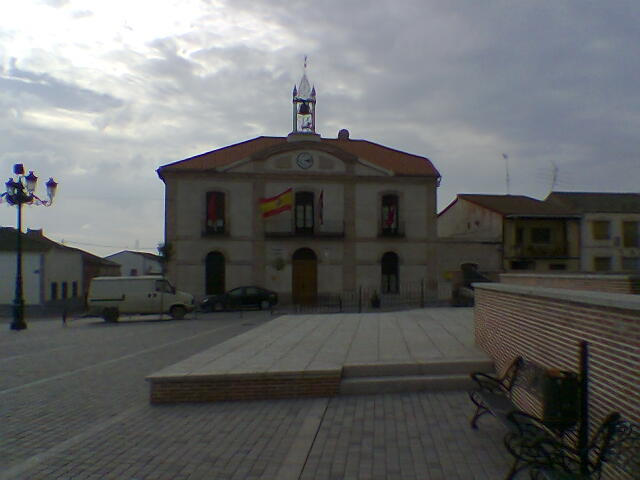
Adanero town hall serves as the seat of local government for the small village of Adanero, in the province of Ávila, within the Castile and León region of Spain. Standing right at the heart of the settlement, the building has long been the natural reference point for residents — the place where everyday administrative business gets done, and one that also carries a slice of the area's history.
Where exactly is the town hall located?
Adanero counts only a few hundred residents, so tracking down the town hall is no challenge at all — just head for the village's central square. Its coordinates sit at roughly 40.9438°N, -4.6040°W, placing it in the northern part of Ávila province, close to the border with Segovia. For anyone driving through the region, it makes for a convenient stop along the routes connecting the larger towns of Castile.
What is the story behind this building?
Adanero's roots go back to the Middle Ages, when the settlement fell under the so-called tierra de Ávila — a broad territory governed by the jurisdiction of the city of Ávila. That arrangement held until the 17th century, when the village's legal standing changed dramatically. In 1643, King Philip IV sold Adanero outright, granting it the status of a villa with its own independent jurisdiction; the buyer, don Antonio Núñez de Prado, became its new lord. Decades later, in 1691, Charles II went a step further, awarding a descendant of that family, don Pedro Antonio Núñez de Prado, the title of Count of Adanero (conde de Adanero) — a title that permanently linked the village's name to Spanish nobility.
The current town hall building, however, doesn't date back to those medieval or early-modern grants. It's a substantial mid-19th-century structure, raised as a new palacio consistorial to replace an earlier seat of local government. One of its most recognizable features is the clock and bell set into the façade, which for decades served as the village's only public timekeeper, its chimes marking out the rhythm of daily life.
What else is worth seeing nearby?
The town hall isn't the only reason to pause in Adanero. A short walk away stands the church of Nuestra Señora de la Asunción, listed as a Bien de Interés Cultural (a nationally protected cultural asset) — the building blends Romanesque-Mudejar elements with later Baroque additions, visible in details like the portal. A little further on is the 17th-century Palacio de los Condes de Adanero, whose façade still bears the stone coat of arms of the Núñez de Prado family, a lasting reminder of the era when they ruled the village.
Frequently asked questions
What is Adanero town hall? It's the administrative building housing the local government of Adanero, a village in Ávila province, built in the mid-19th century.
Can visitors go inside the town hall? As an active public administration building, it's mainly accessible during office hours; touring its interior isn't a typical tourist activity.
What other historic sites are nearby? Within the village itself, the church of Nuestra Señora de la Asunción and the 17th-century Palacio de los Condes de Adanero are both worth a visit.
Where does the "Count of Adanero" title come from? King Charles II created the title conde de Adanero in 1691 for the Núñez de Prado family, who had bought the village from Philip IV back in 1643.
How do you get to Adanero? The village sits in the northern part of Ávila province, near the border with Segovia, and is easily reached via local roads off the main routes linking that part of Castile and León.
Nearby places

Earn badges for the places you visit
Download NextOnTrip, discover new places and check off your trails.