Culture and art in Poland
A guide to 13 Culture and art in Poland — with descriptions, photos and traveler visits from the NextOnTrip community. Locations spread across 9 cities and towns. Most visited by the community: Teatr Polski w Szczecinie, Teatr Współczesny w Szczecinie, Gdyńskie Centrum Filmowe w Gdyni.
-
Teatr Polski w Szczecinie
Szczecin
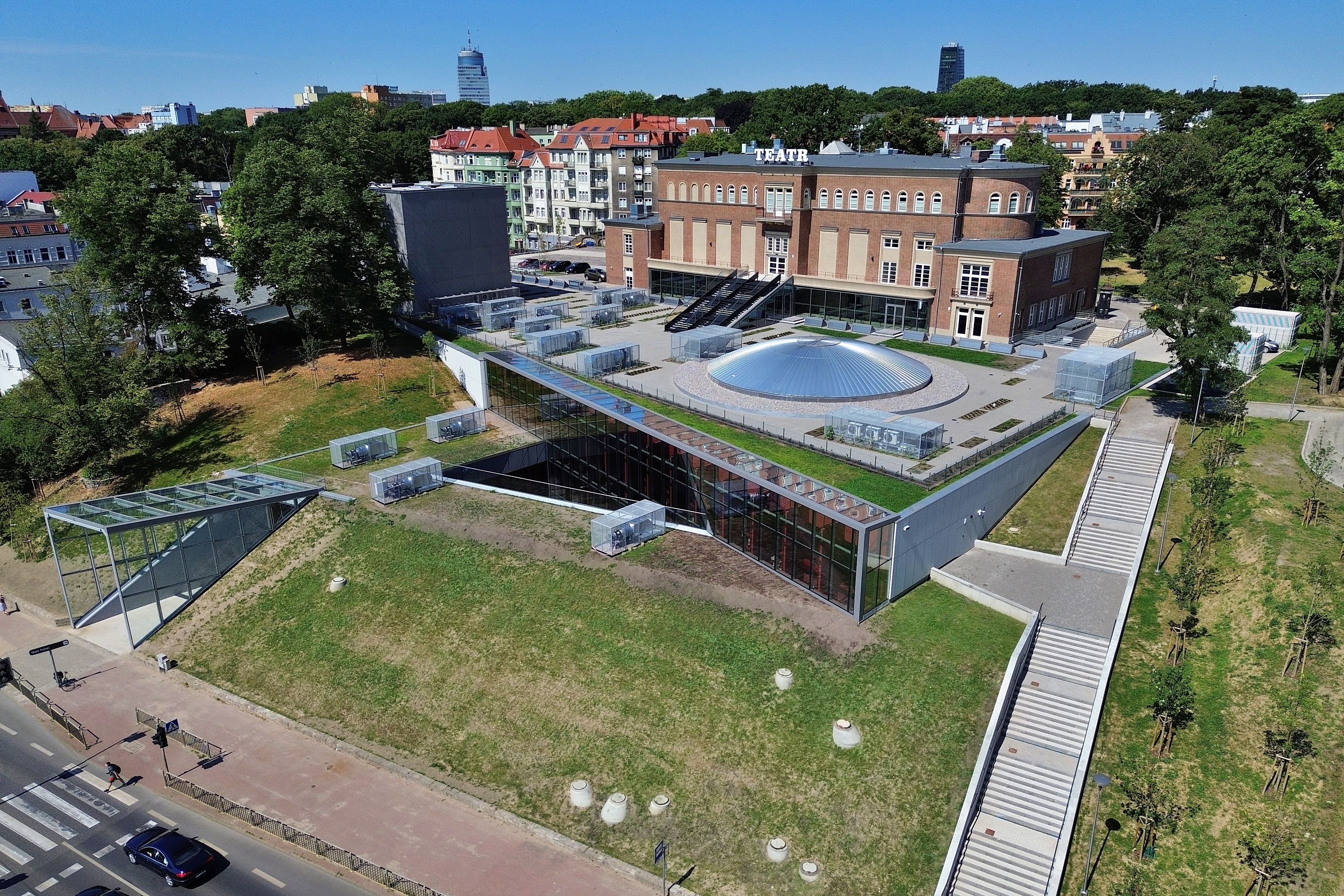
Polish Theatre in Szczecin (Teatr Polski w Szczecinie) is one of the leading drama stages of West Pomerania and one of the city's most interesting examples of modernist architecture. The theatre has operated since 1946, and its home joins a historic building from the 1920s with a modern glass-and-concrete structure set into the slope above the Oder. How did the Polish Theatre in Szczecin begin? The drama theatre was founded in 1946, right after the war, as one of the first Polish stages in the city. Between 1949 and 1975 it belonged to the Dramatic Theatres, a nationwide organisation that managed several stages. Over time the Szczecin company built its own reputation and became a fixed point on Poland's theatrical map. What is the building like, and who designed it? The historic building went up in 1928–1929 as the seat of a masonic lodge, designed by architect Adolf Thesmacher. Its modernist form, restrained in decoration and built from clear, strong volumes, makes it a gem of interwar architecture. Over its long history it served many purposes: it housed a cinema, a concert hall and even a boxing hall. Only after the war did the theatre take it over. A thorough modernisation and extension was completed in 2023. The original appearance of the historic part was restored, and a new reinforced-concrete and glass section was added alongside, integrated into the Oder escarpment. Old and new read as one whole, and some of the new spaces lie underground so they do not hide the historic facade. How many stages are there, and what can you see? The theatre has five stages with room for nearly 1,500 spectators in total. Three of them are in the new section: the Shakespeare Stage, 549 seats, the Italian Stage, 508 seats, the Chamber Stage, 120 seats. Two more operate in the historic building: the Jan Banuch Stage with 236 seats and the Black Cat Parish Stage with 80 seats. This variety lets the theatre combine large-scale productions with intimate performances and events for smaller audiences. Why visit the Polish Theatre? It suits anyone who enjoys drama, and architecture lovers as well. The building is reason enough to stop by: the contrast between prewar modernism and the contemporary glass volume is easy to see from outside, and the hillside setting offers an interesting view of this part of the city. In the evening, when the foyer and windows are lit, the building looks especially striking. Note that performances are in Polish. Frequently asked questions When was the Polish Theatre in Szczecin founded? The theatre has operated since 1946, and its historic building dates from 1928–1929. Who designed the theatre building? The historic part was designed by Adolf Thesmacher. What was the building before it became a theatre? It was built for a masonic lodge, and later housed a cinema, a concert hall and a boxing hall. How many stages does it have? Five: three in the new section and two in the historic building, for nearly 1,500 viewers in total. Was the building rebuilt? Yes. Modernisation and extension finished in 2023, and the historic part regained its original look.
-
Teatr Współczesny w Szczecinie
Szczecin
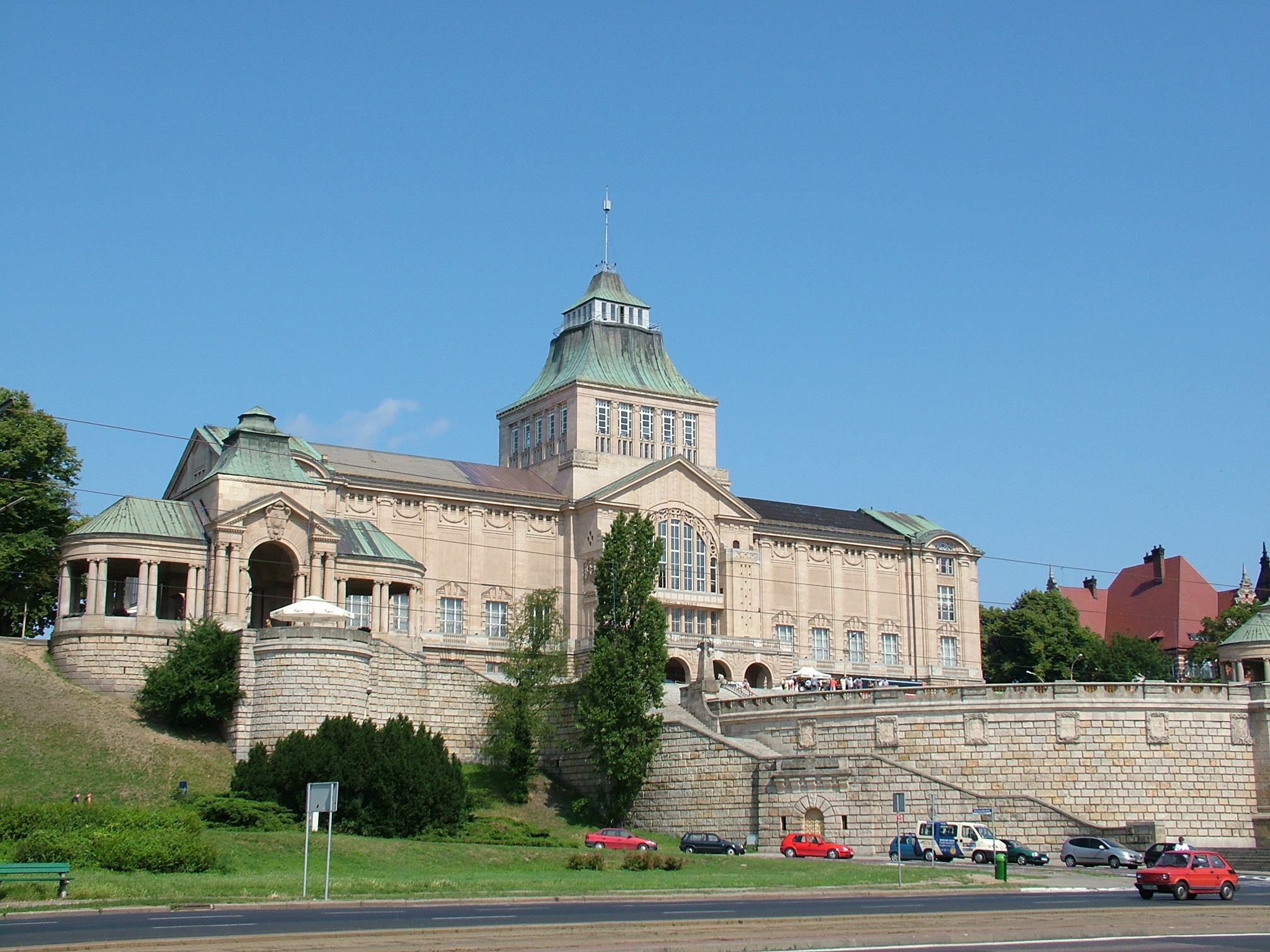
Teatr Współczesny w Szczecinie (the Contemporary Theatre in Szczecin) is one of the city's leading drama stages, housed in an imposing building on the Chrobry Embankment (Wały Chrobrego) overlooking the Oder. The institution develops the performing arts, with a repertoire built mainly on contemporary drama, Polish and international, and on bold new readings of the classics. Where is the theatre? The main venue shares its building with the National Museum, one of the most recognisable addresses in Szczecin. The embankment terrace, the monumental architecture and the view of the port make it easy to pair a performance with a stroll. The theatre has operated in this building since 1950. How many stages does it have? The company works across several stages in two parts of the city centre: The Main Stage (Duża Scena) on Wały Chrobrego, the theatre's largest hall, with an auditorium of several hundred seats, used for major premieres. The New Situations Stage (Scena Nowe Sytuacje), also on Wały Chrobrego, smaller and more experimental, suited to formal exploration and intimate productions. The Small Theatre (Teatr Mały) on Deptak Bogusława, an intimate space with a small audience where viewers sit very close to the actors. This means one city offers both large, spectacular productions and close-up shows in which every word and gesture counts. What will you see on stage? The company focuses above all on contemporary drama. The bill features Polish and foreign authors whose texts deal with current social and cultural themes. Alongside them, the theatre turns to the classics, usually in daring new interpretations that look at older works from today's perspective. Occasionally the programme also includes productions for younger audiences. The Szczecin company is regarded as one of the country's foremost drama stages, and its productions are often discussed by national theatre critics. Planning your visit Arrive early and leave time for a walk along Wały Chrobrego, with views of the Oder and the port. Check the schedule and seat availability beforehand, since the smaller stages have limited seating and tickets go quickly. The Main Stage and the New Situations Stage are in the same building, whereas the Small Theatre is a separate venue on the central promenade, so confirm which stage your chosen show uses. Combine your visit with the neighbouring National Museum. Frequently asked questions Does the Contemporary Theatre in Szczecin have more than one stage? Yes. The Main Stage and the New Situations Stage are on Wały Chrobrego, while the Small Theatre is on Deptak Bogusława. What kind of repertoire does it present? Mostly contemporary drama, Polish and international, complemented by fresh readings of the classics and occasional shows for young audiences. Is the theatre inside the museum building? Yes, its main venue is in the National Museum building on Wały Chrobrego. Is it worth visiting as a tourist? Yes. Even without local context, a performance in one of Szczecin's most prestigious locations is a good way to experience the city's culture, and the surroundings offer views and walks.
-
OFF Piotrkowska w Łodzi
Łódź
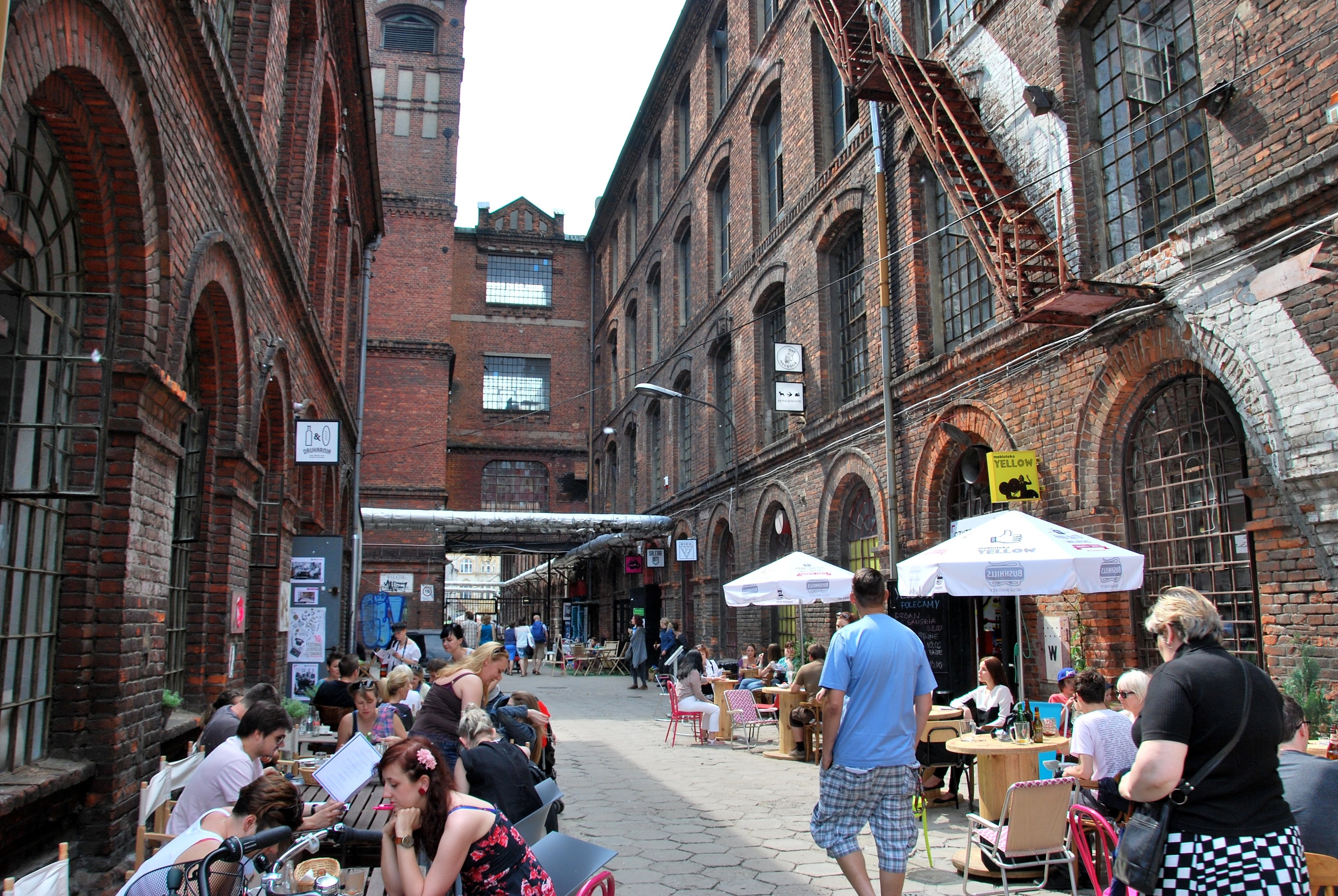
OFF Piotrkowska is a cultural and dining complex in a former cotton mill at 138–140 Piotrkowska Street in Łódź. Bars, restaurants, clubs, studios and galleries now fill the old industrial yard and its brick halls. It is one of the best-known examples of how the city has given its post-industrial buildings a new purpose. How did the complex come about? The mill belonged to the Ramisch family, who moved to Łódź from Bohemia in the 1830s. In 1850 they bought the first plot of land and began building the factory, then added neighbouring plots as the business grew. By 1909 the works were running at full capacity in the very heart of the city. The cotton mill operated until 1990, after which the buildings fell into disrepair until they were revitalised. What can you find there today? The site is home to restaurants, food trucks, clubs and alternative music venues. The old halls also house fashion design workshops, design studios, architects' offices, publishing houses, exhibition spaces, rehearsal rooms and showrooms. In the evening it is one of the liveliest places in town, and by day it is a pleasant spot for coffee in a club-café and a walk among the brick buildings. What was here before the redevelopment? The large plot in front of the factory was long known to locals as "Chinatown", thanks to the many cheap Vietnamese food stalls that traded there. Today the space has been completely transformed and serves as the main courtyard of the complex. Is it worth a visit? The project on the grounds of Franciszek Ramisch's once-devastated mill won first place in the National Geographic Traveler contest for the seven new wonders of Poland. For visitors it is a natural stop during a walk along Piotrkowska Street, the largest architectural complex of its kind in Poland, stretching for about 4.2 km. Frequently asked questions Where exactly is OFF Piotrkowska? At 138–140 Piotrkowska Street, right off the city's main pedestrian boulevard. The entrance leads from the street into the former factory grounds. What was here before? A cotton mill owned by the Ramisch family, which operated until 1990. Is it only an evening destination? No. Cafés and daytime venues, plus studios and exhibition spaces, make it worth visiting at different times of day. Can I eat there? Yes. The site has restaurants, bars, club-cafés and food trucks. Who is it for? Anyone who enjoys an urban, alternative atmosphere, live music, design and industrial brick architecture.
-

Gdańsk Shakespeare Theatre
Gdańsk
Gdańsk Shakespeare Theatre is one of the most distinctive cultural buildings in Gdańsk: a dark brick volume with a retractable roof that revives the city's early modern theatre tradition. It stands on the site of the 17th-century Fencing School, regarded as the first public theatre of the Polish-Lithuanian Commonwealth. Today it is a municipal cultural institution and co-organises the Shakespeare Festival. Why Shakespeare in Gdańsk? In the 17th century this part of the city was home to the Fencing School. Besides fencing displays it hosted theatre performances, and English travelling actors were among those who played here. Prof. Jerzy Limon concluded that the building was modelled on London's Fortune Playhouse. Its appearance is known from an engraving by Peter Willer, and a renovation is recorded in 1635. In the 1740s it was replaced by the Comedy House, which was pulled down in the early 19th century. Excavations in 1997–2000 and 2004 uncovered remains of timber posts dating from the 1630s, outlining a building of roughly 22.4 by 19.6 metres. How the project came about The driving force was Prof. Jerzy Limon, an English-studies scholar at the University of Gdańsk, who founded the Theatrum Gedanense Foundation in 1991. Its work led to Shakespeare Week, first held in 1993 and run as the Gdańsk Shakespeare Festival since 1997. The design was prepared by Italian architect Renato Rizzi, selected through a competition decided in 2005. The symbolic start of the project took place in September 2009, and the theatre was officially opened on 19 September 2014. Prof. Limon directed it until 2021. What the building looks like The concept was to place a wooden interior inside a heavy brick shell. From outside the theatre reads as a stern, compact mass of anthracite brick, with buttresses and few openings. It is surrounded by a wall about six metres high, which can also be used as a performance space. The star feature is the opening roof, made of two leaves clad in patinated copper. It opens in about three minutes, allowing performances to take place in daylight under the open sky. The hall and stage layouts The main auditorium echoes the old Fencing School. Three storeys of galleries surround the audience. Dozens of movable lifts in the stage and seating areas allow the space to be reconfigured, so one theatre can work in several ways: Elizabethan thrust stage, projecting into the audience, proscenium stage, set apart from the audience, central stage, with the audience seated all around, like an arena. In theatre layout the building holds up to 600 spectators. The foyer combines the entrance hall with a wooden room suspended above it. In 2014 the building was a finalist of the Polityka architecture award. How the theatre works The theatre has no resident acting company; it is a receiving house that hosts productions from Poland and abroad as well as concerts. It also runs educational programmes and offers guided tours of the building, a chance to look behind the scenes and see the roof mechanism. Finding the theatre The building stands in Gdańsk's Śródmieście district, between Podwale Przedmiejskie, Bogusławskiego and Zbytki streets, with the entrance on Bogusławskiego Street. The Main Town is close by, so a visit fits easily into a walk around the historic centre. Frequently asked questions Who designed the Gdańsk Shakespeare Theatre? Italian architect Renato Rizzi. When did it open? The official opening was on 19 September 2014. Does the roof really open? Yes, its two leaves open and expose the auditorium to the sky in about three minutes. What stood here before? The Fencing School, where plays were staged in the 17th century, including by English actors.
-
Polish Baltic Philharmonic
Gdańsk
Polish Baltic Philharmonic is one of the most distinctive concert venues in Poland and one of the more interesting examples of an industrial monument given a new life for culture. Its full name is the Polish Baltic Frederic Chopin Philharmonic, and it is based on Ołowianka island in Gdańsk, right by the Motława river, in the converted buildings of a former municipal power plant. Why visit? The philharmonic combines two things that rarely go together: brick architecture from the turn of the 20th century and interiors made for listening to live music. For many visitors the building is as big an attraction as the concert itself. From the Motława side, the eye is caught by the richly decorated neo-Gothic facade with rosettes, turrets and two bastion-like towers that looks more like a stronghold than a factory. Where does the island's name come from? Ołowianka takes its name from the lead stores that operated here from the 16th century; "ołów" means lead in Polish. The metal was floated down to Gdańsk from the Olkusz area in Lesser Poland, and the island's German name, Bleihof, also refers to lead. The island itself was created in 1576, when a newly dug canal cut it off from the mainland. How the complex came to be The municipal power plant on Ołowianka was built in 1897–1898 by the Berlin firm Siemens & Halske, and it kept being expanded until 1913. In the final months of the Second World War the plant was badly damaged, but it was back in operation by August 1945. It kept working until it closed in 1996. The building has been on the register of monuments since 1983. From power plant to philharmonic The idea of turning the decommissioned plant into a concert hall came from the then director, Roman Perucki. He was inspired by a visit to Norrköping in Sweden, where a philharmonic occupies the buildings of a former heat and power plant alongside a museum and places to eat. The buildings and land were handed over to the philharmonic by the Elektrociepłownie Wybrzeże power company. The conversion was designed by architect Marcin Kozikowski of Kozikowski Design, and it was funded by the Pomeranian regional government and European Union money. Work ran from 1998 until 2007, when the fully equipped music and congress centre was formally opened. The concert hall and the organ The largest space is the concert hall, which seats around a thousand people. A key part of the equipment is the concert organ, with 91 stops and four manuals, which keeps organ music a regular feature of the programme. The orchestra and its history The ensemble's roots go back to the first months after the war. In June 1945 a Municipal Symphony Orchestra began forming in Sopot, and on 29 September that year a concert there inaugurated the activity of the Baltic Philharmonic. Over the following decades the institution changed its name several times and for a period was run together with the opera. In 1993 the philharmonic separated from the opera and, as an independent institution, took the name of Frederic Chopin. Frequently asked questions Where is the Polish Baltic Philharmonic? On Ołowianka island in Gdańsk, on the Motława river, close to the historic centre of the city. Was the building once a power plant? Yes. The complex was built as a municipal power plant in the late 19th century and generated electricity until 1996, before the philharmonic took it over. How many seats does the main hall have? The concert hall seats around a thousand people. Who designed the conversion? Architect Marcin Kozikowski of Kozikowski Design. The work lasted from 1998 to 2007. Is it a listed monument? Yes, the former power plant is on the register of monuments, and its neo-Gothic facade remains the most recognisable part of the Ołowianka skyline. Who is it for? For lovers of classical music, but also for anyone interested in industrial architecture and the history of Gdańsk. Even without a concert ticket, it is worth looking at the building from the Motława side to see how a former power plant became one of the cultural symbols of Gdańsk.
-
Galeria Refektarz
Kartuzy
Galeria Refektarz is an art gallery in Kartuzy, set inside the historic refectory of a former monastery in Poland. It blends a preserved monastic interior with a contemporary cultural program, so the setting is as much a part of the visit as the artworks themselves. For travelers, it offers a short cultural stop focused on exhibitions and the atmosphere of the place. Na miejscu można liczyć przede wszystkim na: temporary exhibitions that change over time, with a focus on contemporary art, photography, and design the chance to see the historic refectory of the former monastery, which gives the gallery a distinctive interior setting a local cultural venue that is part of Kartuzy’s arts scene and works well as a calm stop during a town visit If you plan to visit, it is worth checking the current exhibition schedule so you can catch the show that interests you most. This is a good choice for visitors looking for a quiet, compact cultural outing with both history and modern art in one place.
-
Galeria Obok ZPAF
Galeria Obok ZPAF is a gallery space associated with the Association of Polish Art Photographers (ZPAF) in Warsaw. It presents photography exhibitions, often by Polish and international artists, and serves as a venue for meetings and events connected with contemporary photographic art.
-
Cricoteka
Kraków
Cricoteka is a cultural institution and museum in Kraków, Poland, devoted to the life and work of the avant-garde artist and theatre director Tadeusz Kantor. Set in the city’s historic surroundings, it is a strong choice for visitors who want to connect Kraków’s heritage with modern artistic expression. It offers a good option for a focused visit and a short cultural stop. Na miejscu można liczyć przede wszystkim na: exhibition spaces that present Kantor’s legacy and place it in the wider context of contemporary art archives and educational programs that help explain his work and the history behind it performance venues connected with experimental theatre and the broader world of modern artistic expression If you are planning a visit, it is worth allowing enough time to move between the exhibitions, archives, and performance areas at an unhurried pace. This is a good pick for travelers interested in contemporary art, experimental theatre, and Polish cultural history, especially if you want a visit that is both informative and close to the city’s historic fabric.
-
Galeria Szyb Wilson
Katowice
Galeria Szyb Wilson is a contemporary art gallery in Katowice, located at 1 Oswobodzenia Street in the Janów-Nikiszowiec district. It opened in 2001 inside the revitalized pithead and bathhouse buildings of the Wilson shafts, which once belonged to the Wieczorek Coal Mine. The site also carries a long industrial history, with roots going back to 1826, so a visit combines art with a strong sense of place. Na miejscu można liczyć przede wszystkim na: contemporary art exhibitions shown in a former mining complex, where the industrial setting adds a distinctive backdrop to the works on display the preserved pithead and bathhouse architecture of the Wilson shafts, which gives the gallery its unusual character and links it to Katowice’s mining past a visit in the Janów-Nikiszowiec district, making it easy to combine gallery time with a broader look at one of the city’s most recognizable historic areas For a visit, it is worth planning a relaxed stop and checking the current exhibition schedule before you go. Comfortable shoes will be useful if you want to explore the area around the gallery as well. This is a good choice for travelers interested in contemporary art, industrial heritage, and a short cultural outing in Katowice.
-
Labyrinth Gallery
Lublin
Labyrinth Gallery in Lublin is a contemporary art venue that traces its origins back to 1956, when it was founded as the Bureau of Artistic Exhibitions in Poland. Today, it presents a broad range of artistic disciplines and is a good stop for visitors interested in modern culture and creative experimentation. It offers a compact but engaging art-focused visit. You can see exhibitions spanning installations, video art, performance art, multimedia, photography, film, architecture, painting, and drawing. The gallery’s history goes back to 1956, giving it a long-standing place in Lublin’s cultural life under its original name, the Bureau of Artistic Exhibitions. It is a practical choice for travelers who want to explore contemporary art in a city setting without committing to a long outing. If you plan to visit, it is worth checking the current program in advance, since the gallery’s appeal depends on the exhibitions on view. Comfortable shoes are a good idea if you want to take your time moving between different forms of art. This is a solid option for a short cultural stop, especially for visitors who enjoy contemporary and multidisciplinary art.
-
Bunkier Sztuki
Kraków
Bunkier Sztuki is a contemporary art gallery in Kraków, Poland, set right in the city center. It is a good stop for anyone who wants to see a more modern side of Kraków alongside its historic streets and buildings. For visitors, it offers a short cultural visit that fits well into a city walk. Na miejscu można liczyć przede wszystkim na: exhibitions of contemporary art, giving you a look at current artistic trends in a central Kraków setting works by both Polish and international artists, so the program can show a mix of local and wider perspectives a distinctive urban location that creates a clear contrast with Kraków’s medieval architecture and historic atmosphere If you are planning to stop by, it is worth pairing the visit with a walk through the city center, so you can easily combine art with sightseeing. This is a good choice for travelers who enjoy contemporary culture and want a calm, compact visit beyond the usual historic landmarks.
-
Jewish Historical Institute
Warszawa
Jewish Historical Institute is a research foundation in Warsaw, Poland, focused mainly on the history of Jews in Poland and on Jewish culture. It is a place tied to scholarship and memory, with a clear emphasis on preserving and studying this part of the country’s past. For visitors, it offers a quiet, educational stop for a short visit. Na miejscu można liczyć przede wszystkim na: research centered on the history of Jews in Poland, making it a useful stop for anyone interested in the country’s Jewish heritage materials and work connected with Jewish culture, giving the institute a broader cultural and historical context a scholarly atmosphere in Warsaw, suited to visitors looking for a more reflective, museum-like experience rather than a typical sightseeing stop If you plan to visit, it is worth checking opening hours in advance and allowing time for a calm, focused stop. This is a good choice for travelers interested in history, Jewish heritage, and a more low-key cultural outing.
-
Gdyńskie Centrum Filmowe w Gdyni
Gdynia
Gdynia Film Centre (Gdyńskie Centrum Filmowe) is an art-house cinema and meeting point for film lovers in the middle of Gdynia, on Grunwaldzki Square. A bright, modern building with a glass facade, it has become one of the city's key film addresses. If you prefer ambitious cinema to multiplex fare, it is a good place to spend an evening in Gdynia. What is it? The centre houses three studio cinema screens showing artistic and ambitious films. The halls are called Warszawa, Goplana and Morskie Oko. These names are familiar to locals because they refer to Gdynia's pre-war tradition and to the city's historic cinemas, which roots a modern venue firmly in local history. The building also hosts the Gdynia Film School and the Pomeranian Film Foundation. There is a restaurant, a café and a bookstore on site, so you can arrive early for a coffee or talk over the film afterwards. History and architecture Construction began in April 2014 and took about a year and a half. The three-storey building, modernist in form, was designed by the Gdynia architecture studio Arch-Deco. Its glass facade and light volume echo the modernist character of Gdynia, a city known for interwar architecture. The official opening took place in September 2015, on the eve of the 40th Film Festival in Gdynia, with the city's mayor, Wojciech Szczurek, cutting the ribbon. The timing says a lot about the centre's role. The idea of Gdynia as a film city grew around the Polish Feature Film Festival, one of the country's major cultural events, and the film school and workshops developed around it. Planning your visit The cinema is open daily, usually from late morning until late evening, with screenings following a separate programme. Check opening hours and the schedule on the centre's website before you go. Frequently asked questions Where is the Gdynia Film Centre? On Grunwaldzki Square in central Gdynia, in a bright building with a glass facade. How many screens does it have? Three: Warszawa, Goplana and Morskie Oko. Can I eat or drink there? Yes. The building has a restaurant and a café, as well as a bookstore. When did it open? In September 2015, on the eve of the 40th Film Festival in Gdynia. What films are shown? Mainly artistic and ambitious cinema, typical of art-house venues. Who is it for? Cinephiles, festival visitors, people interested in modernist Gdynia, and anyone who wants a film, a coffee or dinner under one roof after a walk around the centre. It also works well as a plan for a rainy day by the sea. The centre is easy to combine with sightseeing in the nearby downtown area, since it sits in the heart of the city. It is worth a visit outside the festival too, because it is a cinema that runs every day, not just a venue for a single event. Film life in Gdynia continues all year, not only in September, and this centre is its permanent home.
Earn badges for the places you visit
Download NextOnTrip, discover new places and check off your trails.