About this place
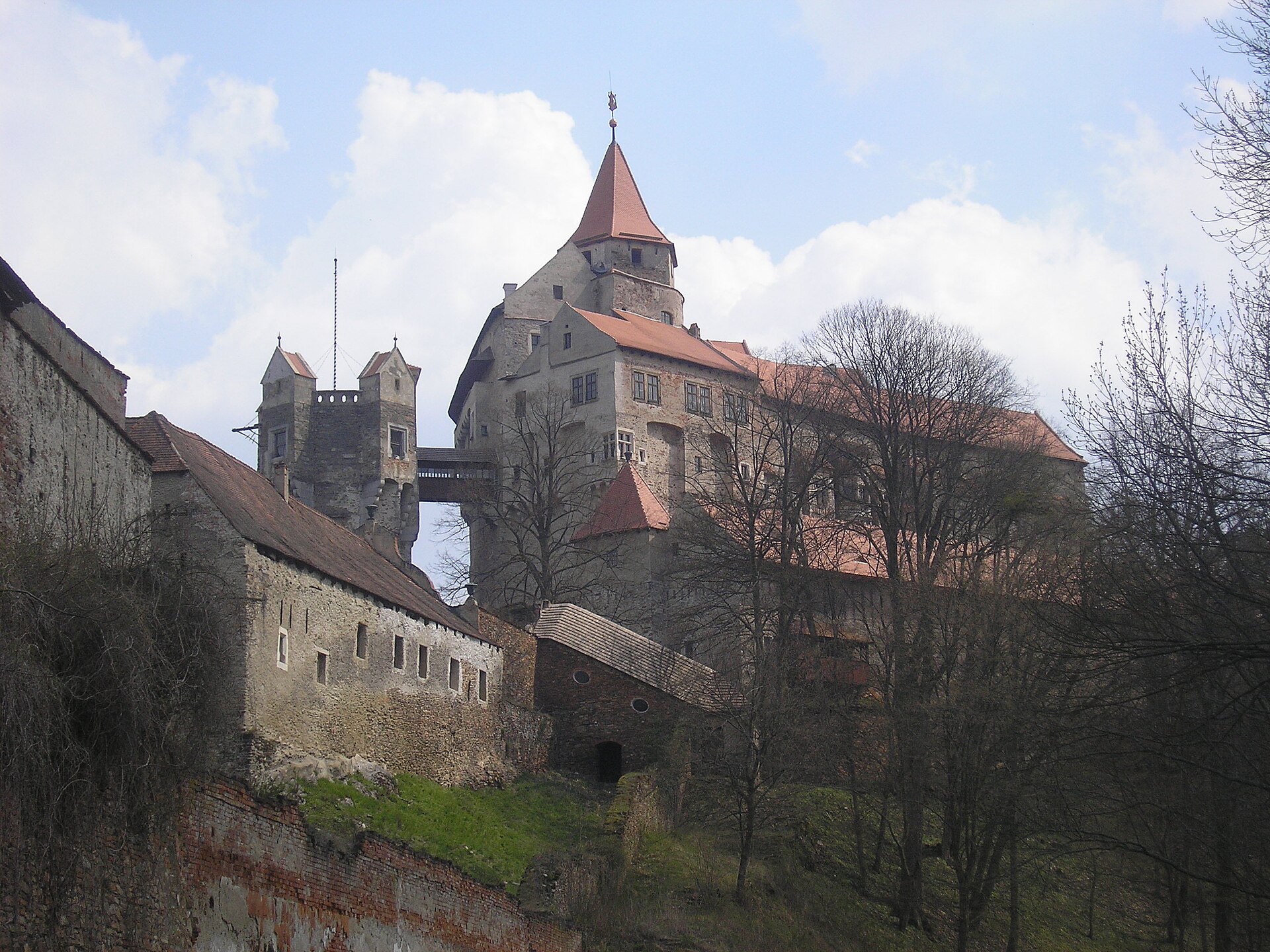
Zubštejn Castle Ruins stand on a wooded hilltop near the village of Pivonice, within the municipality of Bystřice nad Pernštejnem in the Czech Vysočina region. Among the most imposing ruins in the area, the site draws hikers and cyclists looking for a rewarding half-day outing combined with sweeping views.
How to get there?
Zubštejn lies roughly 10 km north of the famous Pernštejn Castle, one of the region's best-known landmarks. The ruins sit on a forested hill above Pivonice, reachable by marked hiking trails on foot or by bike — cars are best left in the nearby village, since the final stretch climbs through the forest. The closest larger town is Bystřice nad Pernštejnem, and the drive from Brno takes under an hour.
What will you see?
The castle was founded at the beginning of the 14th century and, for most of its history, belonged to the powerful Lords of Pernštejn. In 1358, it passed into the hands of the Moravian margrave John Henry (Jan Jindřich), brother of Emperor Charles IV, who expanded and reinforced its fortifications. Zubštejn later returned to Pernštejn ownership.
A further wave of building work came under William of Pernštejn, one of the most influential noblemen in Bohemia and Moravia at the time. Under his direction the castle was modernized and equipped with five artillery bastions, adapting the stronghold to withstand gunpowder warfare — an expensive and, for its era, cutting-edge upgrade.
Zubštejn's prominence did not last. A financial crisis that struck the Pernštejn family in the 16th century led to the castle's gradual neglect, and from 1547 onward it is recorded as abandoned. From that point the buildings deteriorated steadily, leaving only the walls that survive today.
What remains are chiefly the remnants of a palace with four vaulted rooms and part of the former gate tower, through which visitors once entered the courtyard. Despite centuries of decay, the surviving walls are still substantial enough to hint at the castle's former scale, and a walk among the ruins rewards visitors with sweeping views: from the hilltop, the panorama stretches to Sýkoř hill, Pohledec Rock, and further across the Vysočina landscape as far as the Brno area.
Who looks after the ruins today?
The ruins are currently owned by the town of Bystřice nad Pernštejnem, which has been working to stabilize the remaining masonry and prepare the site for wider public access. While Zubštejn remains a wild, non-commercial ruin without an entrance fee or visitor infrastructure, these efforts aim to preserve it for future generations of explorers.
When to visit?
As an exposed, outdoor ruin, Zubštejn is best visited in spring and summer, when the approach trails are dry and the views from the top are at their clearest. Autumn, with fewer visitors and colorful forest surrounding the hill, is a good alternative for those who prefer a quieter walk. Sturdy footwear is recommended, since the trail up to the ruins runs through the forest and includes some steep sections.
Frequently asked questions
When was Zubštejn Castle built? The stronghold was founded at the beginning of the 14th century and remained largely in the hands of the Lords of Pernštejn throughout its history.
Why did the castle fall into ruin? From 1547 onward, following a financial crisis affecting the Pernštejn family, the castle was recorded as abandoned and gradually decayed.
What has survived from the original castle? Remnants of a palace with four vaulted rooms and part of the former gate tower are still standing.
Who manages the ruins today? The town of Bystřice nad Pernštejnem owns the site and is working to secure it and open it more fully to visitors.
Nearby places

Earn badges for the places you visit
Download NextOnTrip, discover new places and check off your trails.