About this place
Slavičín Chateau
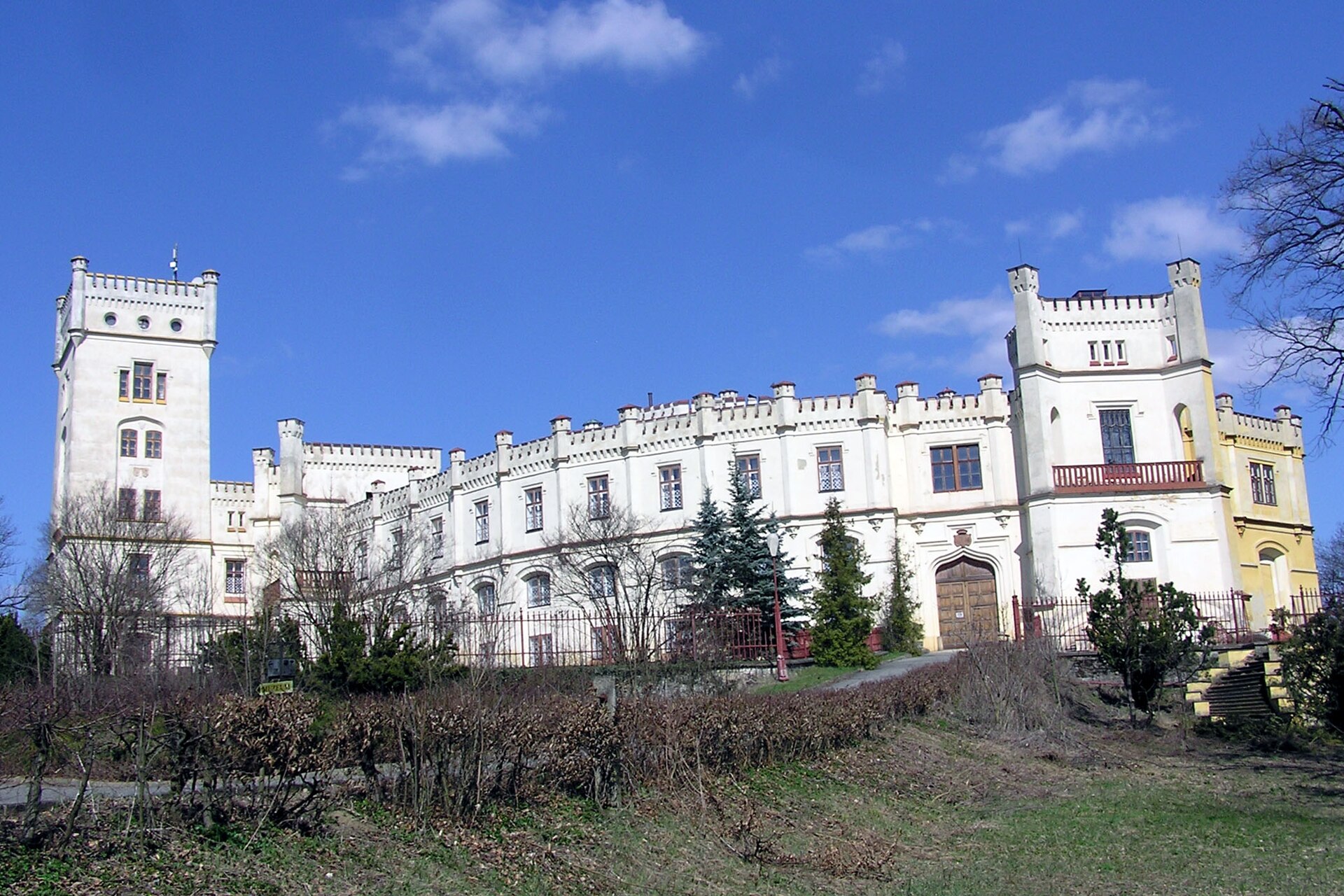
Slavičín Chateau stands on a small hill in the center of Slavičín, a town in the Zlín Region of eastern Moravia, at the foothills of the White Carpathians and a short distance from the spa town of Luhačovice. The Baroque building visitors see today dates from the mid-18th century and rises on the foundations of a much older fortress. Since 2019 it has operated as a hotel with a beer spa, trading under the name Zámek Wichterle.
How far back does the chateau's history go?
The earliest written record connected to the site comes from 1256, naming Helembert of Turři as lord of a local tower. Archaeological research carried out in 1978 confirmed a timber structure from the late 14th century, which was later rebuilt in stone — probably around the turn of the 15th and 16th centuries. The first documented mention of a stone fortress (tvrz) dates from 1485. Ownership then changed hands repeatedly: the Lomnice family held the estate for decades, with Adam of Lomnice alone controlling it for 37 years from 1533, followed by Kateřina Mindszenty (1583–1605) and the Palásthy family (1607–1645). By this period the property had already been upgraded enough to be referred to as a chateau rather than a mere fortress.
When was the current Baroque building constructed?
The structure standing today was built in 1750 on the footprint of the older fortress. In the decades before and after that rebuilding, the estate passed through the hands of the Forgách family (1665–1687) and the Podstatský family (1714–1797). In 1797, Anton Theodor Colloredo-Waldsee, Archbishop of Olomouc, granted the estate to Lieutenant Colonel Franz Buol of the Manfredi regiment; the Buol family kept it until 1833, when Karel Lederer of Lederer-Trattnern purchased the chateau.
Who were the last private owners?
In 1912 the estate passed to the Wichterle family, who remained its owners until the property was nationalized in 1948. From 1952 the building was used by the Zbrojovka Brno company. After 1989 a restitution process began, concluding in 1992 with the chateau returning to the Wichterle family. It was sold to private investor Stanislav Blaho in 2007, and since 2018 has been owned by Roman Machala, who carried out the reconstruction that turned it into today's hotel.
What does the architecture tell visitors?
At the core of the building stands a stone Renaissance residence with vaulted cellars, originally used to store wine and beer — it was the first multi-storey building in the town. The surrounding English-style park was expanded in the 20th century with a music pavilion (1954) and an open-air stage (1955). In 1910 the chateau building housed the installation of the town's first power plant, a notable milestone for the local community at the time.
What can visitors do at the chateau today?
Following a reconstruction completed in 2018–2019, the building now operates as the Zámek Wichterle hotel, offering a beer spa, restaurant, café, and function rooms used for weddings and corporate events. This blend of historic fabric with a modern leisure concept makes the chateau one of the main visitor attractions in Slavičín and the wider Zlín-Luhačovice area.
Frequently asked questions
Can the chateau be visited without booking the hotel? The chateau operates as a hotel with a restaurant, café, and beer spa, so it is best to check availability or book ahead, especially during weekends and peak season.
Have any original elements from the fortress period survived? Yes — the core of the building, including its vaulted cellars, dates back to the Renaissance-era rebuilding of the original fortress, even though the chateau's present appearance is largely 18th-century Baroque.
How far is the chateau from Luhačovice? Slavičín lies close to the well-known spa town of Luhačovice, making it easy to combine a visit to the chateau with a trip to the spa and the surrounding White Carpathian hills.
Is there a park at the chateau? Yes, the chateau is surrounded by an English-style park that received a music pavilion and an open-air stage in the 1950s.
Nearby places

Earn badges for the places you visit
Download NextOnTrip, discover new places and check off your trails.