- Recreation and entertainment
Wrocław Zoo
Save this place and discover nearby attractions with NextOnTrip
In the app you can add it to your favorites, see what else is worth visiting nearby on the map, and earn a badge for your visit.
The app is available for iPhone and Android.
About this place
Wrocław Zoo is the oldest zoological garden in Poland, set close to the city centre and right beside the Centennial Hall, a UNESCO World Heritage Site. Across roughly 33 hectares live around ten thousand animals from more than a thousand species, which places it among the richest zoos in the world by species count. It suits a family outing as well as a full day of animal watching.
How old is Wrocław Zoo?
The decision to found a zoological garden in what was then Breslau was made in 1863, at the initiative of local residents. The grand opening took place on 10 July 1865, with fireworks and a military band. The garden started with 452 animals from about 50 species.
The collection grew steadily. The first elephant arrived from London Zoo in 1873, and a gorilla came from Liverpool in 1897. The zoo also left its mark on animal breeding: the world's first Malayan tapir born in captivity came into the world here, and between the wars a hippopotamus named Anton became well known.
The garden's history was far from smooth. After the First World War, an economic crisis forced it to close, its animals went to Berlin, Leipzig and Cologne, and the grounds served as a park. It reopened in 1927. The Second World War brought heavy destruction, but rebuilding began soon after and the zoo reopened in 1948.
What animals can you see?
The collection spans every continent. Visitor favourites include the rare mouse-deer, okapi, Siberian ibex, Sumatran tigers, clouded and snow leopards, and Indian rhinoceroses. The zoo takes part in dozens of European breeding programmes for endangered species and is a member of the European Association of Zoos and Aquaria (EAZA), so beyond sightseeing it plays a real role in conservation and research.
What is the Africarium?
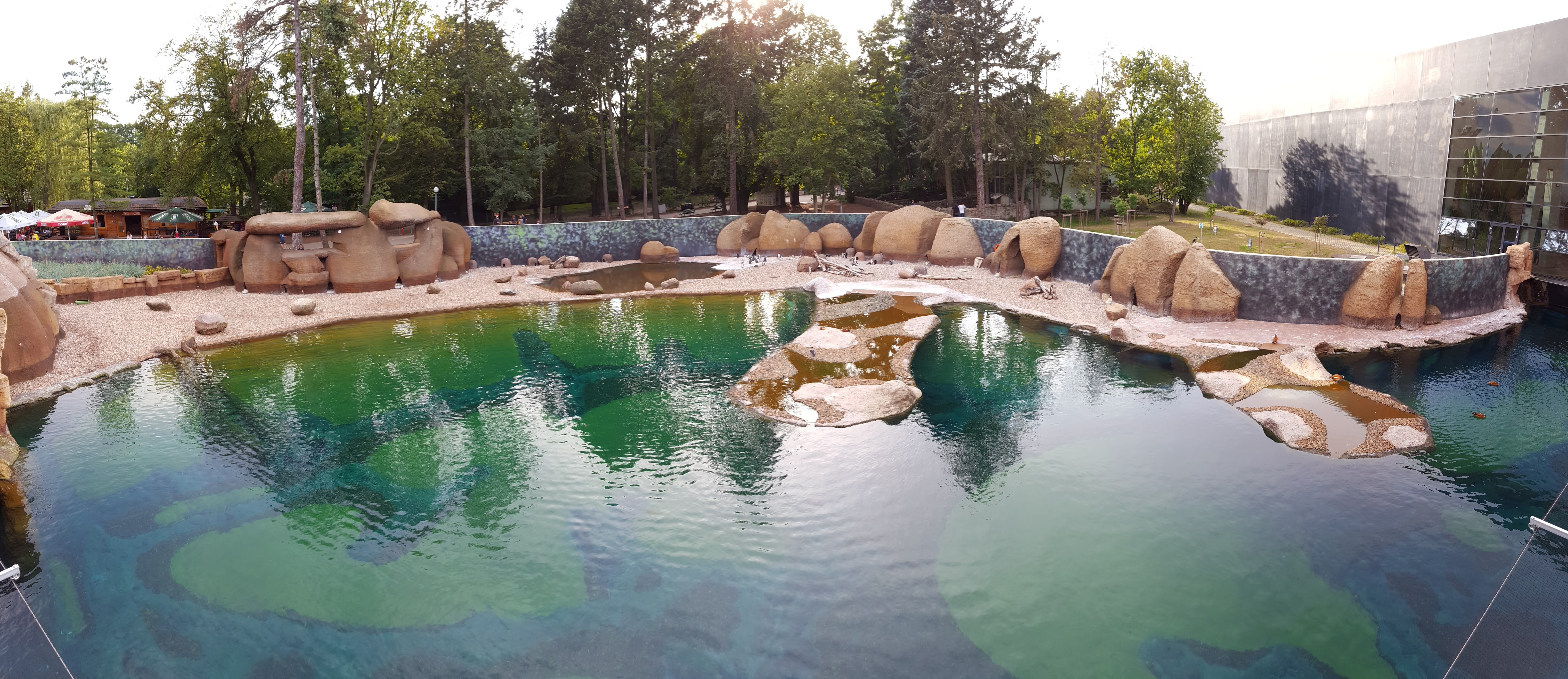
The zoo's biggest draw is the Africarium, opened on 26 October 2014. It was the first oceanarium in Poland to present the fauna of a single continent and, as its creators stress, the only one in the world devoted exclusively to Africa. It occupies about 12 percent of the zoo's area and was the largest investment in the garden's history.
Around 18 million litres of water circulate through its tanks, pumps and filters, the equivalent of six Olympic swimming pools. Visitors follow a route from African coasts and rivers to its deep waters. Residents include fur seals, penguins, crocodiles, hippopotamuses and manatees, along with moray eels, hammer-headed bats, African dormice and Congo peafowl. Young are born here regularly, among them dik-diks, mongooses and naked mole-rats.
How to plan your visit
The garden is large, so set aside most of a day, especially if you want to see the Africarium properly. In warmer months, start with the outdoor enclosures and keep the indoor pavilions for the hottest hours or for rainy weather. More than a million people visit each year, so weekends and holidays can be crowded. Weekday mornings are the quietest.
What else is nearby?
The zoo neighbours the Centennial Hall grounds, the Pergola with its multimedia fountain, and Szczytnicki Park, part of the area Wrocław treats as its leisure zone. After the animals, it is easy to extend your walk to the modernist Hall and the greenery around it.
Frequently asked questions
Is Wrocław Zoo the oldest in Poland? Yes. It opened in 1865 and is the oldest zoological garden in the country.
How many animals live here? About ten and a half thousand individuals from more than a thousand species.
What makes the Africarium special? It is an oceanarium dedicated to the fauna of one continent, with around 18 million litres of water in its tanks.
Is it a good place for children? Yes. The variety of animals, tropical pavilions and spacious enclosures make it well suited to a family trip.
Nearby places

Earn badges for the places you visit
Download NextOnTrip, discover new places and check off your trails.