About this place
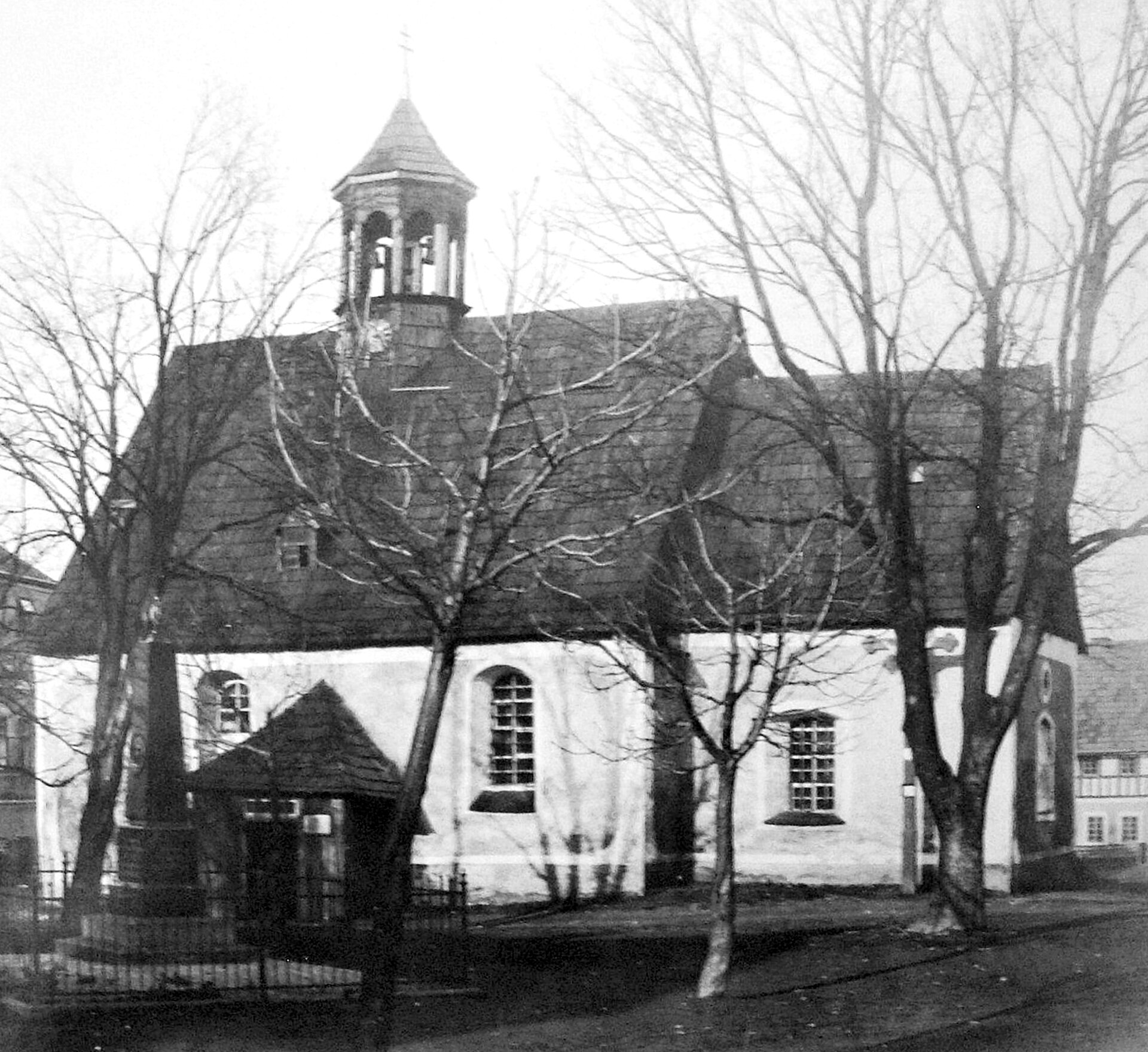
Výsluní - hřbitov is a small, historic churchyard cemetery in the village of Volyně, part of the town of Výsluní in the Chomutov district in northwestern Czechia. The cemetery surrounds the Church of St. Peter and Paul, and together the two form one of the more notable historic sites in this part of the Krušné hory (Ore Mountains).
Where does this cemetery come from?
The church at the center of the site was built in the first third of the 14th century, with the first written mention dating to 1352. The cemetery itself appears in records somewhat later, in a 1484 document that lists it together with the church and the rectory. This means burials have taken place on this spot since at least the late medieval period, serving the residents of Volyně and the surrounding settlements scattered across the Ore Mountains.
What does it look like today?
The cemetery wraps around the church on nearly every side and is enclosed by a stone wall. The main entrance faces south, opening onto a local road through a gate built from stone pillars, flanked by smaller pedestrian passages on either side. This layout — a perimeter wall, a wider gate for carts or larger groups, and side openings for individual visitors — was typical of rural churchyard cemeteries in this region, and it has survived largely intact as a record of the original spatial arrangement.
The Church of St. Peter and Paul itself has been protected as a cultural monument since 1963, a status that effectively extends to the surrounding cemetery grounds as part of the same historic ensemble.
What happened here during World War II?
Volyně was the site of one of the few direct wartime incidents in this area: a British bomber aircraft was shot down nearby during the Second World War. Part of the crew died, and the airmen were buried, at least temporarily, in the village cemetery. Their remains were later transferred to the Olšany Cemetery in Prague, one of the country's largest and best-known burial grounds.
Why is it worth a visit?
This is not a tourist attraction in the conventional sense — there are no ticket booths or visitor facilities. Its appeal lies in its authenticity: a stone wall, a plain gate, and the quiet of a village church set among the Ore Mountains offer a glimpse into a centuries-old, largely unchanged settlement pattern. For anyone interested in local history, sacral architecture, or traces of World War II in Czechia, it makes for a genuine, low-key stop along a route through the Krušné hory.
Frequently asked questions
Is the cemetery still active? Available sources do not specify its current burial status, but the site has been documented alongside the church since at least 1484.
Can the church and cemetery be visited? The church-and-cemetery complex sits within an openly accessible village, though the church interior may be locked outside of services — it's worth checking locally or with the parish beforehand.
What is the historical significance of this site? Beyond its centuries-long religious continuity, the site is linked to a World War II episode: the temporary burial of the crew of a downed British bomber.
Nearby places
-
Svatý Martin (starý)
Kryštofovy Hamry
-

"new" church of Saint Matin in Rusová
Kryštofovy Hamry
-
Church of Saint Nicholas
Kryštofovy Hamry
-
Maria column in Klášterec nad Ohří, Chomutovská, nearby the church
Klášterec nad Ohří
-
Holy Trinity Church (Klášterec nad Ohří)
Klášterec nad Ohří
-
Church of Our Lady (Klášterec nad Ohří)
Klášterec nad Ohří
Earn badges for the places you visit
Download NextOnTrip, discover new places and check off your trails.