About this place
Ve Žlebě is a small protected natural area of roughly 2.55 hectares, spread along a slope between the villages of Jamolice and Dolní Dubňany, within the cadastral territory of the latter. Officially registered as a nature monument (not a nature reserve) under the code CZ0622161, it stretches for about 900 metres and forms part of the Mohelno Highlands — a region known for its dry, sun-exposed slopes of significant ecological value.
Why is this site protected?
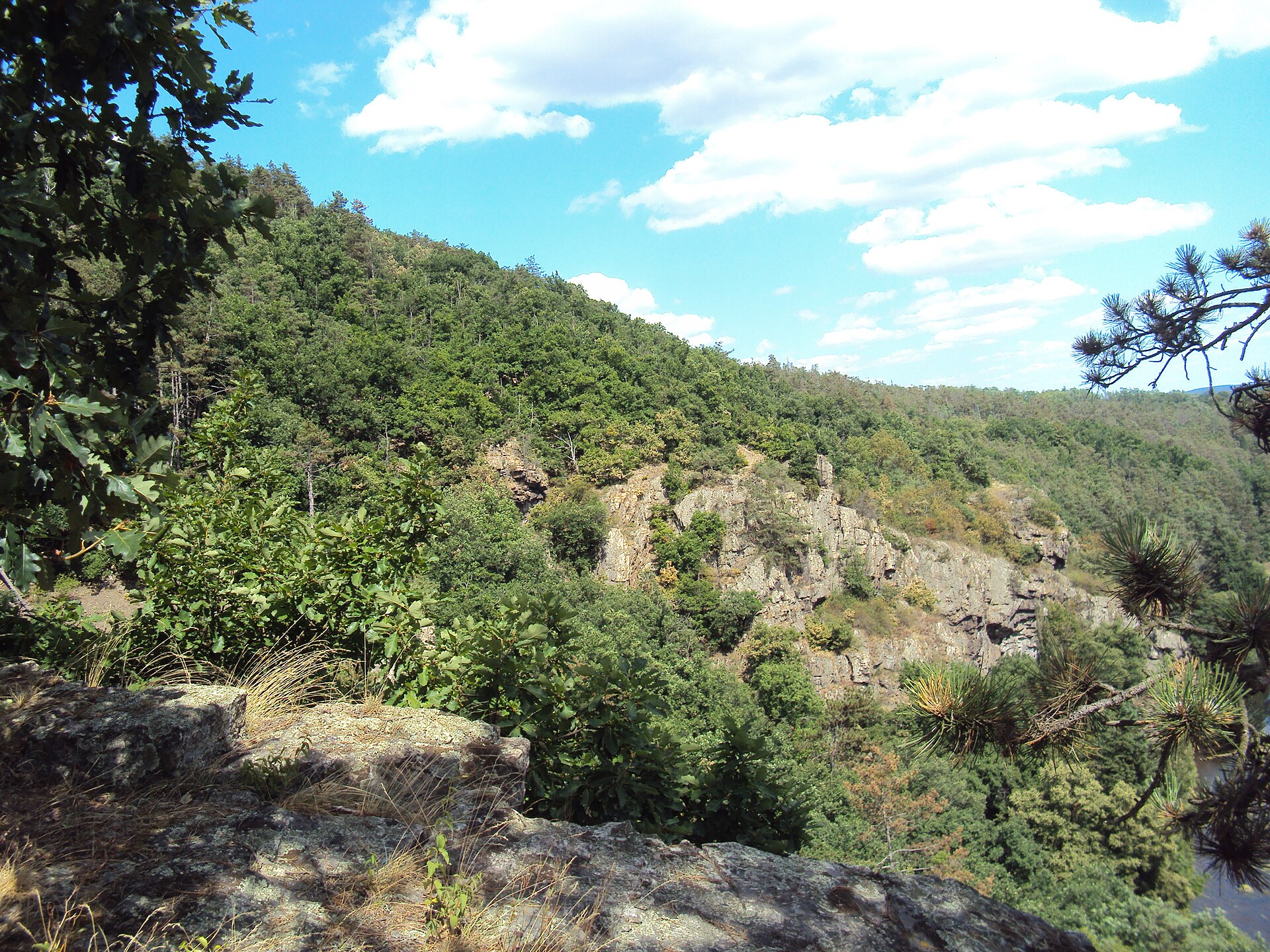
The slopes of Ve Žlebě face mostly west and east, with scattered rock outcrops and remnants of small, disused quarries. This terrain has helped preserve dry grasslands — a habitat type that has been disappearing across much of Central Europe due to overgrowth and changing land use. Small but well-preserved fragments of these grasslands, like the one found here, are exactly the kind of sites that qualify for legal protection.
What can you see here?
The main natural value of Ve Žlebě lies in its populations of pasque flowers — the greater pasque flower (Pulsatilla grandis) and the meadow pasque flower (Pulsatilla pratensis), both of which cover the slope with their distinctive, bell-shaped purple blooms in early spring. Both species are legally protected and were among the main reasons the site was designated as a protected area. Alongside them grows Gagea bohemica, a small early-spring bulbous plant, as well as the lady's slipper orchid and feather grass, a species typical of dry, steppe-like grasslands. This combination of species gives the small site an unusually high botanical value for its size.
What threatens this site?
Like many similar dry grasslands in the region, Ve Žlebě faces pressure from the spread of black locust (Robinia pseudoacacia), an invasive non-native tree that can quickly shade out and outcompete native, light-demanding plants. A second threat is natural succession — grasses and shrubs gradually encroaching on the site where traditional management, such as grazing or mowing, has stopped. Without regular conservation intervention, such grasslands slowly become overgrown and lose their characteristic flora.
Who is this place for?
Ve Žlebě appeals mainly to nature lovers, amateur botanists, and anyone looking for a quiet walk through the Mohelno Highlands away from crowds. The best time to visit is early spring, when the pasque flowers bloom and the slope is at its most striking. Though modest in size, the site is a representative example of the landscape still found around Moravský Krumlov and Znojmo.
Frequently asked questions
What is Ve Žlebě? It is a nature monument covering about 2.55 hectares, protecting dry grasslands on a slope between Jamolice and Dolní Dubňany.
What is worth seeing there? Mainly the pasque flowers (Pulsatilla grandis and Pulsatilla pratensis) blooming in spring, along with rare plants such as Gagea bohemica and the lady's slipper orchid.
When is the best time to visit? Early spring, during the pasque flower blooming season, when the slope looks its most picturesque.
Is the site under threat? Yes — the main threats are the spread of invasive black locust trees and natural overgrowth of the grassland by shrubs and grasses.
Nearby places

Earn badges for the places you visit
Download NextOnTrip, discover new places and check off your trails.