About this place
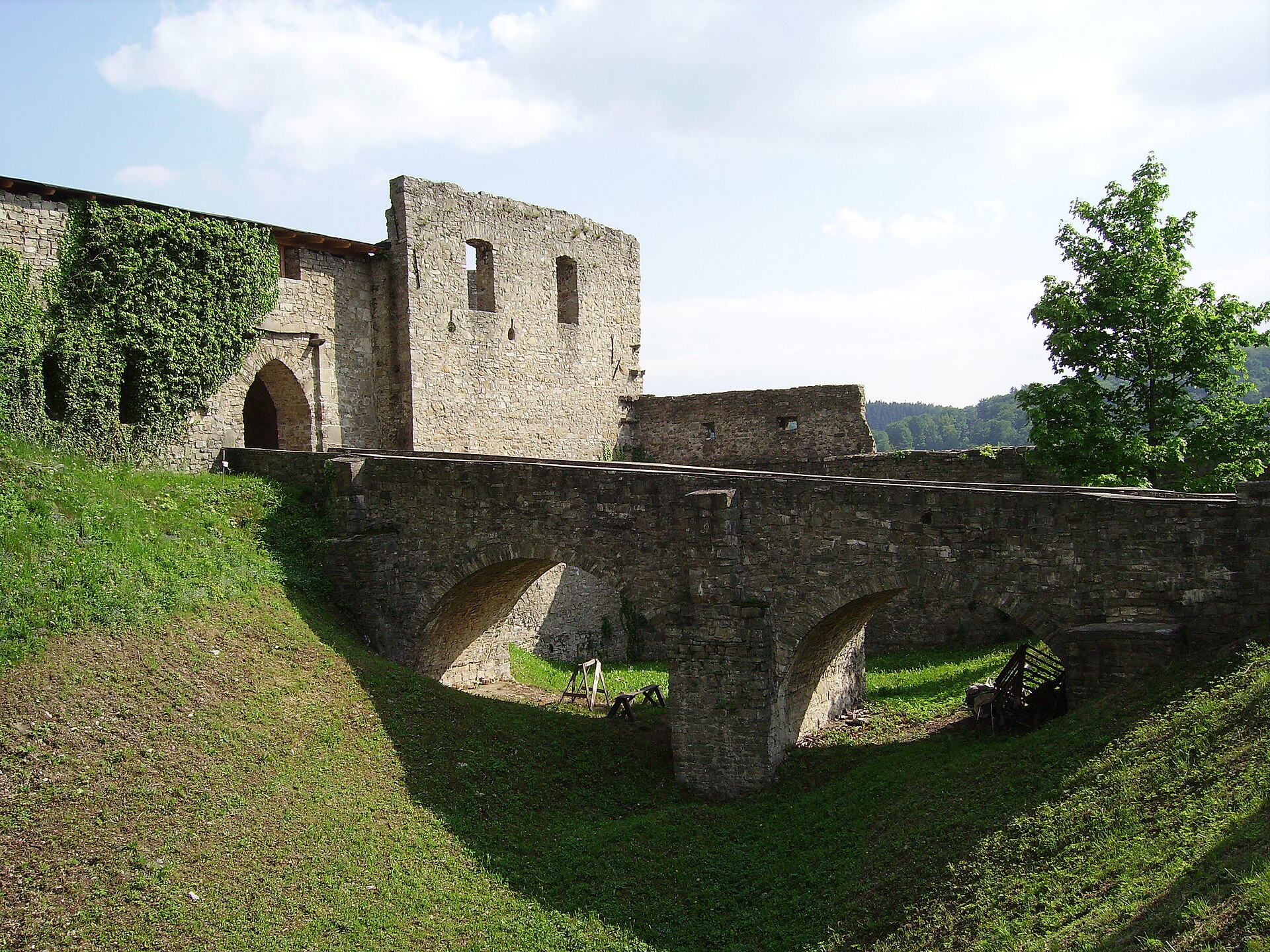
Trúba is a cylindrical tower rising above Štramberk — the most important, and today essentially the only visible, remnant of the medieval Štramberk Castle, also known as Strahlenberg. It stands on the Zámecký vrch hill just northwest of the town's market square and has long served as a lookout tower, offering views over the Moravian-Silesian Beskids and the surrounding Nový Jičín area.
How do you get to Trúba?
Because the tower sits on a hill directly above Štramberk's historic center, the easiest approach is on foot from the market square — the climb takes roughly ten to fifteen minutes along a steep street and a path that crosses the grounds of the former castle. Visitors arriving by car park in the town itself, since there is no parking directly beneath the tower and the final stretch has to be covered on foot. Štramberk's location near Kopřivnice and Nový Jičín makes it easy to combine a visit with other regional sights.
What's the history behind the castle?
The castle on Zámecký vrch was most likely founded in the second half of the 13th century, after the year 1200, on the initiative of the Benešovic noble family. It served as a guard post, watching over a trade route running from the Opava region into Hungary. Over the following centuries the fortifications gradually deteriorated, and in 1783 part of the walls collapsed, with the rest subsequently dismantled; the castle then lay in ruins for more than a century. The turning point came in 1899, when the site was taken over by the Klub českých turistů (Czech Tourist Club). Its local branch began restoring the tower on 19 October 1902, following a design by architect Kamil Hilbert, and the work — which cost 11,000 crowns — concluded with the tower opening to visitors on 1 June 1904.
What will you see on site?
The tower itself stands about 40 meters tall with a diameter of 10 meters, perched at 508 meters above sea level on a rocky spur overlooking the town. Its cylindrical shape and thick walls point to its original defensive role — this was a "last-refuge" tower where the garrison would retreat if the castle came under attack. Today an internal staircase leads to the top, and the viewing platform opens onto a panorama of Štramberk's rooftops, the hills of the Moravian-Silesian Beskids, and nearby towns including Kopřivnice and Nový Jičín.
When is the best time to visit?
The tower is open on a seasonal basis, and the best time to visit is spring through late summer and early autumn, when visibility is at its best and the paths around the castle grounds are dry and pleasant for walking. It's worth timing your visit for late morning or late afternoon, when Štramberk sees fewer tourists and the light is more favorable for photographing the panorama.
Frequently asked questions
What was Trúba before it became a lookout tower? It was the defensive tower of the medieval Štramberk Castle (Strahlenberg), founded in the 13th century by the Benešovic family as a guard post along the trade route from the Opava region to Hungary.
When did the tower open to visitors as a lookout point? Following restoration led from 1902 to a design by Kamil Hilbert, the tower opened to the public on 1 June 1904.
How tall is Trúba and how high up does it stand? The tower is about 40 meters tall with a 10-meter diameter, and the hill it stands on reaches 508 meters above sea level.
What can you see from the viewing platform? A panorama of Štramberk, the hills of the Moravian-Silesian Beskids, and the surrounding area including Kopřivnice and Nový Jičín.
Nearby places

Earn badges for the places you visit
Download NextOnTrip, discover new places and check off your trails.