About this place
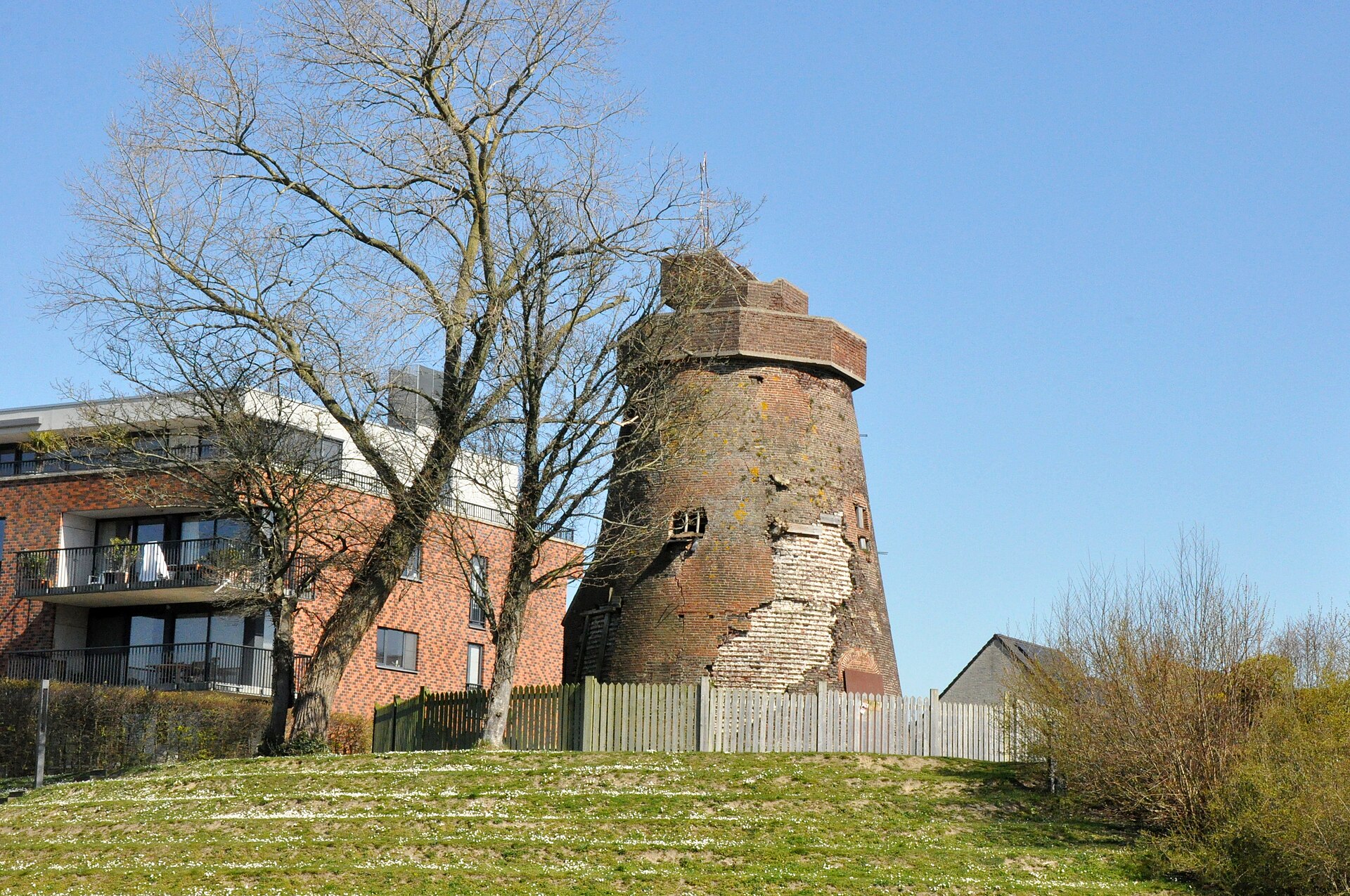
Teerlingmolen is the surviving tower of a windmill in Aalter, a municipality in the East Flanders province of Belgium. Also known as Warandemolen or Oude Molen, it stands today as a brick tower within the Warandepark, a quiet green space that preserves a piece of the town's industrial past.
Where did the mill come from?
The site's milling history goes back to 1769, when a post mill was first built here to serve as an oil mill, pressing oil from oilseeds — a common rural trade across Flanders at the time. The name Teerlingmolen reflects the local naming pattern typical of Belgian windmills, which were often named after nearby streets, farms, or the families who ran them.
How did the structure change over time?
In 1862 the original wooden post mill was replaced with a round stone tower, a sturdier construction that reflected the broader modernization of milling technology in 19th-century Belgium. Two decades later, in 1882, a steam engine was installed in an adjoining building, allowing the mill to keep grinding regardless of wind conditions and boosting its output.
Who ran the mill?
Several generations of local millers are tied to this site. Guillaume Waelput, an early operator, was succeeded by his son-in-law Pieter-Jozef Van Ryckeghem, who ran the oil mill until 1801 while also serving as an alderman of Aalter between 1790 and 1793. Through the 19th century the mill and its adjoining farm passed to the De Smet milling family: Henri De Smet arrived from nearby Maldegem around 1800, at just 22 years old, beginning a long family association with the Teerlingmolen.
What happened to the mill in the 20th century?
The mill's working life as a grinding operation ended relatively early — from 1924 onward the tower was used simply as a storage building. During the Second World War it took on an entirely different role, serving as a lookout post, an adaptation common for tall masonry mill towers that offered a clear view over the surrounding countryside.
How did the mill end up in public hands?
For most of the 20th century the land around the mill remained in private ownership tied to the development of the surrounding area. In 2009 the developer behind the "De Warande" residential estate transferred the mill tower to the municipality of Aalter, allowing it to become part of the public Warandepark and be preserved as a piece of local industrial heritage.
Is Teerlingmolen worth visiting today?
Although the mill no longer has its sails or working machinery, the tower remains a distinctive landmark on Aalter's skyline and an interesting stop for anyone curious about the region's rural industrial history. The surrounding Warandepark makes for a pleasant walk, and information panels in the area help visitors understand the role windmills once played in the economy of small Flemish towns.
Frequently asked questions
Is Teerlingmolen still operational as a mill? No, milling activity ended long ago; from 1924 the building served other purposes, including storage and, during World War II, as a lookout point.
Can visitors go inside the tower? Only the masonry tower survives; access to the interior depends on current arrangements made by the Aalter municipality, so it is worth checking locally before visiting.
Where exactly is the mill located? Teerlingmolen stands within Warandepark in Aalter, East Flanders, close to the town center.
Nearby places

Earn badges for the places you visit
Download NextOnTrip, discover new places and check off your trails.