About this place
The Swedish Grave is a modest roadside memorial near the railway station in Kovářská, in the Ore Mountains (Krušné hory), commemorating a tragedy from the Thirty Years' War. The inscription recalls Swedish soldiers who died in a nearby peat bog in March 1641 — a site still known locally as "Rašeliniště smrti", the Marsh of Death.
What does this memorial commemorate?
The memorial marks an event from March 1641, when a Swedish unit, retreating after its defeat at the Battle of Přísečnice, was making its way through the area around Kovářská toward the border at České Hamry. Bad weather and a snowstorm drove the soldiers off the road and into a snow-covered peat bog. According to local tradition, around 850 Swedish soldiers drowned in the mire — a figure that has stuck in local memory for centuries and given the site its present-day name.
How do we know this actually happened?
For nearly three centuries the tragedy survived mainly as oral tradition among local residents. Confirmation came only in 1924, when peat extraction at the site uncovered weapons along with the remains of soldiers and horses. The find matched the local story of the lost unit and prompted a more lasting way of marking the site.
What does the memorial look like today?
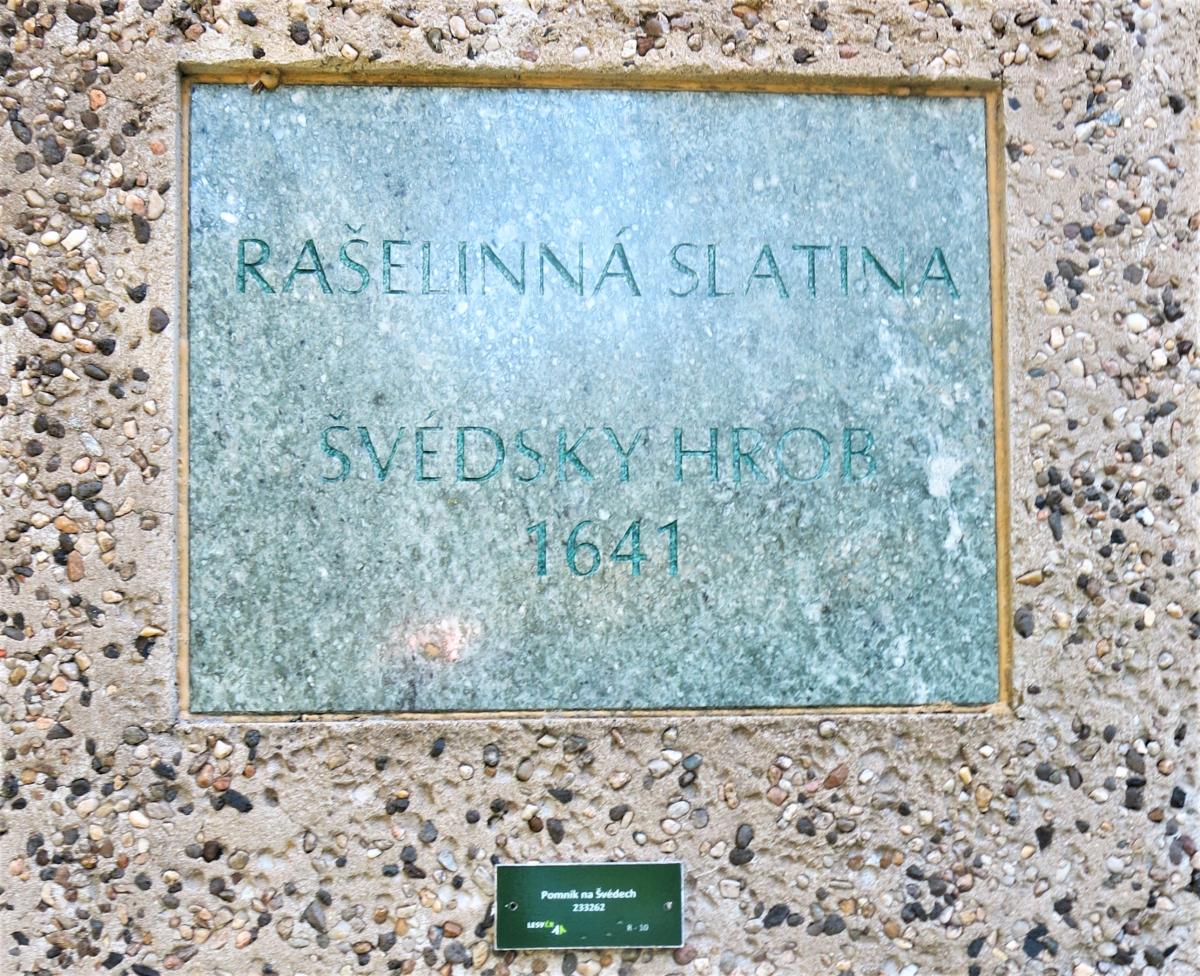
In 1932, a few years after the discovery, a stone monument was erected here bearing a plaque inscribed "Švédský hrob 1641 – Rašeliniště smrti" (Swedish Grave 1641 – Marsh of Death). The original metal plaque was later stolen and replaced with a smaller stone plate carrying a shorter inscription, "Rašelinná slatina – Švédský hrob" (Peat Marsh – Swedish Grave). The stone base itself has remained in place and is what visitors see today at the roadside.
Where exactly is it located?
The memorial stands beside the road, a short distance past Kovářská railway station, at an elevation of roughly 850 metres above sea level, amid the meadows and former peat bogs typical of the Ore Mountains landscape. It lies off the region's main tourist routes, so most visitors are people specifically seeking out this particular place of remembrance rather than casual passers-by.
Why is it worth a visit?
The site's value is primarily historical rather than scenic or architectural — it ties the quiet landscape of the Ore Mountains to a documented episode of the Thirty Years' War. For anyone interested in regional history, 17th-century warfare, or local legends, it makes an unexpected but meaningful stop, a reminder that today's peaceful meadows and bogs once hid a dramatic event. It pairs well with a visit to Kovářská itself and the surrounding villages of the Ore Mountains.
Frequently asked questions
What is the Swedish Grave in Kovářská? It is a memorial commemorating Swedish soldiers said to have drowned in a peat bog in March 1641, during the Thirty Years' War.
How many soldiers reportedly died here? According to local tradition, around 850 Swedish soldiers died in the bog after losing their way during a snowstorm.
How do we know the event actually happened? In 1924, peat extraction at the site uncovered weapons and the remains of soldiers and horses, confirming earlier oral accounts.
When was the memorial built, and what does it look like now? It was built in 1932. The original metal plaque was stolen and later replaced with a smaller stone plate reading "Peat Marsh – Swedish Grave."
Where exactly does the memorial stand? Beside the road near the railway station in Kovářská, at an elevation of about 850 m, in the Ore Mountains (Krušné hory).
Nearby places

Earn badges for the places you visit
Download NextOnTrip, discover new places and check off your trails.