Save this place and discover nearby attractions with NextOnTrip
In the app you can add it to your favorites, see what else is worth visiting nearby on the map, and earn a badge for your visit.
The app is available for iPhone and Android.
About this place
Štefánikovo náměstí is a quiet square in Jihlava, Czech Republic, best known today for its shaded avenue of old oak trees — though a century ago this same spot was home to a cinema, a swimming pool and a shooting range.
Where is Štefánikovo náměstí located?
The square sits near the Vysočina Regional Authority building (Krajský úřad) and right behind the Tomáš Garrigue Masaryk elementary school. The nearby street name Na Hliništi still echoes the area's original use: clay was dug here for brick-making.
What used to stand on this square?
The site's history goes back to the 16th century, when it was covered by the Cihlářský pond, named after the cihláři (brickmakers) who lived nearby. The pond was drained between 1825 and 1830, and two smaller ponds that remained afterward disappeared from the landscape later on.
Around the turn of the 20th century, the area took on recreational and social functions. Between 1912 and 1923, a wooden cinema called Elite Kino-Theater operated here, designed by architect Arthur Corraza and run by local resident Franz Klimsch. The building stood near Žižkova street, across from today's regional government office.
An even older tradition belongs to the local shooting club: the Střelecký spolek was founded back in 1499, and the shooting range building itself was constructed in 1798. Today the building houses a lighting fixtures shop.
When did the swimming pool on Štefánikovo náměstí close?
The pool was built in 1949 by converting a former fire-reserve water tank. It measured 25 meters, had six lanes and starting blocks. It operated until 1958, when a new pool opened on Evžena Rošického street, closing this chapter of the square's recreational history.
Where did the oak alley come from?
The alley that now defines the square's character was planted in 1871, with 42 oak trees. Over the following century and a half, the trees grew into a dense, shaded row that is unusual to find at the center of a town this size. It's this alley that gives Štefánikovo náměstí its current identity as a calm rest area, standing in contrast to the busier parts of Jihlava.
What can visitors see here today?
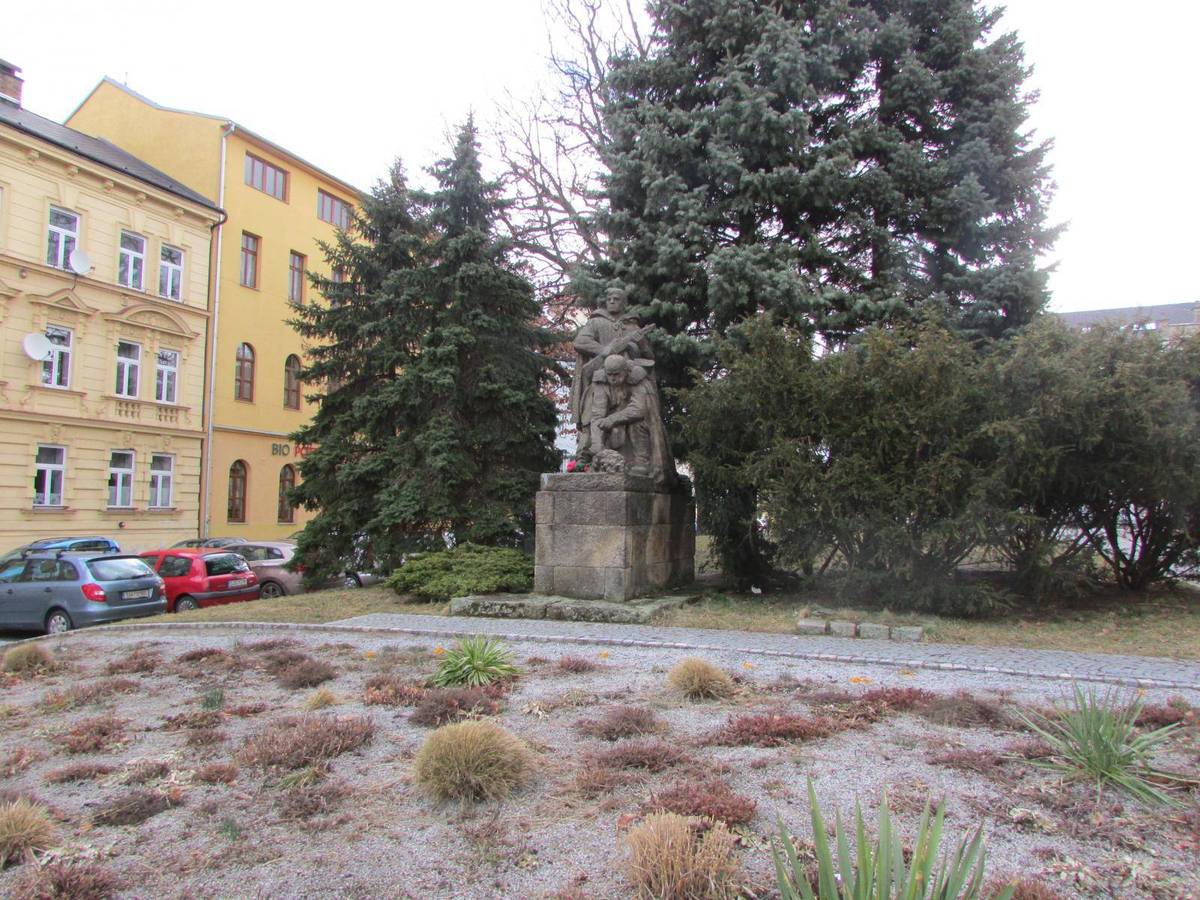
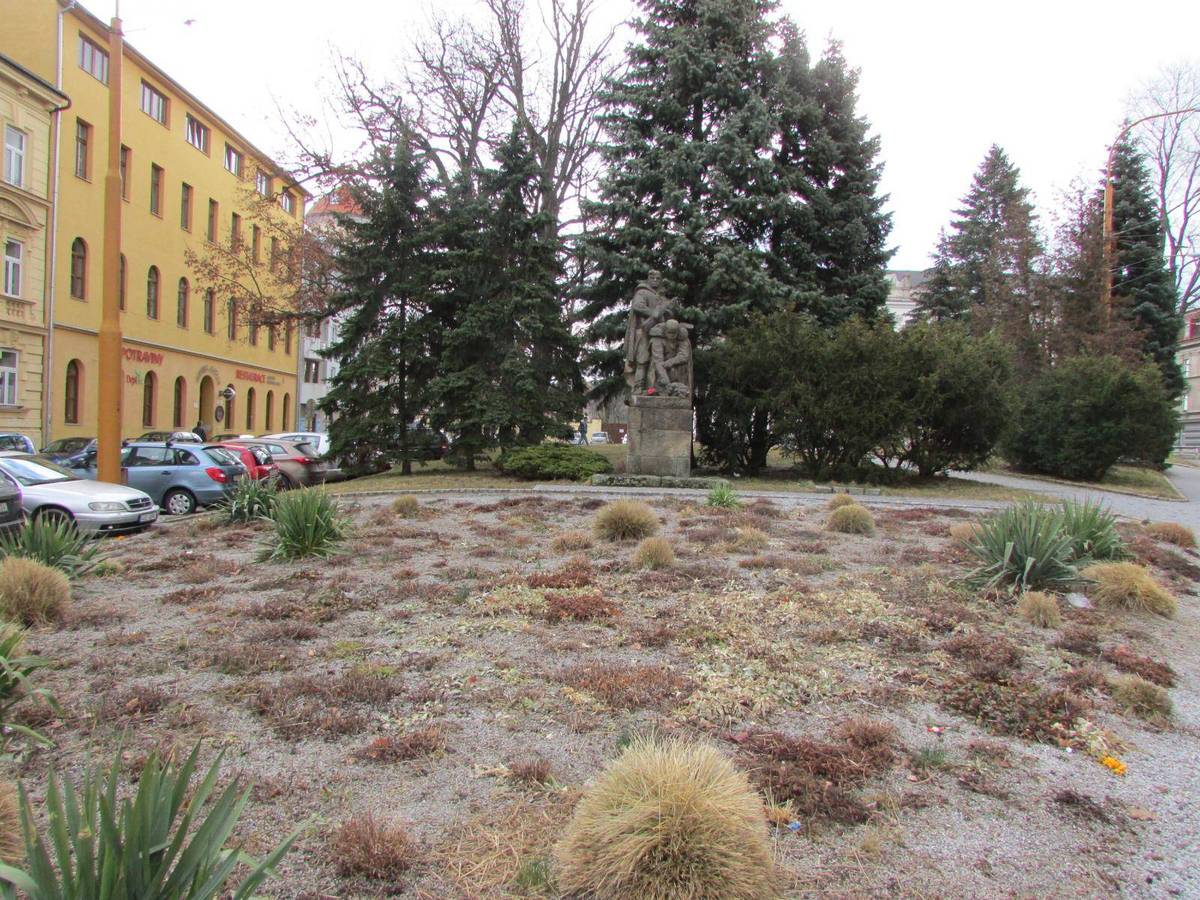
The modern square is defined mostly by greenery and quiet — a place for a shaded walk away from the town's commercial center. A few local venues operate nearby, including Rock Café Zeppelin. The square itself has no historic buildings comparable to Jihlava's protected old town, but its value lies in a layer of history that isn't visible at first glance: a former pond, a cinema, a shooting range and a swimming pool, all of which have left behind only greenery and a street name.
Frequently asked questions
What was the Cihlářský pond? A pond that existed from the 16th century where the square now stands, named after the brickmakers who lived in this part of Jihlava. It was drained between 1825 and 1830.
Was there ever a cinema on Štefánikovo náměstí? Yes. Between 1912 and 1923, a wooden cinema called Elite Kino-Theater operated here, designed by architect Arthur Corraza.
How old is the shooting club connected to this square? The Střelecký spolek was founded in 1499, and the shooting range building was constructed in 1798.
Is the swimming pool on the square still open? No. The pool, built in 1949 from a former fire-reserve tank, closed in 1958 when a new pool opened on Evžena Rošického street.
Where did the square's oak alley come from? From a planting carried out in 1871, when 42 oak trees were put in the ground. They now form the square's main natural feature.
Nearby places

Earn badges for the places you visit
Download NextOnTrip, discover new places and check off your trails.