About this place
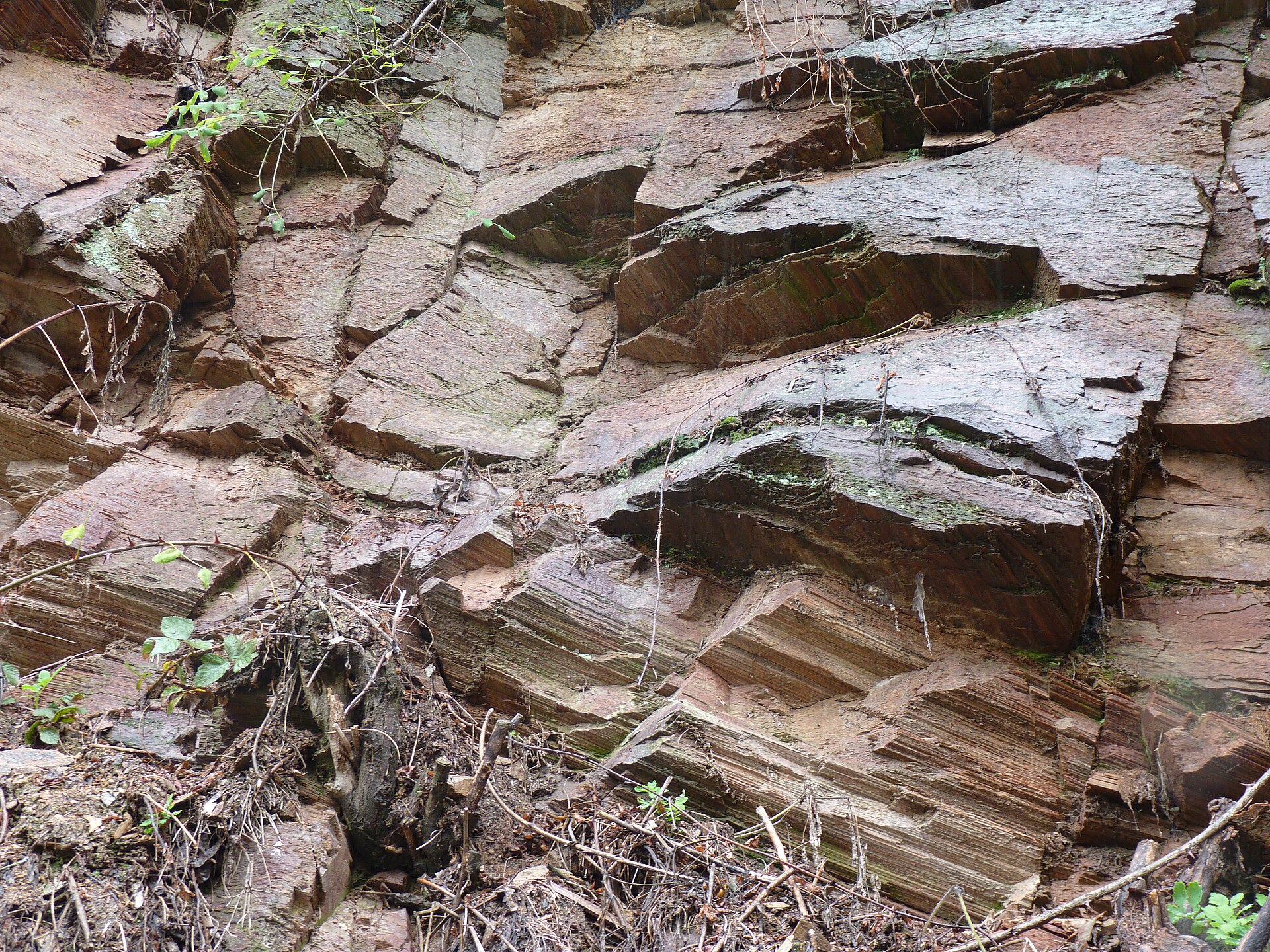
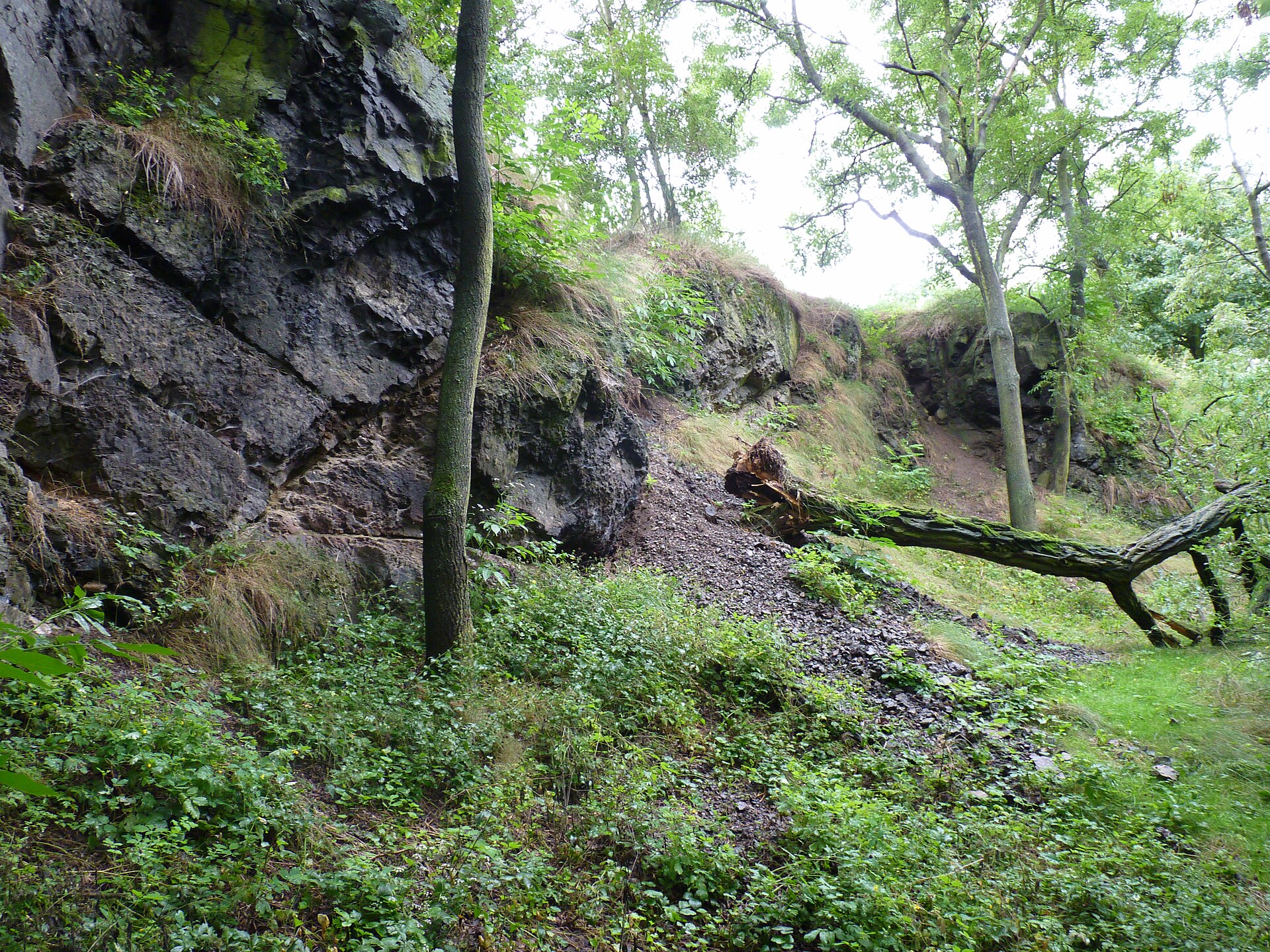
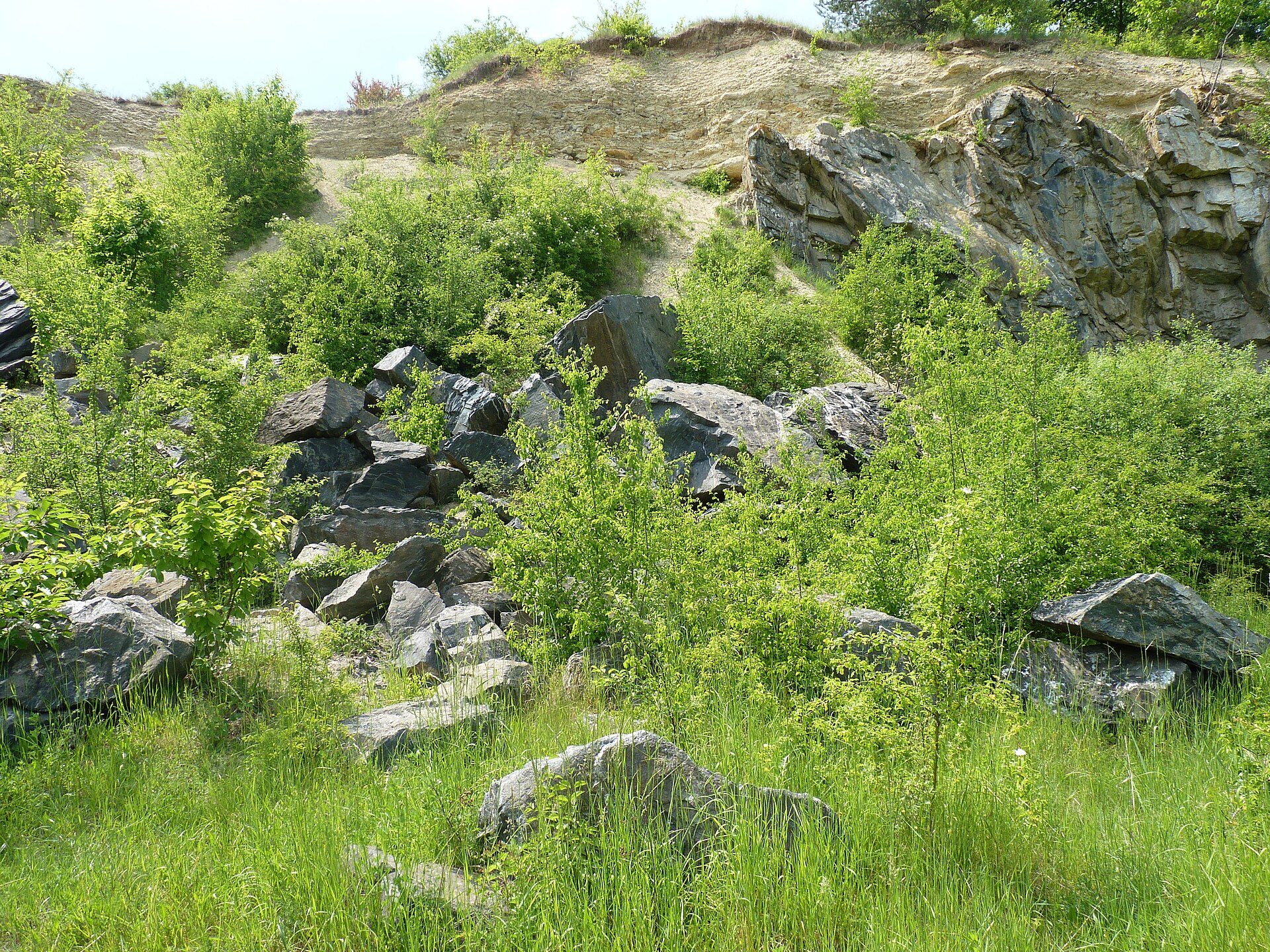
Stébelnatá rula is a small but geologically fascinating natural monument located in the cadastral area of the village of Doubravčany, part of the municipality of Zásmuky, in the Kolín District of the Central Bohemian Region. The protected site preserves a section of a former quarry where a distinctive, fibrous variety of gneiss from the Kutná Hora crystalline complex is exposed.
What is there to see?
The heart of the site is a quarry wall roughly 7 metres high. It is here that the rock reveals the texture that gave the locality its name: the surface looks almost wood-like, with patterns resembling the grain or rings of a cracked tree trunk. This effect is created by the arrangement of dark minerals — biotite and amphibole — alternating with lighter minerals such as feldspar, quartz and muscovite. The resulting bands stretch for several metres in length while remaining only a few millimetres thick, giving the rock a delicately braided or fibrous appearance.
Why is the site protected?
The area was placed under protection in 1977 precisely because of the rarity of this geological structure. The protected zone itself is tiny — just 259 square metres — making Stébelnatá rula one of the smallest, and most tightly defined, natural monuments in the region. Despite its modest size, the site carries significance beyond its local scale: the fibrous texture of the Doubravčany gneiss is referenced in geological literature as a textbook example of this particular type of metamorphic rock structure.
How did this rock texture form?
The gneisses found around Kutná Hora belong to one of the oldest and most varied rock complexes in the Czech Republic. Metamorphism — the transformation of rock under intense heat and pressure deep beneath the surface — produced, in certain parts of this complex, a distinctive linear texture. At Stébelnatá rula, minerals became aligned into clear, elongated bands rather than forming the more typical alternating layers seen in most gneisses. It is this rarer arrangement of minerals that gives the rock its wood-like appearance, and it also explains the Czech name of the site, which translates roughly as "fibrous" or "stalk-like gneiss."
Who is this site for?
Stébelnatá rula appeals mainly to visitors with an interest in geology, petrography and the natural history of Central Bohemia — from curious amateurs to specialists looking for a field example of an unusual rock texture. Given its small footprint and the character of a former quarry, a visit typically takes only a short while, but it can make an interesting stop as part of a longer trip through the Zásmuky and Kolín area, a region well known for its rich mining and geological history around Kutná Hora.
Frequently asked questions
What does the name "Stébelnatá rula" mean? The name refers to the fibrous, stalk-like structure of the gneiss visible on the rock face — minerals arranged into long, thin bands resembling blades of grass or tree rings.
When was the site placed under protection? The area received legal protection in 1977.
How large is the protected area? The natural monument covers 259 square metres, with the exposed rock wall reaching approximately 7 metres in height.
Where exactly is the site located? It lies within the cadastral territory of the village of Doubravčany, part of the municipality of Zásmuky, in the Kolín District of the Central Bohemian Region.
Nearby places

Earn badges for the places you visit
Download NextOnTrip, discover new places and check off your trails.