Save this place and discover nearby attractions with NextOnTrip
In the app you can add it to your favorites, see what else is worth visiting nearby on the map, and earn a badge for your visit.
The app is available for iPhone and Android.
About this place
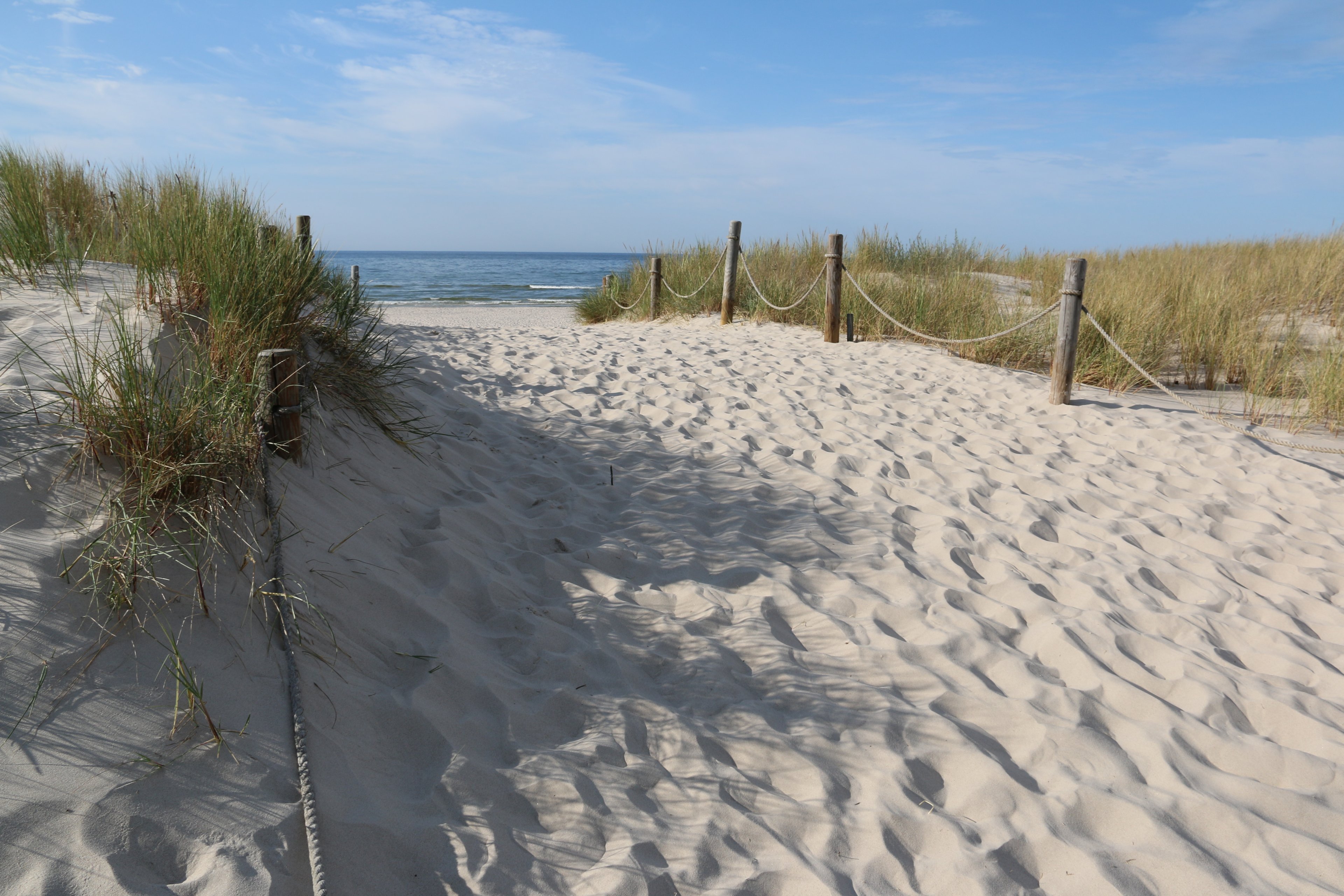
Słowiński National Park (Slovincian National Park) is one of Poland's twenty-three national parks, established on 1 January 1967. It covers roughly 327 km2 of the Baltic coast in Pomeranian Voivodeship, between Łeba and Rowy. It is best known for its shifting dunes, which look like a slice of desert right beside the sea.
Where is the park located?
The park runs along the Baltic Sea, and its northern boundary follows more than 32 km of coastline. Behind the beach comes a belt of dunes, then coastal lakes, peat bogs and forest. Such a variety of landscapes in a compact area is unusual, and it draws walkers, photographers and birdwatchers alike. Łeba is the main gateway to the park, while Rowy is a good base on the eastern side.
What are the moving dunes?
The moving dunes are the park's signature. Wind pushes the sand slowly inland, burying trees in its path, and over time the skeletons of former forests emerge from beneath it. The highest dunes, such as Łącka Góra, offer wide views over the sea, the lakes and the surrounding woods. Walking on loose sand is tiring, so allow more time than the map suggests and carry water. In summer the dunes can get very hot, with almost no shade.
What lakes and habitats can you see?
Behind the dune belt lie shallow coastal lakes, including Łebsko and Gardno, separated from the sea by sandbars. Meadows, reed beds and wetlands surround them, important for waterfowl and migrating birds. Further inland grow pine forests, and the hollows between the dunes hold damp peatland communities. The park belongs to a network of internationally recognised protected areas, so strict conservation rules apply.
How do you explore the park?
The park has a network of marked walking and cycling trails. From Łeba you can walk to the dunes, cycle, or use transport offered in season. Leaving the marked paths is prohibited, because trampling dunes and habitats damages protected nature. The area also has lighthouses and villages where you can learn about the history of the coast's former inhabitants. Outside the main season the park is quieter, and the empty dunes feel even more striking.
Frequently asked questions
When was the park established? On 1 January 1967.
How big is it? About 327 km2, with more than 32 km of Baltic coastline along its northern edge.
Where is it? In Pomeranian Voivodeship, on the Baltic coast between Łeba and Rowy.
What is the best base? Łeba, from where the moving dunes are easiest to reach. Rowy works well from the east.
Can I leave the trail? No. Dunes and peatlands are fragile, so stay on marked routes.
When is the best time to visit? Spring and autumn are cooler and calmer, while in summer the dunes get very hot, so bring water and a hat. Check current entry rules and fees on the park's official website.
Why visit?
Słowiński National Park combines sea, sand, lakes and forest in one place. It suits a day trip from Łeba as well as a longer stay with several walks in different parts of the park. The scenery changes with the season and the weather, so the same route can look different every time. For families, the dramatic dunes are a draw, and for nature lovers the park offers rich birdlife and many habitat types in a small area. Bring sturdy closed shoes, since sand quickly gets into sandals, and sun protection, because the open terrain offers no shelter from wind or sun.
Nearby places

Earn badges for the places you visit
Download NextOnTrip, discover new places and check off your trails.