About this place
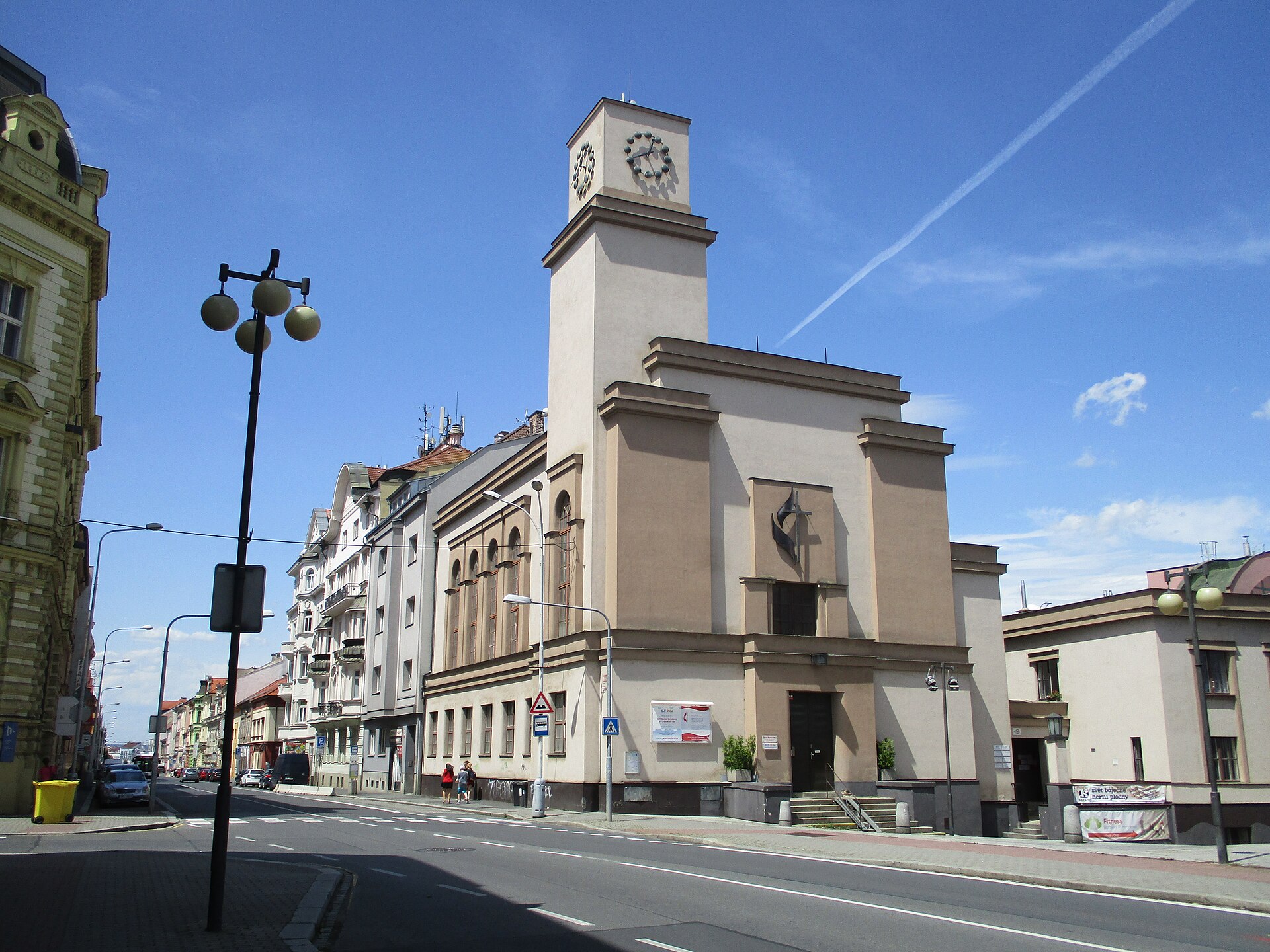
Sbor Karla Farského is a historic church in the southern part of Plzeň, standing at the intersection of Nádražní and Družstevní streets, close to the railway line in the Jižní Předměstí district. The building carries the history of two different denominations – it was built as an Evangelical church, and since the end of the Second World War it has served the Czechoslovak Hussite Church, named after one of its co-founders, priest Karel Farský.
How was the church built?
The foundation stone was laid in June 1865, and construction was completed in September 1869. The church was built at the initiative of the Evangelical congregation of Plzeň, based on a design by architect Václav Daniel. A rectory adjoining the church was built at the same time, forming a coherent architectural complex with the main building.
After the end of the Second World War, the building changed denominational ownership. On 6 May 1945, the church was handed over to the newly established Plzeň congregation of the Czechoslovak Hussite Church, and just a week later, on 13 May 1945, the community held its first service there. In 1950, the parish also took over the neighbouring rectory and a former school building, expanding its facilities.
What architectural style does the church represent?
The church is an example of 19th-century eclecticism, combining neo-Romanesque, neo-Gothic and neo-Renaissance elements in its massing and architectural detail. This mix of historicizing styles was typical of Protestant churches built across the Habsburg monarchy in the second half of the 19th century, when architects freely drew on revival forms rather than committing to a single historical style. The church, together with its rectory, is listed as a protected cultural monument of the Czech Republic as a coherent architectural ensemble.
What happens at the church today?
Sbor Karla Farského remains an active place of worship for the Plzeň diocese of the Czechoslovak Hussite Church, with regular services held inside. The local parish also uses the church interior for cultural purposes, hosting classical music concerts and other public events open to residents and visitors of Plzeň. As a result, the building combines its religious function with the role of a local cultural venue.
Frequently asked questions
Where exactly is the church located? The church stands in the Jižní Předměstí district of Plzeň, at the intersection of Nádražní and Družstevní streets, near the railway line.
Who was Karel Farský, after whom the church is named? Karel Farský was one of the co-founders and the first patriarch of the Czechoslovak Hussite Church, an independent Czech Christian denomination established in 1920.
Was the church originally built for the Hussite congregation? No. The building was constructed between 1865 and 1869 as an Evangelical church. It was only handed over to the Czechoslovak Hussite Church in 1945, after the end of the Second World War.
Can visitors enter the church? The church is an active place of worship, primarily accessible during services and the concerts and cultural events held there.
Who designed the building? The design was created by architect Václav Daniel, who conceived the church in the spirit of 19th-century historicizing eclecticism.
Nearby places

Earn badges for the places you visit
Download NextOnTrip, discover new places and check off your trails.