About this place
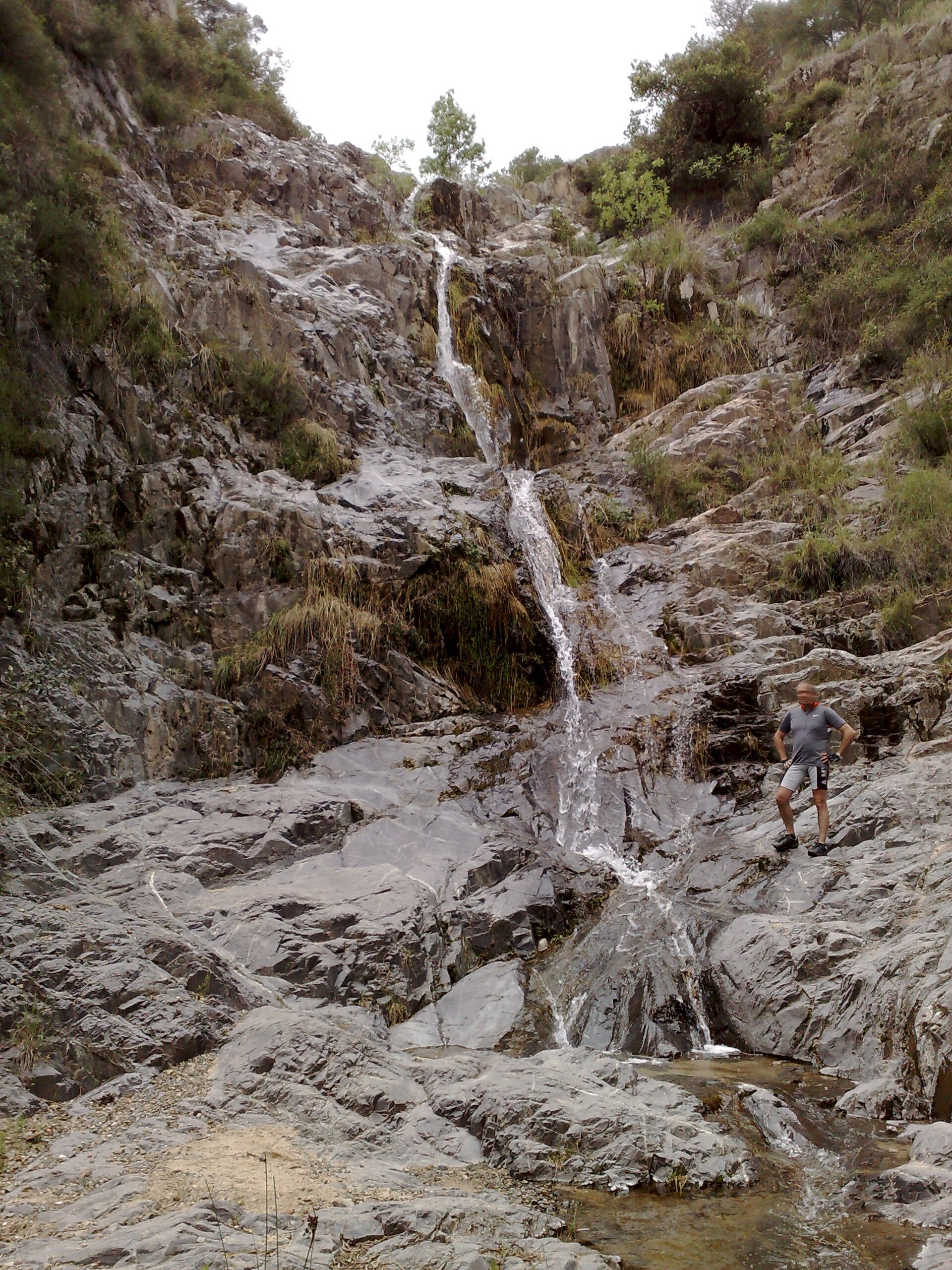
Salt de la Pixera is a small but remarkable waterfall in the municipality of Capafonts, part of the Motllats mountain range within the Prades massif (Baix Camp, Catalonia). Sitting at roughly 950 metres above sea level along the route through Cova de les Gralles and Toll de l'Olla, it's a favourite target for hikers exploring this part of Tarragona province.
What will you see there?
The waterfall drops about 40 metres through a narrow, rocky ravine known as the Barranc de la Pixera. It doesn't flow year-round — the fall only reaches full strength after heavy rain or snowmelt. What sets Salt de la Pixera apart from other Catalan waterfalls is a rare atmospheric effect: when the strong mistral wind (a signature wind of the Camp de Tarragona region) blows and temperatures drop below zero, air funnelled into the rocky basin reverses the direction of the falling water. Droplets are lifted upward, freeze mid-air, and scatter as ice crystals, producing what locals and meteorologists call an "inverted waterfall." The phenomenon has been covered by regional media and weather observers as one of the more unusual natural attractions of the Baix Camp area.
How do you get to Salt de la Pixera?
The starting point is the village of Capafonts, from which a marked hiking trail heads into the Motllats range. The route linking Capafonts, Cova de les Gralles, Salt de la Pixera and Toll de l'Olla is popular with local and regional hikers and is typically walked in a single day. Some stretches cross rocky, uneven ground through forest, so a reasonable level of fitness is needed. Sturdy hiking shoes, water, and a trail map are worth carrying, since signage can be sparse in the deeper parts of the valley.
When is the best time to visit?
Autumn, winter and early spring are the best seasons, when rainfall in the region keeps real water flowing over the fall. In summer, during the dry season, the Barranc de la Pixera streambed is often nearly dry and the waterfall loses much of its visual impact. For anyone chasing rare natural phenomena, the most exciting moments come on days with strong mistral wind and sub-zero temperatures — that's when the "inverted waterfall" effect can appear, though it's occasional and impossible to schedule in advance.
What else should you know before the trip?
The area around Salt de la Pixera lies within the Prades massif, known for dense forests, limestone rock formations and a network of trails connecting nearby villages. Capafonts itself is a small, picturesque village that makes a good base for further exploration of the range — nearby you'll find other viewpoints and caves, including the aforementioned Cova de les Gralles. A trip to the waterfall pairs naturally with a full day on the trail, with stops to rest at nearby springs and viewpoints along the way.
Frequently asked questions
Does the waterfall have water all year round? No. Salt de la Pixera depends on rainfall — flow is strongest in autumn, winter and early spring, while the streambed is often dry in summer.
What is the "inverted waterfall" effect? It's a rare atmospheric phenomenon seen during strong mistral winds combined with below-zero temperatures, where wind pushes the falling water back upward, freezing and scattering it in the air.
How long does the hike from Capafonts take? The route linking Capafonts to Salt de la Pixera, Cova de les Gralles and Toll de l'Olla is a full-day hike through forested and rocky terrain.
Is the trail suitable for children? The uneven, rocky terrain requires a basic level of fitness, so it's not ideal for very young children, but older kids accompanied by adults can usually manage it without major difficulty.
Nearby places

Earn badges for the places you visit
Download NextOnTrip, discover new places and check off your trails.