About this place
Rue Charles Collet is a small street in the village of Haironville, in the Meuse department of France's Lorraine region. It is a quiet, local road typical of the smaller settlements in this area — not a headline attraction, but a good window into everyday life in rural eastern France along the Saulx river.
Where is Rue Charles Collet located?
The street sits at the heart of Haironville, a village of roughly 600 residents spread mainly along the right bank of the Saulx. Haironville lies in the southern part of the Meuse department, in a landscape of small farming communities set among woodland and river valleys. A route through this area dates back to Gallo-Roman times, and traces of that past came to light when sarcophagi were unearthed in the village during the 19th century.
What can be found along this street?
Today, Rue Charles Collet serves as a practical service hub for the village. At number 3, a parcel collection point handles deliveries for residents of Haironville and neighbouring hamlets, and right next to it, at the same address, a small motorhome parking area offers a convenient overnight stop for travellers touring Lorraine by campervan. At number 2, a local nursing practice serves patients from Haironville and the surrounding countryside.
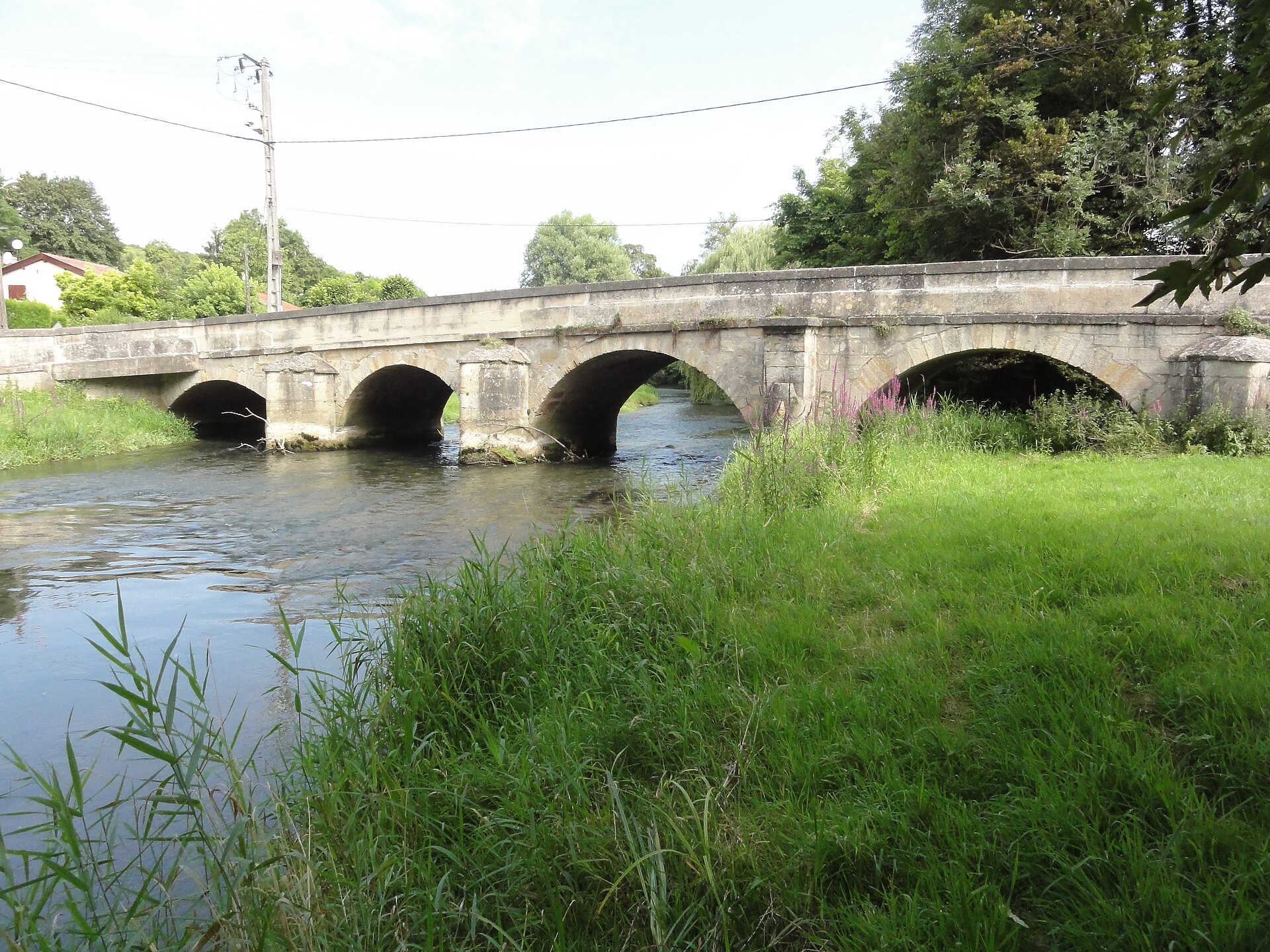
The most notable feature near this street, however, is the bridge crossing the Saulx river, located right on Rue Charles Collet. This structure was listed as a protected historic monument by a decree issued in December 1950, reflecting its architectural and historical value to the region. The bridge remains a defining piece of the village's layout, linking the two banks of the river around which local life has centred for centuries.
What is the history of Haironville?
The village's name shifted over the centuries — the earliest recorded forms, dating from the 12th century, trace back to a Germanic personal name, and subsequent centuries produced a series of spelling variants before the name settled into its current form by the 18th century. Haironville developed from ancient times along a Gallo-Roman era route, a history borne out by archaeological finds: several sarcophagi discovered in the 19th century contained human remains, along with weapons and Roman coins.
Metalworking played a major part in the village's story. As early as the 16th century, an existing mill was converted into a forge powered by a waterwheel driving the bellows. Over time, as competition grew from other Lorraine ironworks, the local works shifted toward rolling thin sheet metal, and by the early 20th century the former foundry had become a sheet-metal workshop. That industrial past still shapes the village's character and layout.
Haironville is also home to three historic houses, including a 16th-century château built as a countryside retreat by notable families from nearby Bar-le-Duc, the historic capital of the region.
Frequently Asked Questions
Is Rue Charles Collet a tourist attraction? Not in itself — it's an ordinary residential and service street. Its main draw is the nearby historic bridge over the Saulx and the authentic, unhurried feel of a small French village.
Can you park a motorhome here? Yes. A motorhome parking area with a handful of spaces sits at 3 Rue Charles Collet, making it a convenient stop for travellers passing through the Meuse region.
How do you get to Haironville? Haironville lies in the southern Meuse department in Lorraine, a short distance from Bar-le-Duc. Driving is the most practical option, using the local roads that connect the region's smaller villages.
What else is worth seeing nearby? Beyond the bridge over the Saulx right on the street, Haironville has several historic houses, including a 16th-century château, and the surrounding countryside offers scenic river landscapes typical of southern Meuse.
Nearby places

Earn badges for the places you visit
Download NextOnTrip, discover new places and check off your trails.