About this place
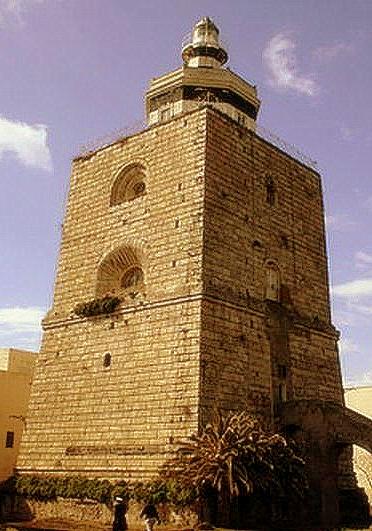
Punta San Raineri Lighthouse marks the northern tip of Messina, right where the Strait of Messina links the Tyrrhenian Sea to the Ionian Sea. It's one of the most recognisable landmarks along this stretch of the Sicilian coast, visible from the seafront, from the ferry, and from ships passing through the strait.
Where exactly is the lighthouse?
The lighthouse stands on the promontory of Punta San Raineri, at the point where Messina's harbour basin opens onto the strait itself. That spot has never been chosen at random — for centuries it has been the strategic point controlling access to the port and shipping traffic between Sicily and mainland Calabria. You may also see it referred to as Torre della Lanterna Montorsoli, or in Italian simply Faro di San Raineri.
How do you get to Punta San Raineri?
The lighthouse sits within Messina's port area, so the most practical way to experience it is from the outside: walk the seafront promenade on the northern edge of the city, take the ferry across the strait to Villa San Giovanni or Reggio di Calabria, or view it from a boat trip along the coast. Because it's an active navigational light, don't expect to walk inside — the appeal here is the structure itself and the setting, not an interior visit.
What will you actually see?
What stands today is a two-storey, octagonal masonry light tower with a lantern and gallery on top, built above a much older, square stone defensive watchtower. The upper octagonal section is painted in black-and-white horizontal bands, the lantern room itself is white with a grey metal dome, while the square base below remains bare, unpainted stone. That contrast — a newer navigational tower rising from an old, rough fortification — tells you a lot about how this lighthouse came to be.
The base, in fact, has a much longer history than the light itself. Local tradition links the tower's foundations to a watchtower attributed to the Renaissance sculptor and architect Giovanni Angelo Montorsoli, though no documentary evidence survives to confirm the claim. What is established is that the stone defensive tower dates to the 16th century (commonly cited as 1555) and formed part of a fortification system ordered in 1546 by Charles V, the Holy Roman Emperor, to defend Sicily against Ottoman raids. Today the lighthouse operates as a fully automated, remotely monitored navigational light guiding vessels in and out of Messina's harbour.
When is the best time to visit?
The Strait of Messina is a striking view in any season, but the lighthouse is at its best in late afternoon or at sunset, when the black-and-white bands stand out sharply against the sky over the strait. Pairing a walk along this part of the city with a ferry crossing is a good way to spend an afternoon — it's also the best way to see the tower from the water, with the Calabrian coast in the background.
Frequently Asked Questions
Can you go inside the lighthouse? No — it's an active, automated navigational light within Messina's port area, so entering the tower isn't a standard tourist option. You view it from outside: the promenade, the harbour, or the ferry deck.
Where's the best spot to see it? The seafront promenade on Messina's northern side and the ferry crossing the strait both give good views — from the water you can see the full structure, including the stone base below the tower.
How old is the lighthouse? The stone defensive tower at its base dates to the 16th century and is linked to fortifications ordered in 1546 by Charles V. The upper octagonal section housing the navigational light is more recent.
Is the Montorsoli connection historically confirmed? It's a local tradition attributing the tower's base to architect Giovanni Angelo Montorsoli, but no documents confirm it — best treated as a legend rather than an established fact.
Nearby places

Earn badges for the places you visit
Download NextOnTrip, discover new places and check off your trails.