About this place
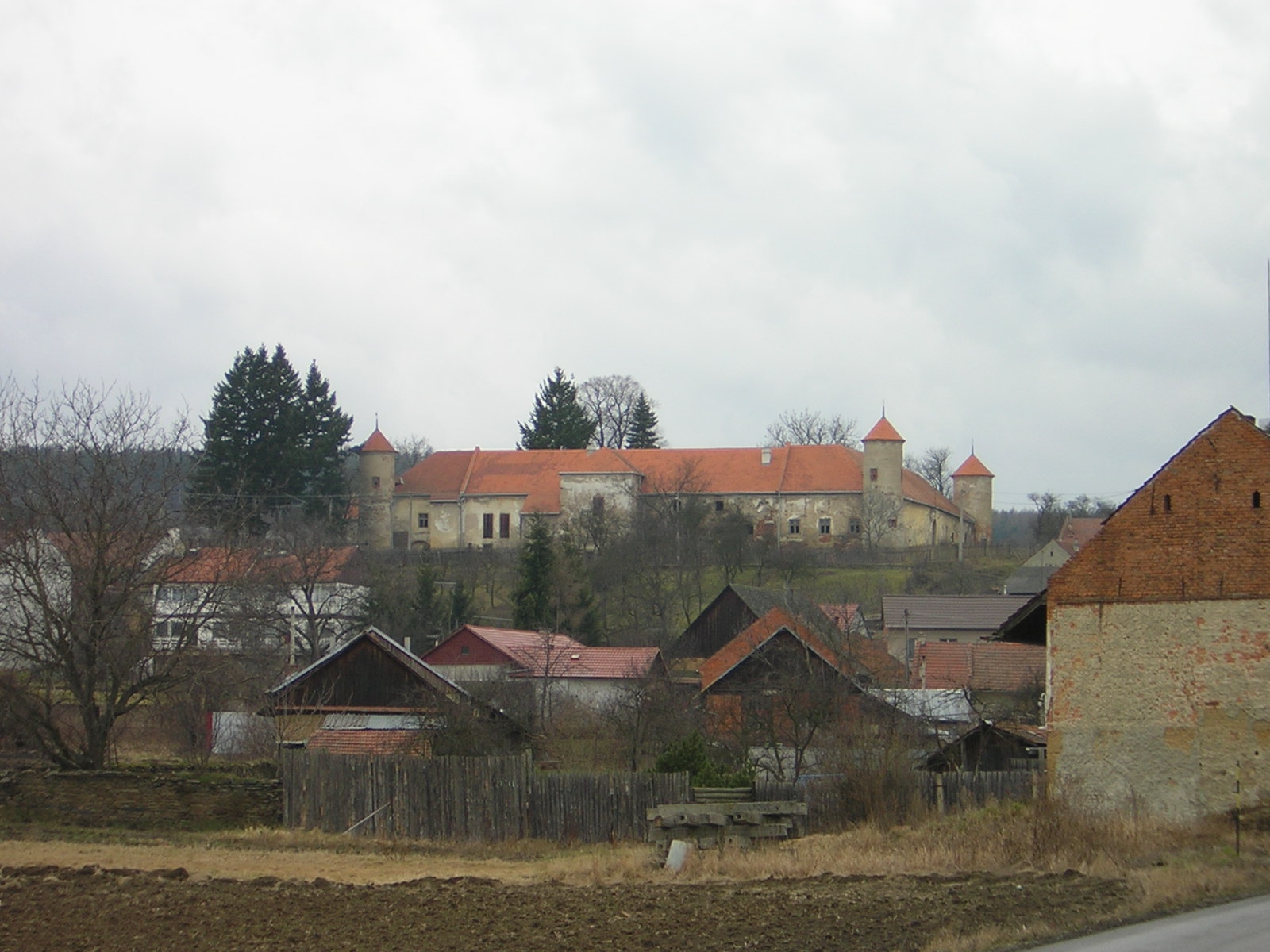
Ptení Castle sits at the centre of the village of Ptení in the Prostějov district of Moravia, and it ranks among the oldest Renaissance castle complexes in this part of Europe. After decades of slow decline, the building is now being brought back to life by a new owner who is restoring it room by room.
Who built the castle and when?
The story of the site begins in 1499, when Jakub ze Šárova, then the highest court judge of the Margraviate of Moravia, started rebuilding an existing fortified manor on the spot. He already owned the neighbouring estate and village of Krumsín, so Ptení became another piece added to his family holdings. Records mention the fortress at Ptení again in 1581, by which time it was run by his grandsons, Jiří and Vilém ze Šárova.
The structure visitors see today, however, took shape at the start of the 17th century. The castle was laid out on a square plan around an inner courtyard, with four round towers at the corners that originally served a defensive purpose. Inside, most rooms were covered with barrel vaults, and the building has seen relatively few later alterations, which is why it still reads as a coherent, unified whole.
How did ownership change over the centuries?
Following the Battle of White Mountain in 1620, the estate was confiscated, and in 1630 it was bought by the imperial colonel Miniatti of Campoli. In 1679 the castle briefly passed to Václav Bernard of Bartoděj before quickly returning to the Miniatti family. Once that family line died out, the property was sold on, and from 1757 it belonged to a convent of Poor Clares based in Olomouc. Under the nuns' ownership the castle was used mainly for agricultural purposes and was not properly maintained, which set off a long period of deterioration. Even so, a decorative park with an orangery was laid out around the grounds in the mid-18th century, suggesting the surroundings were still treated as a place worth showing off.
In 1925, during Czechoslovak land reform, the state took the castle over, and in 1936 the town of Prostějov purchased it from the state. For much of the following decades the building simply crumbled — as late as 2019, local press was still reporting on the unsuccessful search for a buyer willing to invest in saving it.
What is happening at the castle now?
That changed when the castle was bought by musician David Hudeček, known by his stage name Horset, a self-described medieval history enthusiast. He now leads the restoration work in person and personally guides visitors through the rooms he has brought back to life. So far the rebuilt spaces include a knights' hall, a hunting room, a bedroom furnished in Louis Philippe style, and a reconstructed kitchen. A museum is also taking shape, where models and other exhibits tied to the castle's history will be displayed in glass cases.
The castle has opened its doors to the public, and entry is by voluntary donation rather than a fixed ticket price — an unusual approach meant to draw in both locals and visitors to help fund the restoration. Planned opening hours are 11 a.m. to 5 p.m., open every day including Mondays.
Frequently asked questions
Where exactly is Ptení Castle located? In the village of Ptení, in the Prostějov district of the Olomouc Region in Moravia, roughly 14 km west of the town of Prostějov.
Can visitors go inside Ptení Castle? Yes. The current owner has opened the restored rooms to the public and personally guides tours, with admission by voluntary donation.
How old is the castle? The site's history goes back to 1499, though the building's present form dates from the early 17th century.
Who owns Ptení Castle today? It is currently owned by musician David Hudeček, known as Horset, who is personally overseeing its restoration.
Nearby places

Earn badges for the places you visit
Download NextOnTrip, discover new places and check off your trails.