About this place
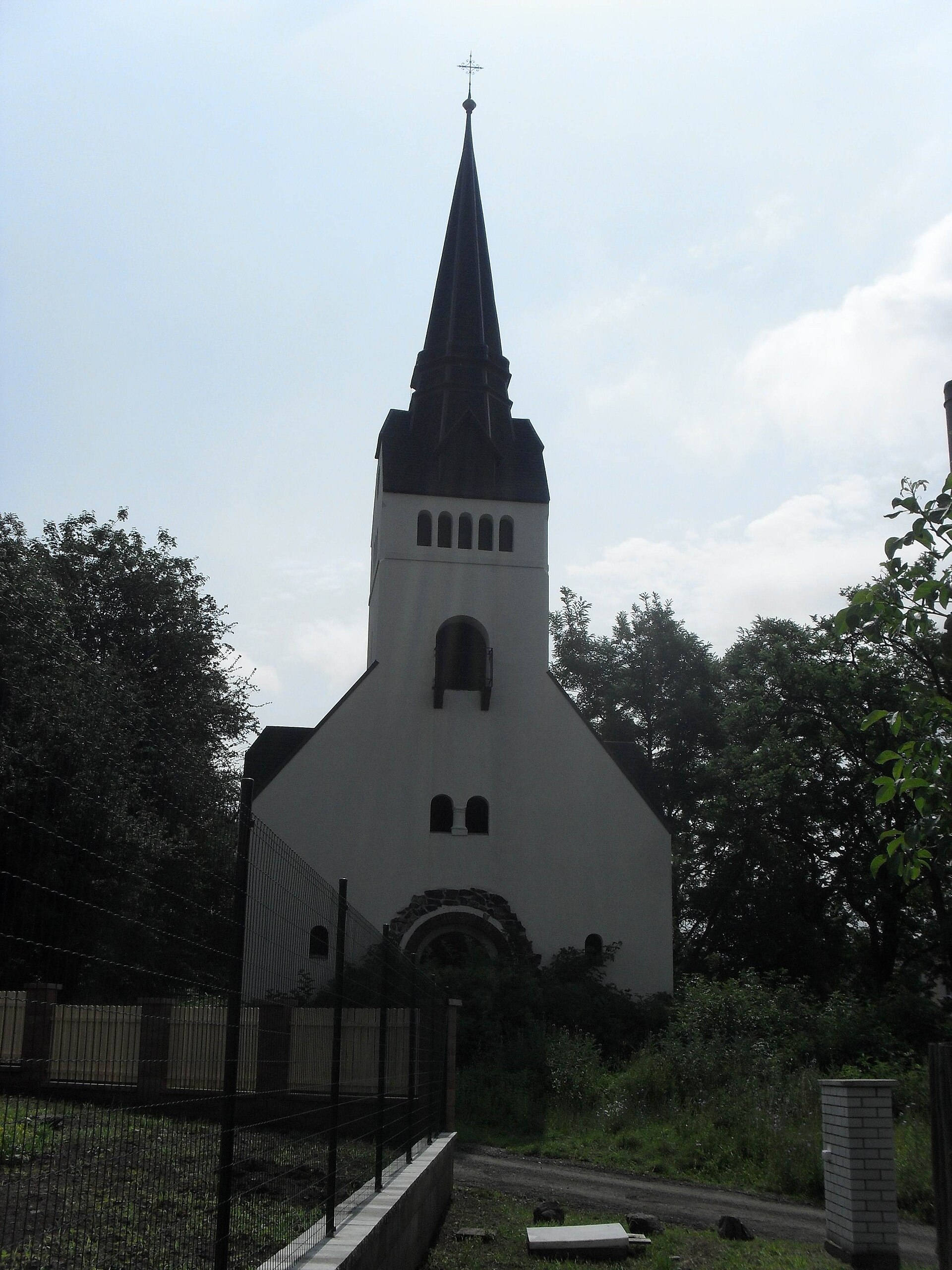
The Protestant church in Bystřany is an abandoned church standing in the upper part of the village of Bystřany, in the Teplice district of northern Czechia. Though the building is now derelict, its shape still recalls a period when this region saw a wave of mass conversions to Protestantism.
Where does this church come from?
The building dates from the turn of the 19th and 20th centuries: construction plans survive from 1902–1903, and the church itself was finished around 1910. It is not an isolated case — it belongs to a group of evangelical churches built at that time across northeastern Bohemia in connection with the "Los von Rom" ("Away from Rome") movement. Through this movement, many German-speaking inhabitants of the Czech lands left Catholicism for Protestant denominations, which meant new places of worship had to be built quickly in many towns and villages across the region.
What does the building look like?
The church was designed as a single-nave building with a gallery, a rectangular presbytery and a tower. The facade and tower feature distinctive paired (coupled) windows, and the overall style blends emerging Art Nouveau influences with a lingering historicism drawing on both Romanesque forms and the Saxon Renaissance. This mix of styles was typical of the more modest Protestant churches built during that period along the Czech-German borderland.
What condition is the church in today?
The building stands on rising ground above the main road running through the village, a position that once emphasized its role as a local landmark. After it stopped being used for worship, the church served for a time as a hay store for a local hunting association. Today it is freely accessible, but in a considerably deteriorated state, the result of decades without regular upkeep. A cast-iron bell that originally hung in the tower was removed several years ago to protect it from theft and is now kept in a shed at the municipal office in Bystřany.
Why is it worth knowing about?
The church in Bystřany is a record of the religious and social changes that swept through the German-speaking parts of Czechia at the turn of the 19th and 20th centuries. It also illustrates the fate of many similar sacred buildings in the region — erected during a period of growth for evangelical communities and later abandoned following the demographic shifts that followed the Second World War. For anyone interested in sacred architecture or the history of the Czech-German borderland, it is a place worth a brief stop while passing through Bystřany.
Frequently asked questions
When was the Protestant church in Bystřany built? Construction plans date from 1902–1903, and the church was completed around 1910.
Why were so many evangelical churches built in the region at that time? It relates to the "Los von Rom" ("Away from Rome") movement, during which many Germans in the Czech lands converted from Catholicism to Protestantism, requiring new churches to be built.
Can the church be visited today? The building is freely accessible, but it is in poor structural condition, so visiting requires caution.
What happened to the church bell? The cast-iron bell was removed from the tower several years ago to prevent theft and is now stored in a shed at the municipal office in Bystřany.
Nearby places

Earn badges for the places you visit
Download NextOnTrip, discover new places and check off your trails.