About this place
Písečný přesyp u Píst is a small yet remarkable natural site in Central Bohemia — a mobile sand dune on the eastern edge of the Kersko-Bory Landscape Park, within the cadastral territory of the village of Písty near Nymburk. The protected area covers only 3.7 hectares, but it ranks among the last surviving sand dunes of this type in the central Elbe (Polabí) lowland.
How did a sand dune end up in the middle of Bohemia?
The landscape, which today resembles a piece of coastal dune terrain transported far inland, took shape during the Quaternary period. The Elbe River repeatedly changed its course, depositing large quantities of gravel and gravelly sand across the area now occupied by Písty. Wind then stripped the finest sand grains from this layer and piled them into aeolian dunes. The result is a dune that still behaves as a mobile sand formation today — a rare and geologically valuable phenomenon for landlocked Central Europe.
Why is the site protected?
Conservation here centers on open continental dune grasslands, a highly specific type of vegetation adapted to extremely poor, dry, and permeable sandy soils. This habitat has allowed plant and animal species rarely found elsewhere in the region to survive. The area has held nature monument status since 1951, and since 2009 it has also been designated a Natura 2000 site of European importance, underlining that its value extends well beyond the local level.
What lives here — plants and animals of the sand
The sun-warmed sandy patches host organisms specialized in surviving dry, nutrient-poor conditions. A particular highlight of the dune is its population of antlions — predatory insects that dig characteristic funnel-shaped pits in loose sand to trap ants and other small arthropods. Antlions are typically associated with the dry, sandy landscapes of southern Africa, which is exactly why their presence in central Bohemia is considered a biogeographical curiosity. Alongside them, the reserve supports other species tied exclusively to dune habitats, for which every patch of undisturbed sand matters for population survival.
What does the dune look like, and what should visitors know?
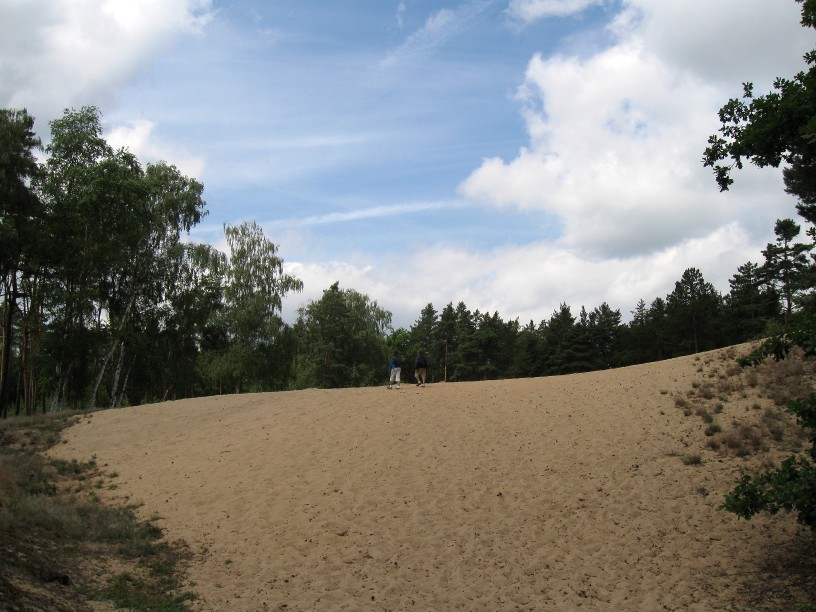
The dune forms a compact but clearly visible sandy rise, its pale, bare surface standing out sharply against the surrounding pine forests of Kersko-Bory. Because of its nature monument status and the fragile habitats it protects, the site calls for careful behavior — shifting sand and rare vegetation are easily damaged by excessive foot traffic. It is often recommended as the destination for a short excursion that combines geology, botany, and entomology in one compact spot within the Nymburk region.
Frequently asked questions
Where exactly is Písečný přesyp u Píst located? On the eastern edge of the Kersko-Bory Landscape Park, within the cadastral territory of the village of Písty, in the Nymburk district of the Central Bohemian Region.
Since when has the area been protected? It has held nature monument status since 1951 and has also been part of the Natura 2000 network since 2009.
What makes this site ecologically valuable? A mobile sand dune formed during the Quaternary period, along with its associated dune grasslands and a population of antlions, insects typical of sandy habitats.
How large is the protected area? The reserve covers 3.7 hectares.
Nearby places

Earn badges for the places you visit
Download NextOnTrip, discover new places and check off your trails.