About this place
Parque Natural Geológico de Chera-Sot de Chera is a natural park spanning the municipalities of Chera and Sot de Chera, in the north-west of the province of Valencia, Spain. Covering more than 6,451 hectares, it is home to the first geological park established in the Valencian Community, a status earned thanks to the exceptional variety of rock formations found within its boundaries.
What makes this park geologically unique?
The park's main distinction lies in the contrast between the geological processes that shaped the landscape on its two sides. On the Chera side, tensional forces and normal faults dominate, while on the Sot de Chera side visitors can observe the effects of compressive forces, in the form of anticlines and synclines, folds created when rock layers are pushed together. Having two such different tectonic mechanisms at work within a relatively small area makes the park an unusually instructive site for anyone interested in earth sciences.
What does the landscape look like?
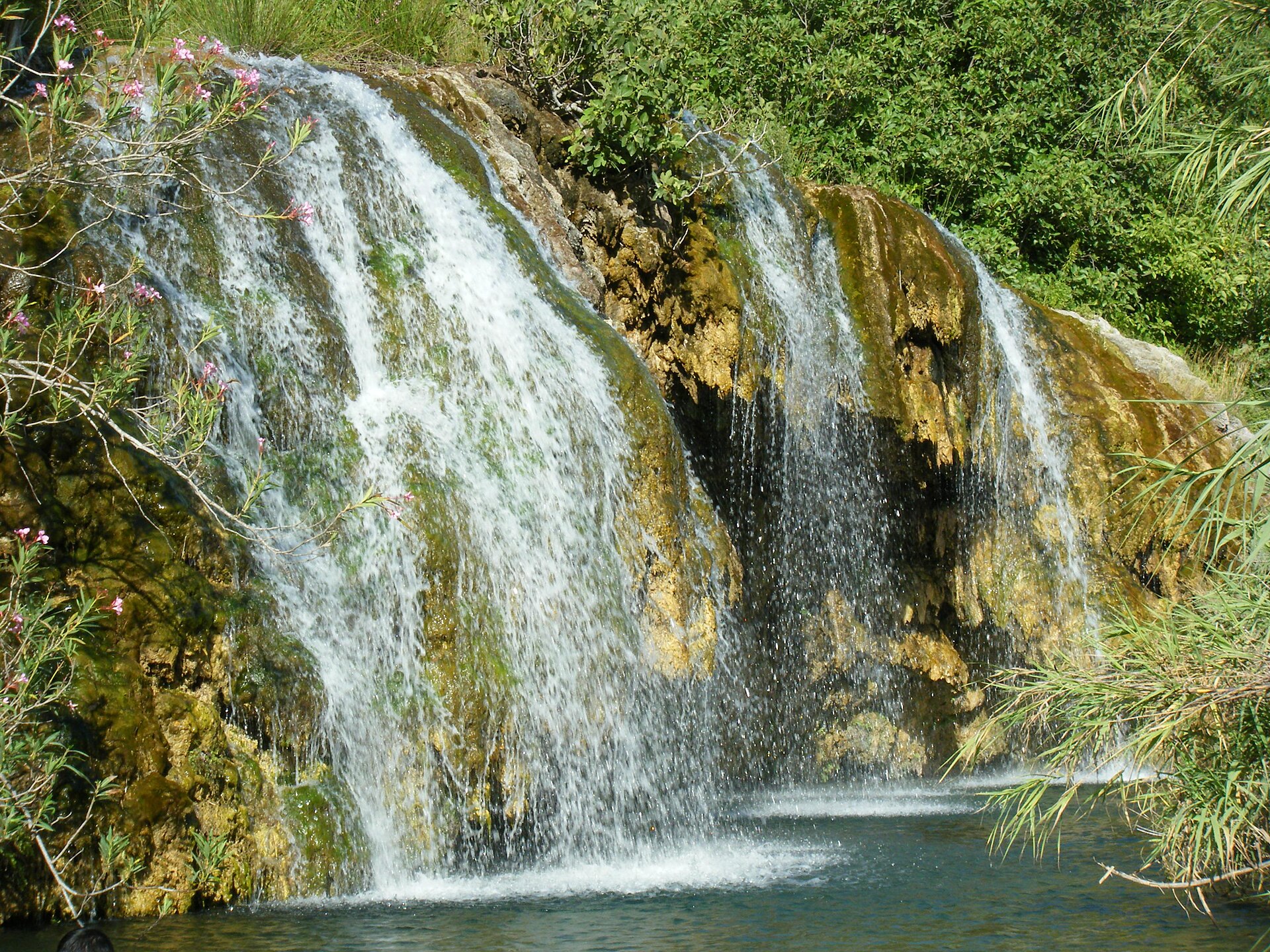
The park's terrain is defined by deep gorges, steep mountains and fertile valleys. Rock and water coexist throughout the area in ravines, canyons and waterfalls, producing a landscape full of contrasts. More than a hundred springs rise within the park, making it one of the more water-rich areas of this part of Spain, despite the generally dry Mediterranean climate typical of the wider region. One of its main attractions is the Buseo reservoir, reached via canyons and ravines such as the Barranco de la Hoz, a scenic route popular with hikers.
What flora and fauna can be found here?
The vegetation is dominated by pine forest, accompanied by species typical of Mediterranean scrubland, such as kermes oak (coscoja), juniper and mastic tree. This type of vegetation is well adapted to the park's rocky, limestone terrain and dry climate.
Among the animals living in the park, birds of prey stand out in particular, including several species of eagle, the peregrine falcon and the eagle owl. The presence of these species points to a healthy ecosystem with suitable nesting habitats along the park's rocky slopes and cliffs.
Who is this park for?
Chera-Sot de Chera is a good fit for travelers drawn to rugged, rocky nature and curious about geology and the forces that shape landscapes. Its network of trails through gorges and canyons also makes it a solid choice for hiking away from the more crowded, typically touristy routes along the Valencian coast. The proximity of the two small towns of Chera and Sot de Chera makes it easy to combine a visit to the park with a taste of the region's rural way of life.
Frequently asked questions
Where is the park located? In the province of Valencia, across the municipalities of Chera and Sot de Chera, in the north-west of the region.
How large is the park? More than 6,451 hectares.
What is the park's main geological attraction? The contrast between normal faults on the Chera side and folds, anticlines and synclines, on the Sot side, produced by opposing tectonic forces.
What water-related features can be found here? More than a hundred springs, numerous ravines and waterfalls, and the Buseo reservoir, reachable via the Barranco de la Hoz canyon among other routes.
What animals live in the park? Mostly birds of prey, including several eagle species, the peregrine falcon and the eagle owl.
Nearby places

Earn badges for the places you visit
Download NextOnTrip, discover new places and check off your trails.