About this place
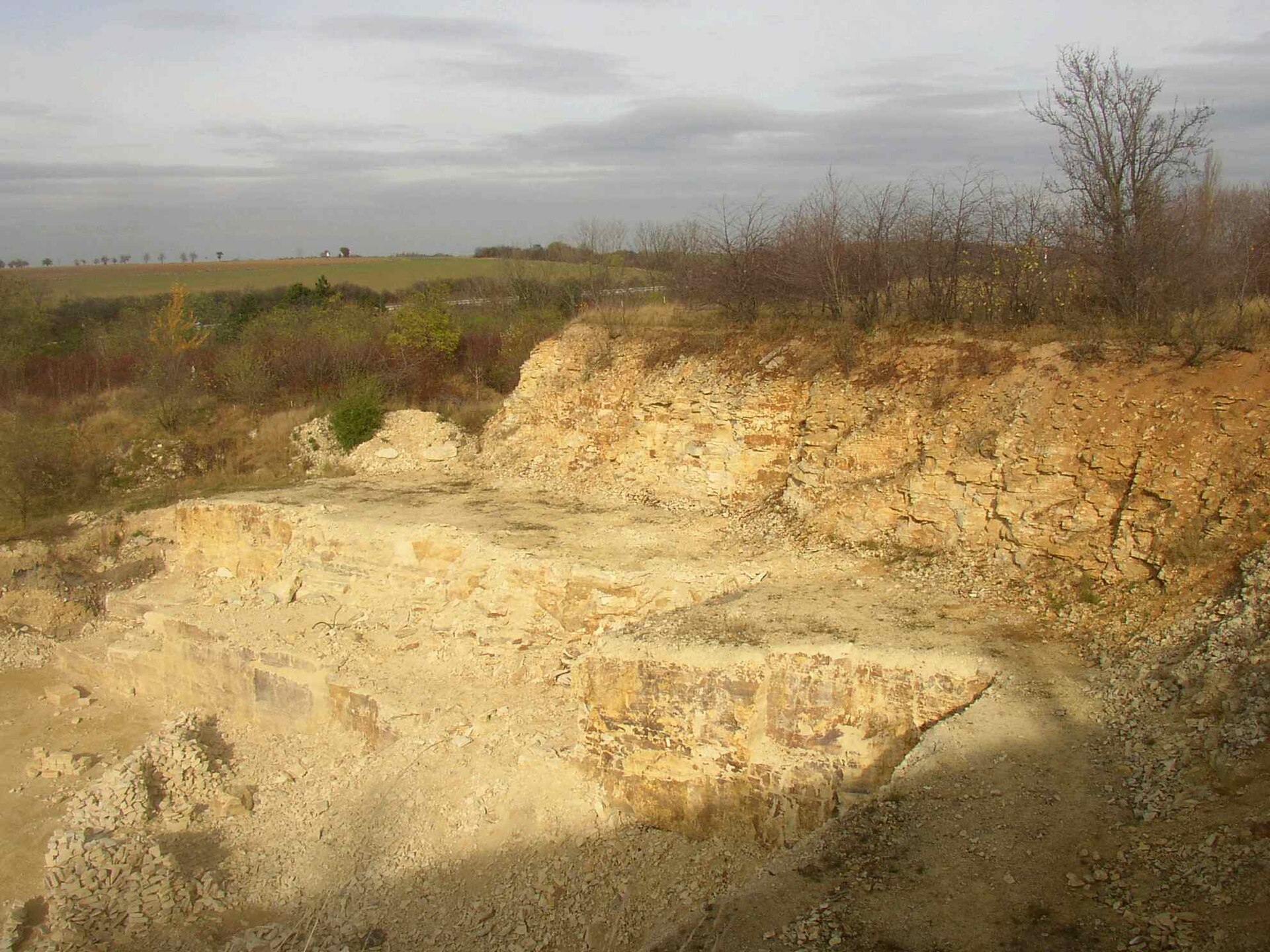
Opukový lom u Přední Kopaniny is a small but geologically significant nature reserve on the northwestern edge of Prague, near the village of Přední Kopanina. This former limestone quarry has been protected as a nature monument since 1988, and its scientific importance reaches well beyond the boundaries of the city.
Why does this quarry matter to geologists?
The exposed rock face documents the boundary between the Cenomanian and Turonian stages of the Upper Cretaceous period. This outcrop serves as the stratotype — the reference profile — for the Bělohorský formation, meaning geologists use it as the benchmark when classifying comparable rock layers elsewhere in the country. It is currently the only well-preserved exposure of the so-called golden opuka of the Bělohorský type within Prague itself, which is why the site is treated almost as a textbook example by researchers and geology students alike.
Where does "golden opuka" come from?
The quarry's name is no accident. It was worked for a pale, golden-toned sedimentary stone known locally as golden opuka. This building material has been extracted here since the 12th century and used both in original construction and in the restoration of some of Prague's most important monuments. Stone from Přední Kopanina was used to build the nearby Church of Saint Mary Magdalene, and in later centuries the same material was applied during restoration work on Saint Vitus Cathedral at Prague Castle, one of the most significant churches in the Czech Republic. This long history of extraction gives the site a dual identity, combining natural heritage with a local tradition of stonemasonry.
What else is there besides the rock itself?
The edges of the former quarry are covered with valuable steppe vegetation, including rock fescue, a grass species adapted to dry, nutrient-poor conditions. These favorable conditions come directly from the calcium-rich opuka bedrock, which supports xerothermic plants that are otherwise rare within the built-up Prague metropolitan area. As a result, the site carries ecological value on top of its geological significance, forming a small but noteworthy pocket of steppe habitat surrounded by urban development.
Who is this place for?
Opukový lom u Přední Kopaniny will appeal most to visitors interested in geology, the history of building materials, and quieter, lesser-known corners on the outskirts of Prague. It is not a typical tourist attraction with visitor infrastructure — rather, it is a modest spot for a short walk and a close look at rock layers spanning millions of years, layers that are also literally built into the historic architecture of Prague's Old Town through the very stone quarried here.
Frequently asked questions
Since when has Opukový lom been protected? The site has held nature monument status since 1988 and is administered by the City of Prague.
What is golden opuka? It is the local name for a pale, golden-colored sedimentary rock quarried here since the 12th century and used to build and restore Prague landmarks, including Saint Vitus Cathedral.
Why is this site scientifically important? The quarry's exposed rock face is the stratotype of the Bělohorský formation and documents the Cenomanian-Turonian boundary, making it one of the most important geological sites in the Czech Republic.
Is there anything beyond the geology worth seeing? Yes, the edges of the quarry support steppe vegetation, including rock fescue, which is rare in the urban context of Prague.
Nearby places

Earn badges for the places you visit
Download NextOnTrip, discover new places and check off your trails.