About this place
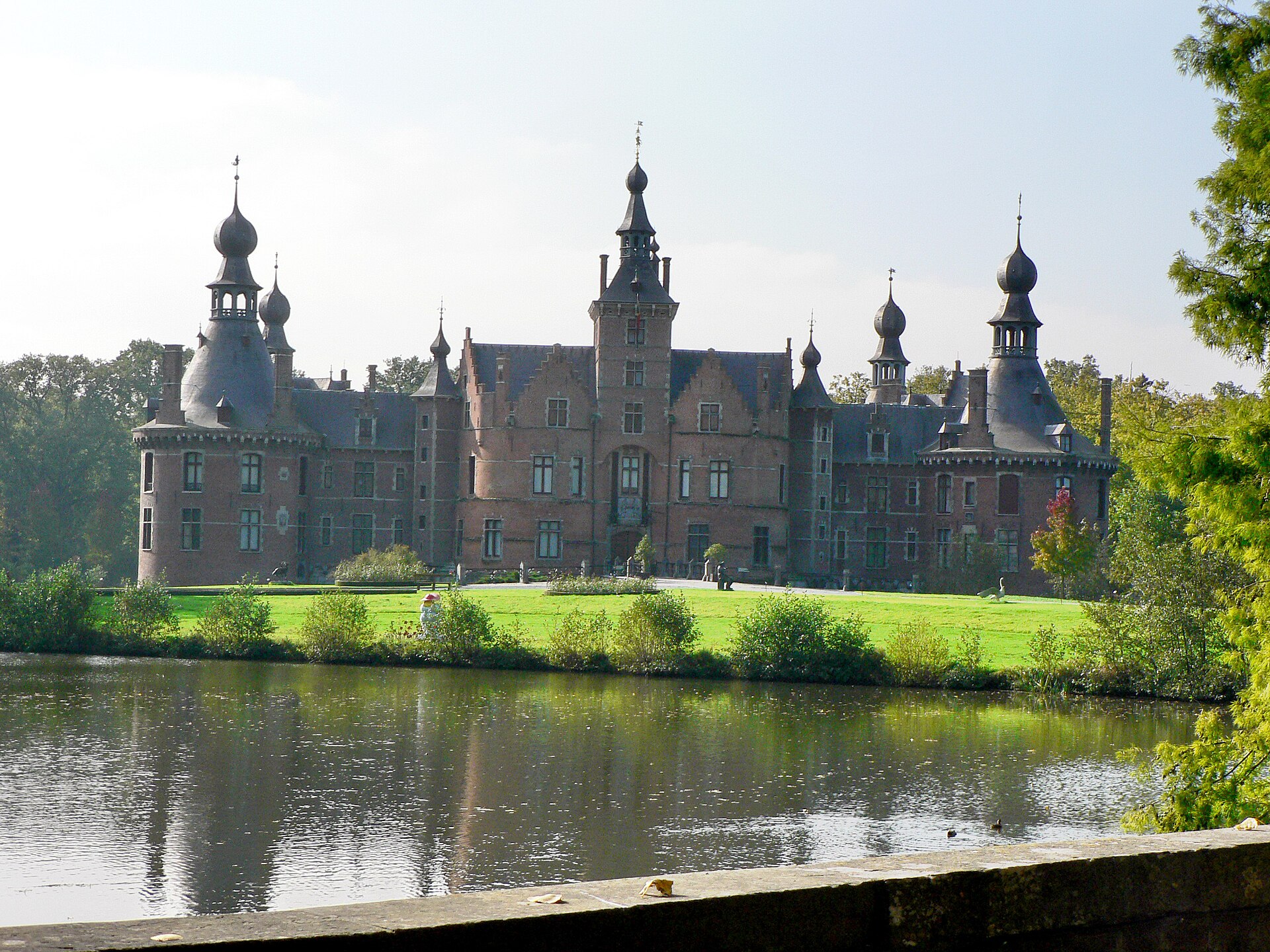
Ooidonk Castle is a moated castle standing in the city of Deinze, in the province of East Flanders, Belgium, on the banks of the river Lys. The site sits at an altitude of just 11 meters, on the flat terrain typical of this part of Flanders, surrounded by a moat and parkland. It remains to this day the residence of the current Count t'Kint de Roodenbeke, which gives it the character of a living, still-inhabited estate rather than a purely museum piece.
How did the history of this site begin?
The first stronghold on this spot was built in 1230. Its purpose was to defend the city of Ghent and to secure the line of the river Lys against incursions. The fortress belonged to Nikolaas van Hoendunc, lord of Nevele — it is from his name that the site's own name, Ooidonk, ultimately derives. This early structure was distinctly defensive in character, shaped by the needs of a medieval border region.
Why was the castle destroyed and rebuilt so many times?
Ooidonk's history is marked by repeated cycles of destruction and reconstruction. After Louis de Male, Count of Flanders, tore down the original fortress, Jean de Fosseux undertook its reconstruction and enlargement starting in 1381. Moats were added at this stage, meaning the castle could only be reached by drawbridge, while four towers reinforced its defenses — a layout typical of fortifications of that period. The following centuries brought further destruction: the castle burned down in 1491, and again in 1579, amid the turmoil of the religious wars sweeping the Low Countries at the time. Following the 1579 fire, the castle was rebuilt in the form that has survived, with later modifications, to the present day, blending medieval defensive features with a later, more residential character.
Which family is most closely tied to the castle?
In the 15th century, the castle passed into the hands of the well-known French noble family of Montmorency, when Jeanne de Fosseux married Jean de Montmorency. The most notable member of this line was Philippe II de Montmorency-Nivelle, probably born at Ooidonk Castle in 1526. He became known as a leading opponent of Spanish rule in the Netherlands, and was eventually beheaded in Brussels in 1568 — an episode that links this modest, provincial castle to one of the most dramatic chapters of the Habsburg era in Western Europe.
Who owns the castle today?
In 1864, the castle and its surrounding grounds were purchased by senator Henri t'Kint de Roodenbeke. Since then, Ooidonk has remained in the hands of this family, and the current Count t'Kint de Roodenbeke still resides there. This ownership continuity, spanning well over a century and a half, sets Ooidonk apart from many Belgian castles that have been fully converted into museums or hotels.
Frequently asked questions
Where exactly is Ooidonk Castle located? In the city of Deinze, in the province of East Flanders, at an altitude of 11 meters above sea level.
Is the castle still inhabited? Yes, it is the residence of the current Count t'Kint de Roodenbeke.
How many times was the castle destroyed? At least twice — in 1491 and in 1579 — and it was rebuilt each time.
Which historical figure is most strongly associated with this place? Philippe II de Montmorency-Nivelle, probably born at the castle in 1526 and beheaded in Brussels in 1568.
Nearby places

Earn badges for the places you visit
Download NextOnTrip, discover new places and check off your trails.