Save this place and discover nearby attractions with NextOnTrip
In the app you can add it to your favorites, see what else is worth visiting nearby on the map, and earn a badge for your visit.
The app is available for iPhone and Android.
About this place
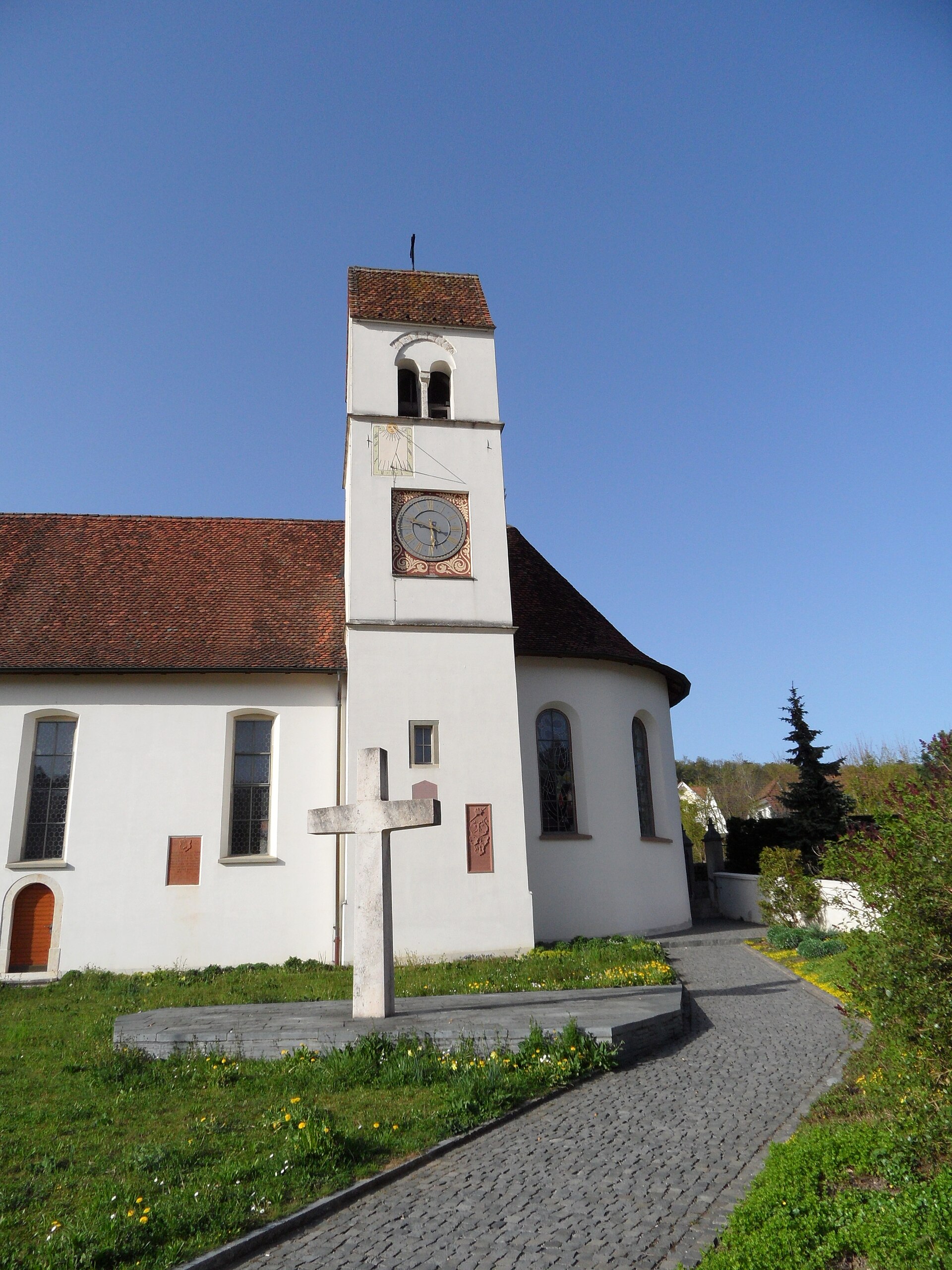
The Ecumenical Church in Flüh stands in the village of Flüh, part of the municipality of Hofstetten-Flüh in the canton of Solothurn, Switzerland. Catholics and Reformed Protestants share the building, and the congregations themselves describe it as the first ecumenical church in the country.
What makes this church special?
The church opened in 1974, although the Historical Dictionary of Switzerland lists 1972, most likely the year construction began. The Leimental valley grew quickly between the 1950s and 1970s, and neither denomination could afford a new church alone. They built one together instead. Cooperation here began as a practical solution and only later became a principle.
The "first ecumenical church" title is contested. Other sources point to an ecumenical centre in Langendorf, also in Solothurn, opened in October 1971. The dispute is about what counts as the first, not about whether Flüh is an early example of a jointly used church.
What will you see inside?
The interior is sparse, almost minimalist. The main room is semicircular, with an altar at the front and a plain cross on the wall. Locals describe the design as a compromise, the lowest common denominator between two traditions. You will not find baroque altars or rich painted decoration. The reason to visit is to see a sacred space designed for two congregations at once.
Who uses the church today?
Catholics and Reformed Christians hold their own services in the building, and a joint ecumenical service takes place once a month. Other denominations are guests as well, including migrant churches from Basel. In January 2024 the congregations marked the 50th anniversary with a festive service led by both confessions together.
What is the village like?
Flüh is first documented in 1451 as "Jn flühen". In the Middle Ages it fell under the influence of Landskron castle and Mariastein monastery, and until 1515 it belonged to the lordship of Rotberg. A bathhouse and mill are recorded from 1461, and the "Roter Ochsen" inn from 1692. In 1888 the Birsigtalbahn railway was extended to Flüh, linking the village with Basel. The surroundings suit a short walk combined with a visit to the church.
Frequently asked questions
Where is the church?
In the village of Flüh, in the municipality of Hofstetten-Flüh, in the northern part of the canton of Solothurn, in the Leimental valley. Coordinates: 47.4847 N, 7.4973 E.
Is it really the first ecumenical church in Switzerland?
The congregation says so. Other sources name the ecumenical centre in Langendorf from 1971, so the title is disputed.
When are services held?
Catholics and Reformed Christians have their own schedules, and a shared ecumenical service is held once a month. Check the websites of both parishes for current times.
Is it worth visiting for the architecture?
If you are interested in modern church architecture, yes. The building is modest, with a semicircular hall and a plain cross, and it shows ecumenical compromise in practice.
Nearby places

Earn badges for the places you visit
Download NextOnTrip, discover new places and check off your trails.