About this place
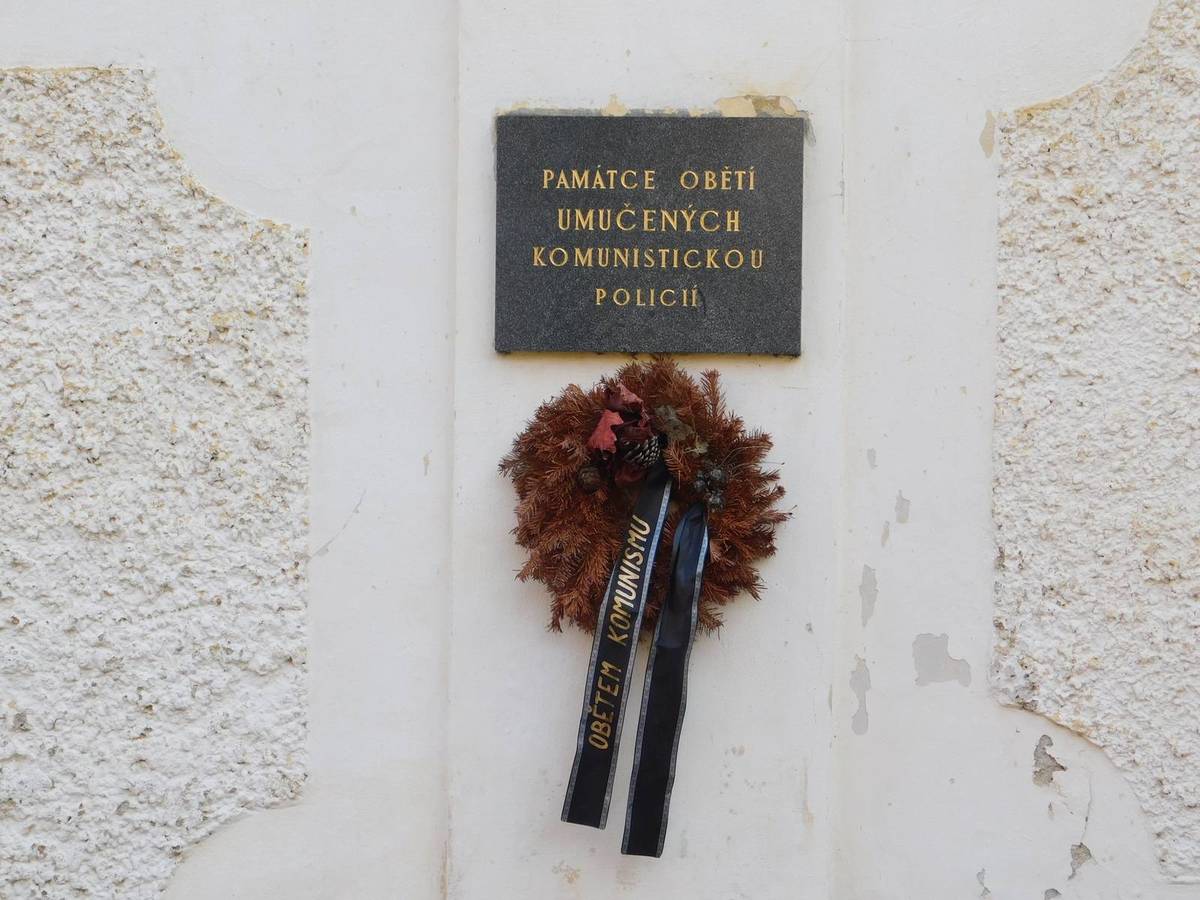
Obětem komunistické policie is a small memorial plaque mounted on the wall of a building on Kapucínská street in Prague's Hradčany district. Unlike the large, well-known monuments in central Prague, this modest tribute points to one specific, dark address — a building where political prisoners were brutally interrogated after 1948.
Where is the plaque located?
The plaque sits at Kapucínská 214/2 in Prague 1, on the wall in front of the building, to the right of the entrance gate. The location lies in a quiet, historic corner of Hradčany, close to Loretánská street and the castle hill area — well off the main tourist routes, which means many visitors to Prague Castle pass nearby without ever noticing it.
What does the plaque commemorate?
The inscription, in essence, reads as a tribute to the victims tortured to death by the communist police. It refers to events that took place inside this very building between 1948 and 1952, when the premises were used by the Ministry of National Defense for interrogations carried out by military counterintelligence. In the period that followed, the building housed an unofficial branch of the state security service dealing with cases of people suspected of operating under false identities abroad — in other words, émigrés and individuals linked to Western intelligence.
Who were the victims linked to this place?
Among the victims associated with this address are several generals — Janoušek, Paleček, and Knop — as well as RAF officers, meaning Czechoslovak airmen who had served in the British air force during the Second World War, and members of the national ice hockey team from 1950. That last case is one of the better-known episodes of 1950s repression: the hockey players were detained and interrogated before their planned departure for the world championships, and several of them were subsequently sent to prison or labor camps. The fact that decorated wartime airmen and ordinary national sports representatives ended up interrogated in the same building shows how wide a net the postwar regime cast in labeling people enemies of the state.
Why this site, and not the central monument on Petřín Hill?
Prague has its large, widely known Memorial to the Victims of Communism on the slope of Petřín Hill — a monumental sculptural composition symbolizing the regime's gradual erosion of a person's humanity. The plaque on Kapucínská street represents a different kind of commemoration altogether: not a general symbolic form, but a specific address where actual interrogations and torture took place. That makes it meaningful for anyone interested in modern Czech history who wants to see not just a monument, but the real site of events.
How can you visit?
The plaque is fixed to the outer wall of the building, so it can be viewed at any time, free of charge, with no opening hours to work around. It's worth combining a stop here with a walk through the surrounding streets of Hradčany — Loretánská, Nový Svět, and the area around the Capuchin monastery — which together form an atmospheric, far less crowded alternative to the busy tourist core of Prague.
Frequently asked questions
What exactly is at this address? A memorial plaque on the wall of a building at Kapucínská 214/2 in Prague 1, commemorating the victims of interrogations carried out at this site by communist-era security services after 1948.
When was the plaque unveiled? After 1989, as part of the broader wave of commemorating victims of the communist regime following the fall of communism in Czechoslovakia.
Who were the people connected to this location? Among those named are generals Janoušek, Paleček, and Knop, RAF officers, and members of the 1950 Czechoslovak national ice hockey team.
Is this the same as the large monument on Petřín Hill? No — this is a separate, much smaller plaque marking a specific building where interrogations took place, distinct from the symbolic sculptural monument on the slope of Petřín Hill.
Nearby places

Earn badges for the places you visit
Download NextOnTrip, discover new places and check off your trails.