About this place
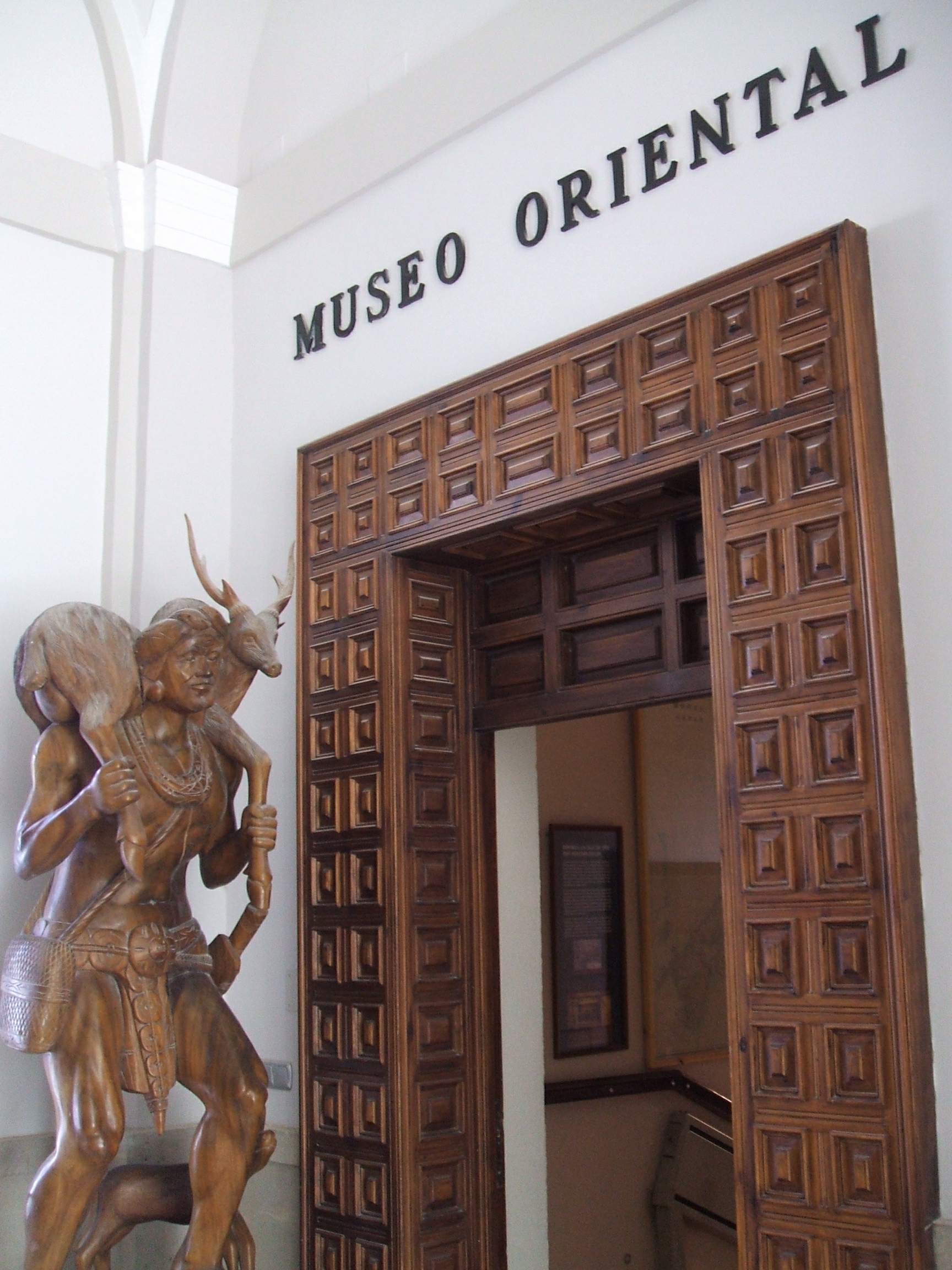
Museo Oriental in Valladolid holds one of Europe's richest collections of Asian art, tucked inside the walls of an active Augustinian monastery in the city center.
Where is the museum located?
The Museo Oriental occupies part of the Real Colegio de PP. Agustinos Filipinos (Royal College of the Philippine Augustinians) in Valladolid. The building is still a working monastery, so the museum operates as a distinct institution inside a religious complex rather than a standalone civic building. That setting explains the nature of the collection: for centuries, Augustinian missionaries brought back objects from their outposts across Asia to this house in Spain.
Where did the collection come from?
The story begins in 1565, when Augustinian friars started missionary work in China, Japan, and the Philippines. Over the following centuries, the friars gathered religious, artistic, and everyday objects that made their way back to Valladolid and into the monastery's holdings. Individual rooms were already open to visitors more than a century ago, but the museum in its current form was inaugurated by the King and Queen of Spain on 12 October 1980. Following a major renovation, it reopened to the public in May 2006.
What can visitors see inside?
The collection splits into two main geographic sections. The Philippine section covers ethnological art from Luzon and Mindanao, colonial-era objects, and material tracing the history of the Manila Galleon, the trade route linking the Philippines with New Spain. A dedicated space is given to Hispano-Philippine art from the 17th to 19th centuries, alongside memorabilia connected to the 1898 war and the last Spanish soldiers stationed in the Philippines. The second part of the collection is devoted to Chinese art. Experts regard the museum's holdings as the best collection of Oriental art in all of Spain.
Who is this museum for?
Given the religious and ethnographic focus of the exhibits, the Museo Oriental appeals to visitors interested in the history of Catholic missions in Asia, collectors of Far Eastern art, and travelers looking for something different from Valladolid's usual museum offerings, which lean heavily toward sacred art and Castilian sculpture. It is a strong stop for anyone wanting to understand how Spain connected with Asia during the colonial era.
How should visitors plan a visit?
Because the museum sits inside a still-active monastery, expect limited opening hours and the quiet atmosphere typical of a religious site. A visit doesn't take an entire day: the exhibition is compact but densely packed, and one to two hours is usually enough to see it properly. It pairs well with a walk through Valladolid's historic center, since the monastery sits within the old town itself.
Frequently asked questions
What sets the Museo Oriental apart from other museums in Valladolid? It is the only museum in the city dedicated to Asian art rather than Spanish sacred art or sculpture — its pieces come from Augustinian missions in China and the Philippines, not from local workshops.
When was the museum established in its current form? The modern exhibition was inaugurated by the King and Queen of Spain on 12 October 1980, although individual rooms with objects existed earlier. After renovation, the museum reopened in May 2006.
Does the collection focus only on the Philippines? No — alongside an extensive Philippine section (ethnological and colonial art, the history of the Manila Galleon), the museum also holds a significant collection of Chinese art.
Is the museum inside a working monastery? Yes, the building is the Real Colegio de PP. Agustinos Filipinos, an active Augustinian monastery — worth keeping in mind when planning a visit and behaving accordingly on site.
Nearby places

Earn badges for the places you visit
Download NextOnTrip, discover new places and check off your trails.