About this place
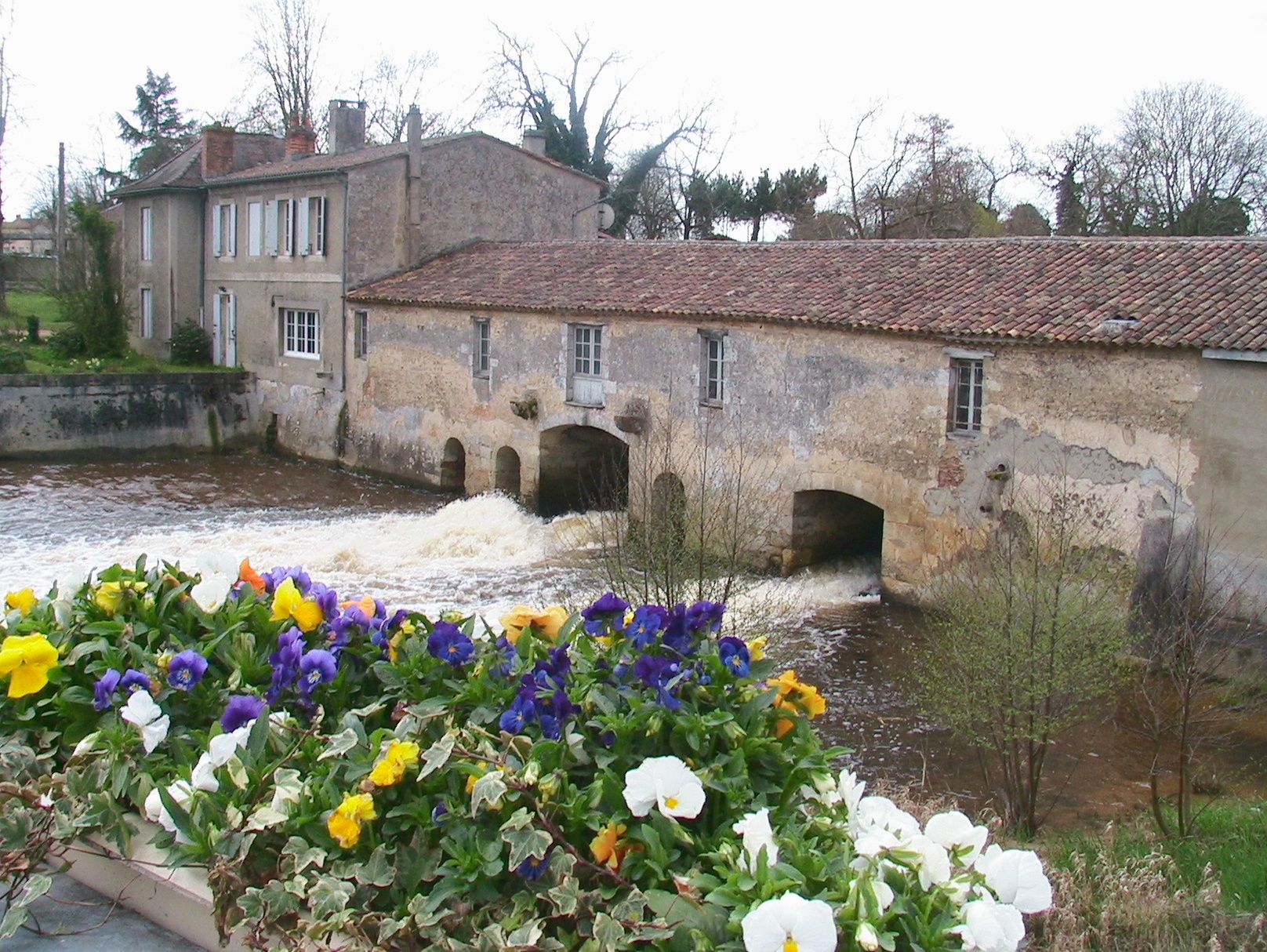
Moulin de Noès is a historic watermill straddling the boundary between Mérignac and Pessac, in the Gironde department, just outside Bordeaux.
Where exactly is Moulin de Noès?
The mill stands over the Peugue river, which at this point marks the boundary between the communes of Mérignac and Pessac. Most of the surrounding land — roughly nine-tenths — falls administratively within Mérignac, with the remainder in Pessac. That split is why the site is often credited to both towns, even though it's most commonly associated with Mérignac.
What's the story behind this mill?
Moulin de Noès is the only structure still standing from the Bellevue estate, an experimental 18th-century farm. Its origins trace back to a royal order issued on 16 April 1761, which encouraged the clearing and draining of the marshy heathlands around Bordeaux to guard against grain shortages. In 1769, a wealthy Bordeaux banker and shipowner, Jacques-Alexandre Laffon de Ladebat, bought the waterlogged plot and set about reclaiming it.
The drained fields were used to grow grain, but the estate had a second, less obvious purpose: raising silkworms, fed on mulberry leaves from trees planted specifically for that trade. The farm also trained agricultural workers, some of whom could eventually become landowners themselves — an unusually progressive arrangement for the period.
The rest of the Bellevue farm buildings disappeared in 1970. The mill is the only piece that survived, making it the sole physical link to that 18th-century enterprise.
What makes the building's architecture stand out?
The structure is a three-arch watermill built directly over the riverbed. Its most decorative feature is the upstream-facing wall: a recessed niche capped by a quarter-dome vault, finished with moulded edges and a scroll-shaped clasp motif, topped by a pediment carved with flowing water, a shell, and aquatic plants. Details like these are uncommon in the region's rural industrial buildings, which is reason enough to pause here even briefly.
The mill was restored in 1993. No milling machinery survives inside — today it functions as a landscape and heritage landmark rather than a working mill.
Is it a protected heritage site?
Yes. Moulin de Noès has been listed as a monument historique in France since 28 December 1984. The listing covers the mill building itself, as a surviving marker of 18th-century agricultural enterprise around Bordeaux.
How can you visit Moulin de Noès?
The site sits along local footpaths that follow the Peugue river, making it an easy stop on a walk connecting Mérignac and Pessac. Since there's no visitor infrastructure inside, most of what you'll see is from the outside — the mill's body and its carved riverside façade.
Frequently asked questions
Is Moulin de Noès in Mérignac or in Pessac? It sits right on the boundary between the two communes, with most of the land belonging to Mérignac — which is why the site is often described as shared between both towns.
Is the mill still operational? No. The milling machinery is gone, and the building now serves as a heritage and landscape feature rather than a functioning mill.
What's the history behind the site? The mill is the last remaining piece of the 18th-century Bellevue estate, established after 1769 by Bordeaux banker Jacques-Alexandre Laffon de Ladebat on reclaimed heathland.
Is Moulin de Noès a protected monument? Yes, it was listed as a monument historique on 28 December 1984.
Nearby places

Earn badges for the places you visit
Download NextOnTrip, discover new places and check off your trails.