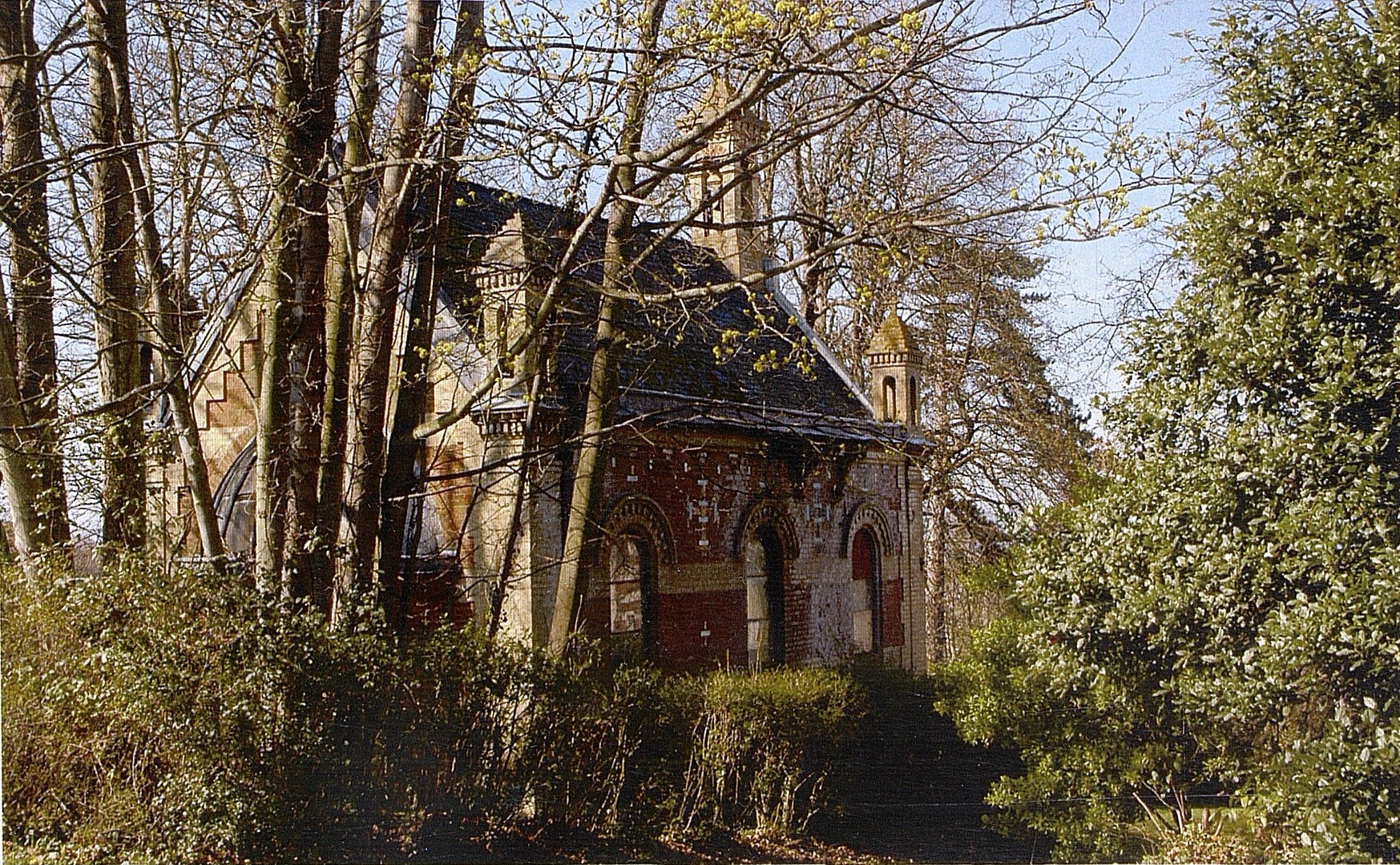
About this place
The Manoir de Clairefontaine sits just outside Tourgéville, a quiet commune in Calvados a short drive from Deauville and Trouville-sur-Mer.
Built in the last quarter of the 19th century, the manor follows the eclectic taste common to Normandy country houses from an era when the Côte Fleurie was becoming a fashionable summer retreat for Parisian high society. What draws most attention today, though, is not the main house itself but the chapel standing beside it.
What makes the chapel special?
The chapel was added to the manor in 1890, designed by Gustave Clausse, an architect and art historian with a documented interest in historicist revival styles. Built in a Neo-Renaissance idiom, it is regarded as an outstanding example of that decorative language at the close of the 19th century. At the center of its façade sits a terracotta medallion of the Madonna and Child, produced in a Florentine workshop tied to the glazed-relief tradition associated with Luca della Robbia — a technique originally developed for Renaissance churches in Italy and later echoed in this Norman setting. Inside, the decoration continues with stained glass by Vantillard, terracotta bas-reliefs signed by Devers, and mosaics by Faccina, a combination of crafts rarely gathered inside one small rural chapel.
Is the site protected as a monument?
Yes, at least in part. The chapel of the Manoir de Clairefontaine was listed on France's register of historic monuments on 19 September 2005. The protection applies specifically to the chapel; the manor house itself remains private property and is not open to visitors. A visit is best approached as a look at the exterior and grounds from the road rather than an indoor tour.
How do you get there, and where should you stay?
Tourgéville borders Deauville and Trouville-sur-Mer directly, the two best-known resort towns of the Côte Fleurie in Calvados. Both make a practical base for reaching the manor. The surrounding countryside is classic Normandy — green pastures, apple-tree lanes, and timber-framed villas reminiscent of the belle époque seafront promenades nearby. Tourgéville itself keeps a rural, low-key character, a useful contrast if you want a calmer place to sleep after a day in busier Deauville.
What else is worth seeing nearby?
A trip to Tourgéville pairs naturally with time in Deauville, famous for its film festival and boardwalk, and in Trouville-sur-Mer, known for its historic fish market. The wider Côte Fleurie is dotted with manors and villas raised at the turn of the 20th century by Parisian elites escaping the city, and the Manoir de Clairefontaine fits squarely into that architectural landscape.
Frequently Asked Questions
Can visitors go inside the Manoir de Clairefontaine? No. The house is private property. Historic-monument protection covers the chapel, and there is no general public access to the interiors.
Who designed the chapel? Gustave Clausse, a French architect and art historian, designed the chapel in 1890.
Why is the chapel considered exceptional? It combines a terracotta Madonna-and-Child medallion in the della Robbia tradition with stained glass, bas-reliefs, and mosaics — an unusually rich decorative program for such a small chapel.
How far is it from Deauville? Tourgéville borders Deauville directly, so the resort's center is normally only a few minutes away by car.
Nearby places

Earn badges for the places you visit
Download NextOnTrip, discover new places and check off your trails.