About this place
Maison, 15 rue des Épineaux is a historic townhouse in the old center of Aix-en-Provence, locally known as the Hôtel de Cormis. The building dates from the first half of the 16th century, and in 1534 it was purchased by Pierre de Cormis, ancestor of François de Cormis, a respected lawyer and jurist who was born in this very house in 1639.
What can you see?
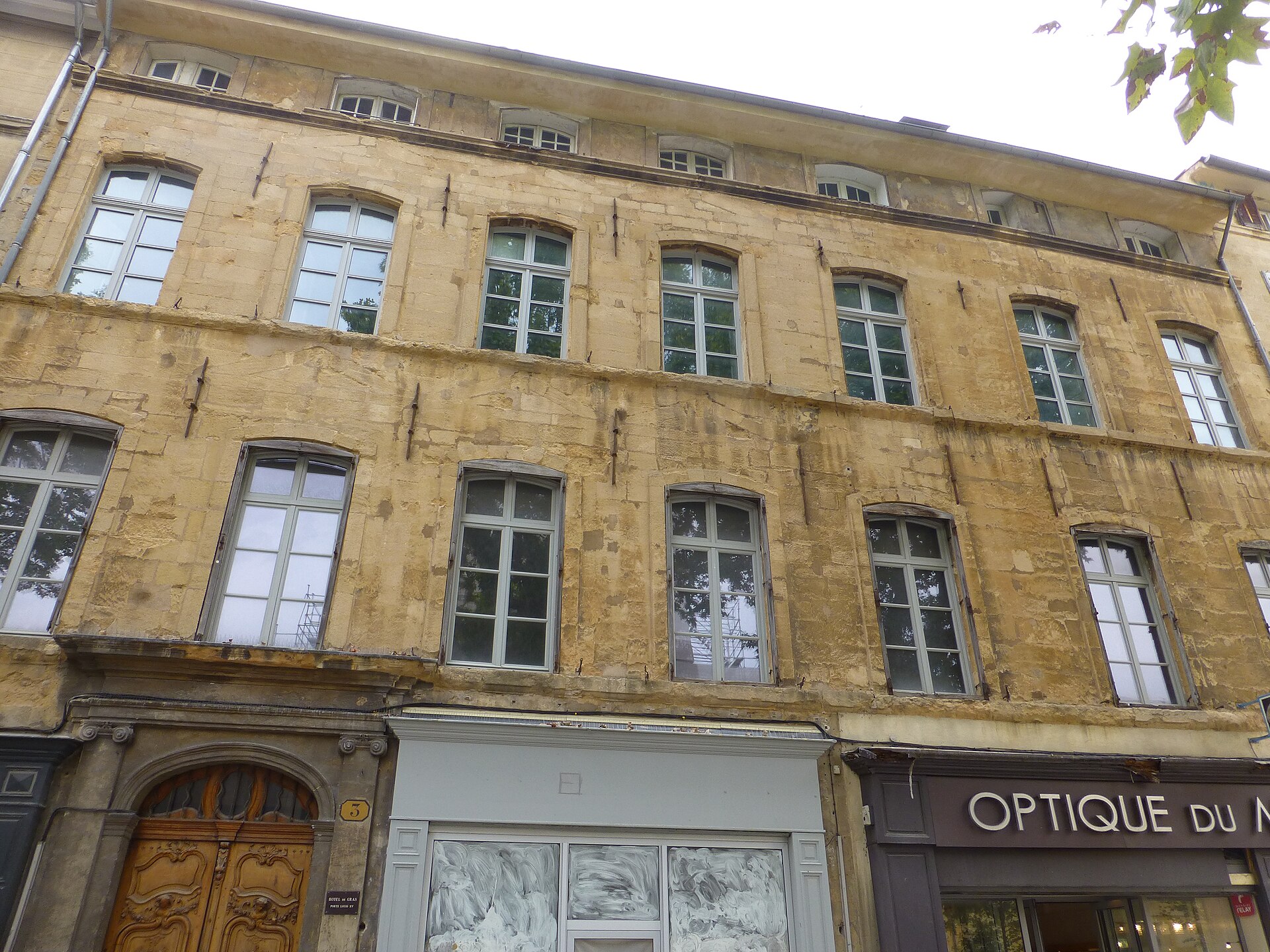
The property's main draw is its 17th-century entrance door. It is a three-part composition crafted from walnut wood, finished with elaborate moldings. Above the doorway, sculpted garlands of laurel leaves surround an expressive mask carved in high relief — a decorative motif typical of the period that still catches the eye of visitors wandering the narrow streets of the old town.
The door panels and the transom above them were listed on France's supplementary inventory of historical monuments by a decree issued on April 10, 1929. Nearly a century later, these woodwork details remain under heritage protection.
The building itself is privately owned and has since been divided into apartments, so the interior is not open to visitors. The site's appeal for tourists lies entirely in the facade and the carved door, both of which can be admired from the street.
How do you get there?
Rue des Épineaux sits within the historic heart of Aix-en-Provence, surrounded by other period townhouses and hôtels particuliers typical of this part of the city. The easiest way to reach it is on foot — Aix's old town is compact and largely pedestrianized, and its narrow streets are best explored at walking pace. The location connects well with the main landmarks of the historic center, making it an easy addition to a walking route through old Aix.
When should you visit?
Aix-en-Provence can be visited year-round, but a stroll through the old town is most pleasant in spring and autumn, when temperatures are mild and the streets less crowded than at the height of summer. The carved details at 15 rue des Épineaux show best in morning or late-afternoon light, when the sun catches the relief work at a favorable angle.
Frequently Asked Questions
Can you visit the inside of the building? No. The house is privately owned, now split into apartments, and is not open to tourists.
What exactly is protected as a historical monument? The door panels and the transom above the entrance are protected, having been listed on the historical monuments register by a 1929 decree.
Who was François de Cormis? A respected lawyer and jurist, born in this house in 1639, descended from Pierre de Cormis, who acquired the property in 1534.
Is it worth visiting if you can't go inside? Yes — the 17th-century entrance door alone, with its carved walnut decoration, is a notable example of Provençal decorative woodwork and makes a worthwhile stop on a walk through historic Aix-en-Provence.
Nearby places

Earn badges for the places you visit
Download NextOnTrip, discover new places and check off your trails.