About this place
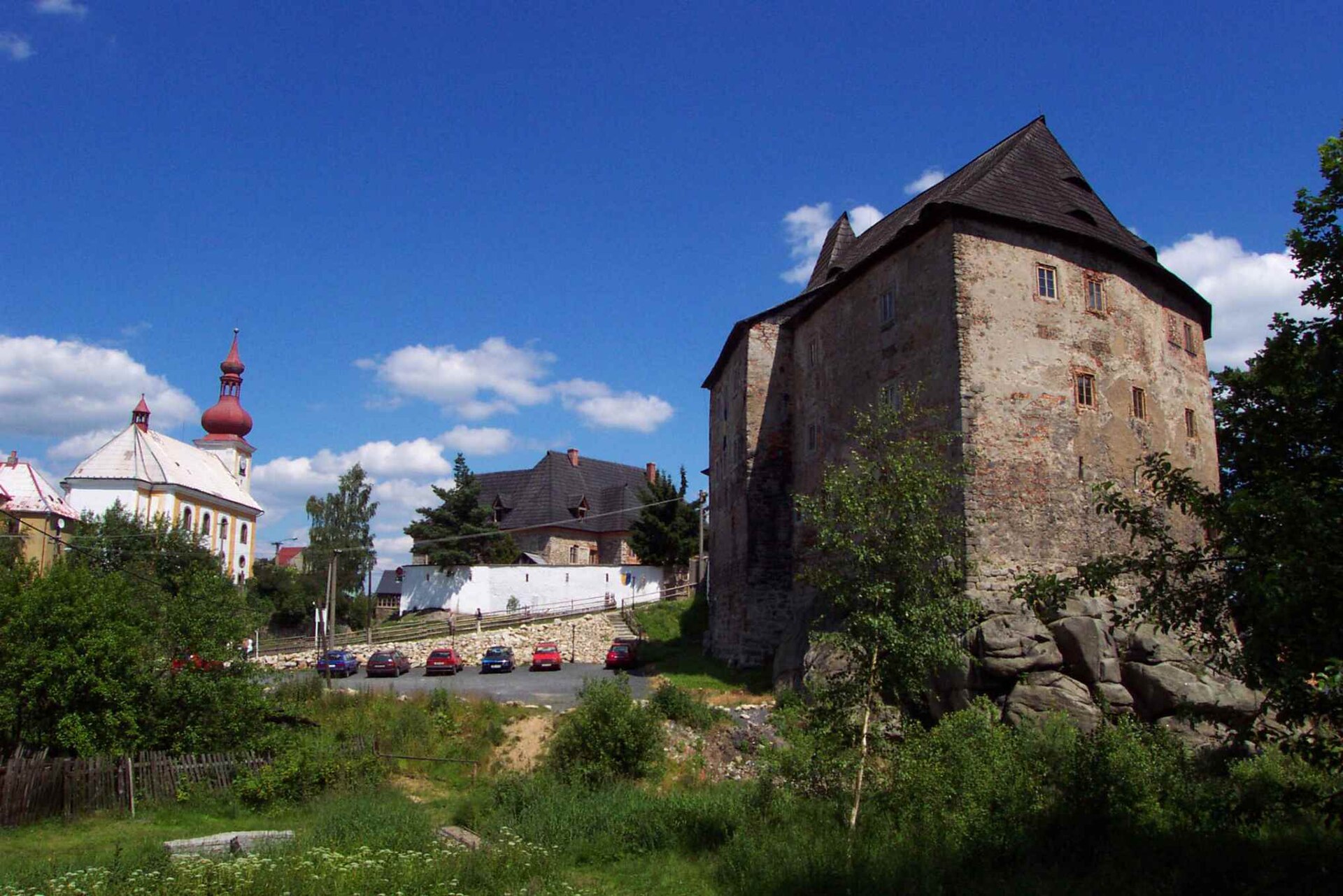
Libá Chateau stands on the north-western edge of the village of Libá, in the Cheb district of the Karlovy Vary Region, barely 1.5 km from the German border. Better known through the centuries under its German name, Liebenstein, it is one of those Czech monuments that lived through the full cycle — medieval stronghold, ruin, and restored chateau open once again to visitors.
When was the castle first built?
The earliest written record of the site dates to 1264. The early-Gothic castle of Liebenstein had been founded around the mid-13th century as the seat of a ministerial family tied to the Cheb (Eger) palatine office — the lords of Liebenstein. By the end of the 13th century that line had died out, and the stronghold began to fall into disuse.
What happened to the castle over the following centuries?
Ownership changed hands several times before settling with the von Zedtwitz family, who held the Libá estate from the medieval period all the way through to 1945. More than four centuries under a single noble house is unusual even for a region as thick with old aristocratic families as Karlovy Vary.
The castle's most dramatic moment came during the Thirty Years' War. In 1647, Swedish troops led by generals Wrangel and Wittenberg captured and devastated the fortress. The damage was severe enough that the site lost much of its residential importance for decades afterward.
When did the chateau take on its current look?
Reconstruction did not arrive until the 18th century. A Baroque renewal was carried out in 1719, and around 1770 the building underwent a thorough Rococo remodeling — the point at which Libá Chateau acquired the appearance still recognizable today. The Rococo character of the facade and interior layout remains clearly legible in the architecture.
What happened to the chateau in the 20th century?
After the Second World War, once the long-standing owners had left the region, the complex fell out of use. Left unattended, the building deteriorated decade after decade until it had effectively become a ruin — a fate shared by many monuments in the Czech borderlands after 1945.
How was the chateau brought back?
The turning point came after 1991, when the property passed into private hands. The new owners undertook a full-scale reconstruction, covering roof repairs, new windows, and restoration of the exterior facade. The work stretched over more than two decades. Libá Chateau reopened to visitors in 2014, once the main phase of restoration was complete.
What can visitors see today?
Visitors today can walk through a section of the interior set up as an exhibition tracing the building's architectural evolution — from the medieval stronghold, through the Baroque and Rococo rebuilding, to the post-war decline and the modern restoration. A standout feature is the massive cylindrical tower, a survivor from the earliest Gothic phase of construction, alongside the cellars beneath the main chateau building, still carrying an air of mystery.
Frequently asked questions
Where is Libá Chateau located? On the north-western edge of the village of Libá, in the Cheb district of the Karlovy Vary Region, about 1.5 km from the German border.
What is the chateau's German name? Liebenstein — the name under which it operated for most of its history.
When was the original stronghold built? An early-Gothic castle already stood there by the mid-13th century, with the first written mention dating from 1264.
Which family held the estate the longest? The von Zedtwitz family managed the Libá estate from the medieval era until 1945.
When did the chateau gain its current Rococo appearance? A Baroque renewal took place in 1719, followed by a thorough Rococo remodeling around 1770.
Since when has the chateau been open to visitors again? Following a private restoration that began after 1991, the chateau reopened to the public in 2014.
Nearby places

Earn badges for the places you visit
Download NextOnTrip, discover new places and check off your trails.