About this place
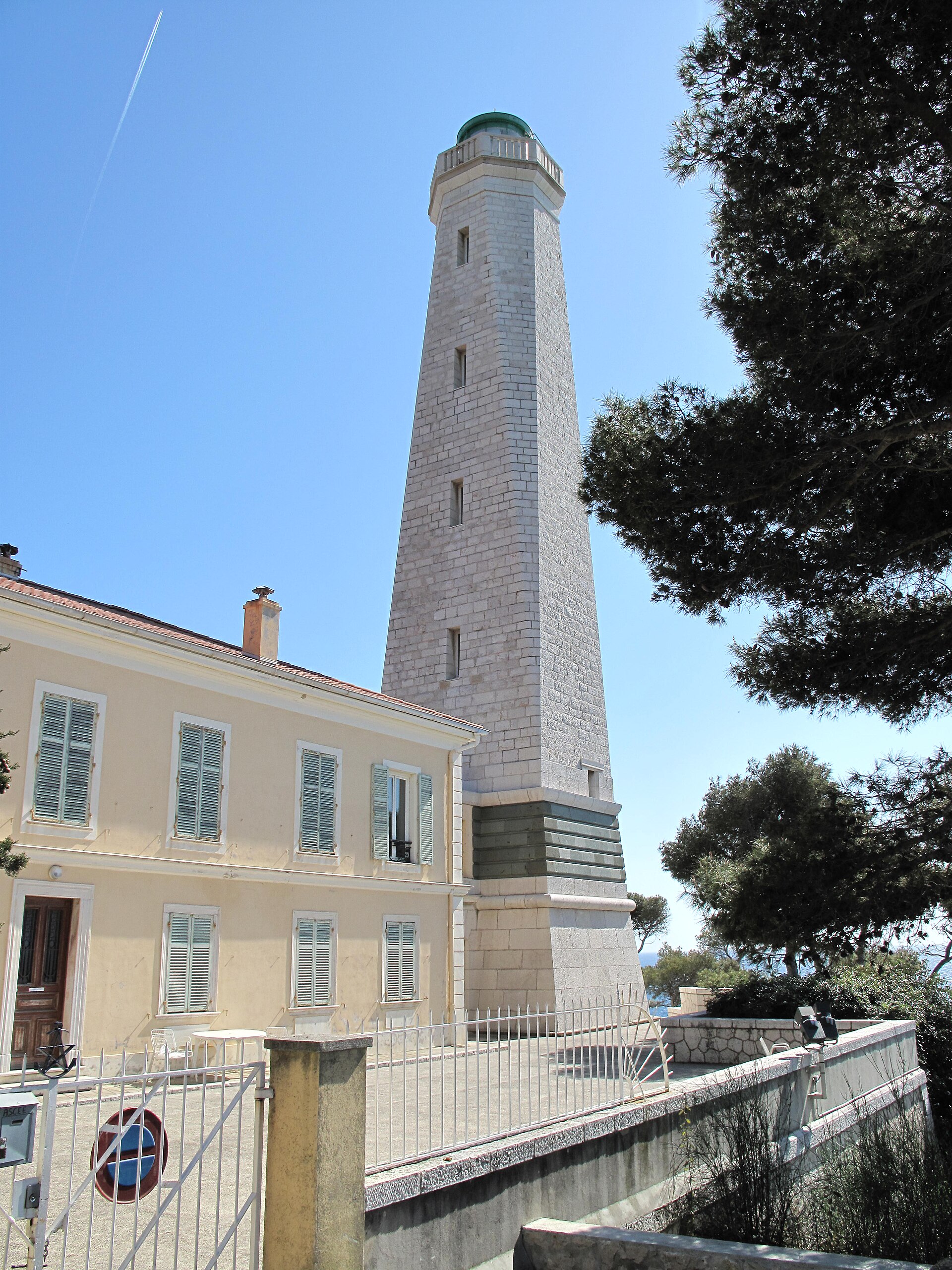
Le Phare de Nice stands at the tip of the breakwater guarding Port Lympia in Nice, right beneath Mont Boron on the French Riviera. Its white, square-sectioned tower topped with a red lantern and white dome is one of the most recognizable silhouettes along the eastern stretch of the city's waterfront, visible both from the promenade and from boats entering the harbor.
Where exactly is it?
The lighthouse sits at the far end of the sea pier of Port Lympia, Nice's main marina and commercial harbor, which separates the Baie des Anges from Cap de Nice. Its coordinates are roughly 43.6906 N, 7.28833 E. The closest landmark on shore is Mont Boron, a 191-metre hill rising directly above the port and marking the natural boundary between central Nice and Cap de Nice.
How do you get there?
The easiest way is on foot from the Old Town (Vieux Nice) or along the Quai des Docks promenade — the walk takes only about fifteen minutes. Alternatively, take a city bus toward the port, or follow the hiking trail up Mont Boron for an elevated view of the lighthouse against the sea. Since the breakwater is part of the working port, access to the tower itself is limited; the best vantage points are the pier-side walkway or a viewpoint on the Mont Boron slopes.
What will you see there?
The lighthouse standing today dates from 1952: a white, square, pyramidal tower crowned with a red lantern and a white dome. It's actually the latest in a long line of navigation lights on this spot. The first, provisional lighthouse was built here in 1862 on the old customs dock — a 15-metre masonry cylindrical tower showing a fixed white light interrupted by long red flashes every 30 seconds. When the port was expanded in the 1880s, the outer pier was extended by 100 metres and a new 14.45-metre cylindrical tower was installed at its head. In 1928 that structure was demolished and replaced by another, this time at the end of a pier extended to 235 metres. World War II interrupted the sequence: in 1945 German bombardment destroyed the lighthouse, and a temporary 7-metre wooden scaffold tower took its place until the current structure was rebuilt in 1952.
When should you visit?
The lighthouse can be seen year-round, but spring and autumn offer the most comfortable conditions for walking the port and taking photographs, with mild weather and fewer crowds than the peak summer months. Sunset is a particularly good time to visit — the white tower and red lantern stand out against the pink-tinged sky over the bay, and it's a popular hour for a stroll along the pier or a descent from the Mont Boron trail. Many visitors combine a look at the lighthouse with a walk through the Old Town, pairing history with harbor views.
Why is it worth seeing?
Le Phare de Nice ties together the city's maritime history, its coastal scenery, and its proximity to two of Nice's best-known spots — Vieux Nice and Mont Boron. For photographers, it's one of the city's signature shots: a white lighthouse tower set against the blue of the Mediterranean and the green slopes of Cap de Nice.
Frequently asked questions
Can you go inside the lighthouse? No. Le Phare de Nice is part of the port's working infrastructure and isn't open to the public for interior visits. It's meant to be viewed from outside, from the pier or nearby vantage points.
How tall is the lighthouse? The current 1952 tower is shorter than its historic predecessors — the 1862 version stood 15 metres tall and the 1880s version 14.45 metres. Today's compact, square structure is typical of the post-war rebuilding of French lighthouses.
Where's the best spot to photograph it? The Quai des Docks promenade, the pier at Port Lympia, and the hiking trail up Mont Boron all offer strong views, the latter giving an elevated perspective over the whole harbor.
Are there other attractions nearby? Yes — right next door you'll find the Old Town (Vieux Nice), Port Lympia's marina, and Mont Boron itself, with its viewpoints and 57-hectare forested park.
Nearby places

Earn badges for the places you visit
Download NextOnTrip, discover new places and check off your trails.