Save this place and discover nearby attractions with NextOnTrip
In the app you can add it to your favorites, see what else is worth visiting nearby on the map, and earn a badge for your visit.
The app is available for iPhone and Android.
About this place
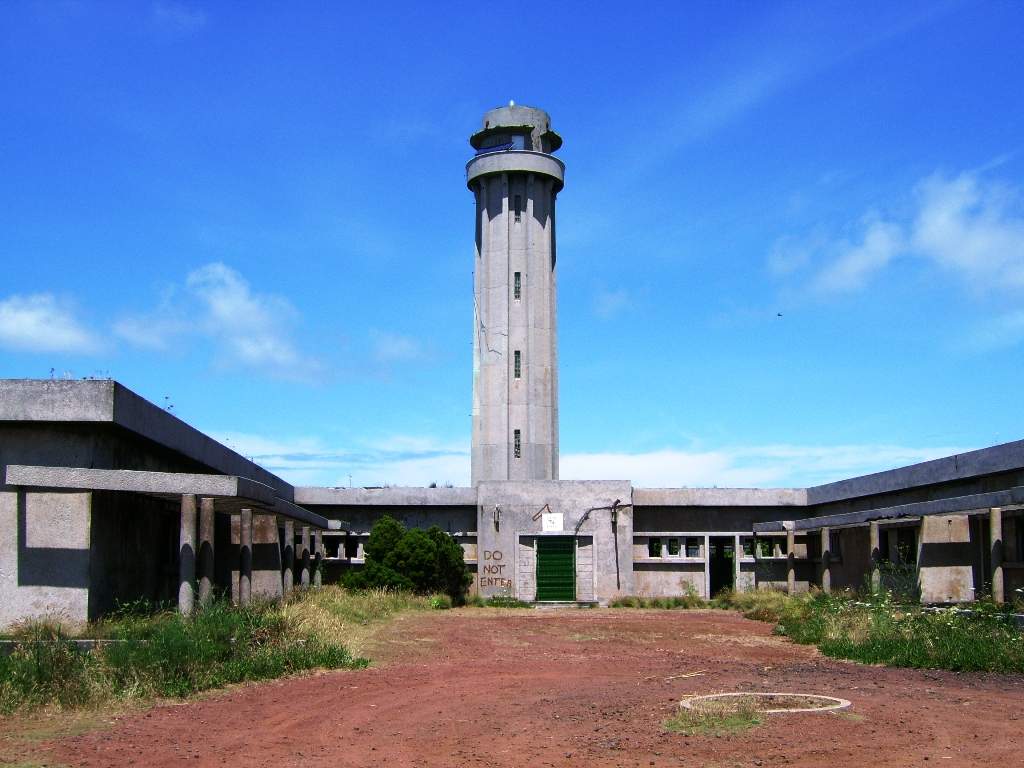
Ponta dos Capelinhos Lighthouse stands near the village of Capelo, at the western tip of Faial in the Azores. It is among the most unusual lighthouses in Portugal: a roughly 20-metre octagonal stone tower rising from a black volcanic wasteland, with its lower floors buried under ash.
What is the history of the lighthouse?
Construction began in April 1894, and the light was first lit in 1903, about 70 metres above sea level. For half a century it guided ships around Faial. The tower sits on top of a two-storey keeper's house.
On 27 September 1957 a submarine eruption started just off the coast. It lasted around 13 months, added fresh land to the island and sent so much sand and tuff over the headland that the building was nearly buried. The light was shut down in 1957 and nearby families left their homes. The Capelinhos eruption remains one of the best-documented volcanic events in Azorean history.
What can you see here?
At the foot of the tower is the Capelinhos Volcano Interpretation Centre, opened in 2008, fifty years after the eruption. Designed by architect Nuno Ribeiro Lopes, it uses the ground-floor rooms of the old lighthouse, now sunk in volcanic sand. The exhibition explains how the eruption unfolded and how it changed life on the island.
The visit ends with a climb up the tower. From the top you look over the dark volcanic cone, the cliffs, the Atlantic and the barren, moon-like plain left by the eruption. Expect a fair number of steps.
How do you get there and when should you go?
The lighthouse sits at the far western point of Faial, a short drive from the island's main town, Horta. A car or taxi is the easiest way, and there is parking on site. A short trail also leads across the volcanic cone and can be extended along the coast.
Opening hours of the centre depend on the season: in summer it generally opens daily, in winter some days are shorter or closed, and a full ticket costs about 10 euros. Sources vary on exact times, so check the official Destinazores page before you go. The operator may close the site in bad weather, and the headland is often windy. A clear morning or late afternoon gives the best views.
Frequently asked questions
Is the lighthouse still working? No. It was shut down in 1957 because of the eruption and now serves as a viewpoint and part of the museum.
Can you climb the tower? Yes. The climb is part of the interpretation centre visit, either as a separate fee or within the full ticket.
How much time should you plan? Allow 1.5 to 2 hours for the museum and tower, or around 3 hours if you also walk the volcanic cone.
Is it suitable for families? Yes, the exhibition is accessible, but the tower has many steps and the coast is windy.
Nearby places

Earn badges for the places you visit
Download NextOnTrip, discover new places and check off your trails.