About this place
Krumlovsko-rokytenské slepence is a national nature reserve spanning the cadastral territories of Moravský Krumlov and Rokytná, in the Znojmo-Brno hilly region of southern Moravia, Czech Republic. Declared on 1 June 2005 by the Ministry of the Environment, the reserve covers 86.6 hectares and ranks among the most ecologically valuable sites in the region, often mentioned alongside the Pouzdřany Steppe and Mohelno Steppe reserves in terms of natural significance.
What does this reserve protect?
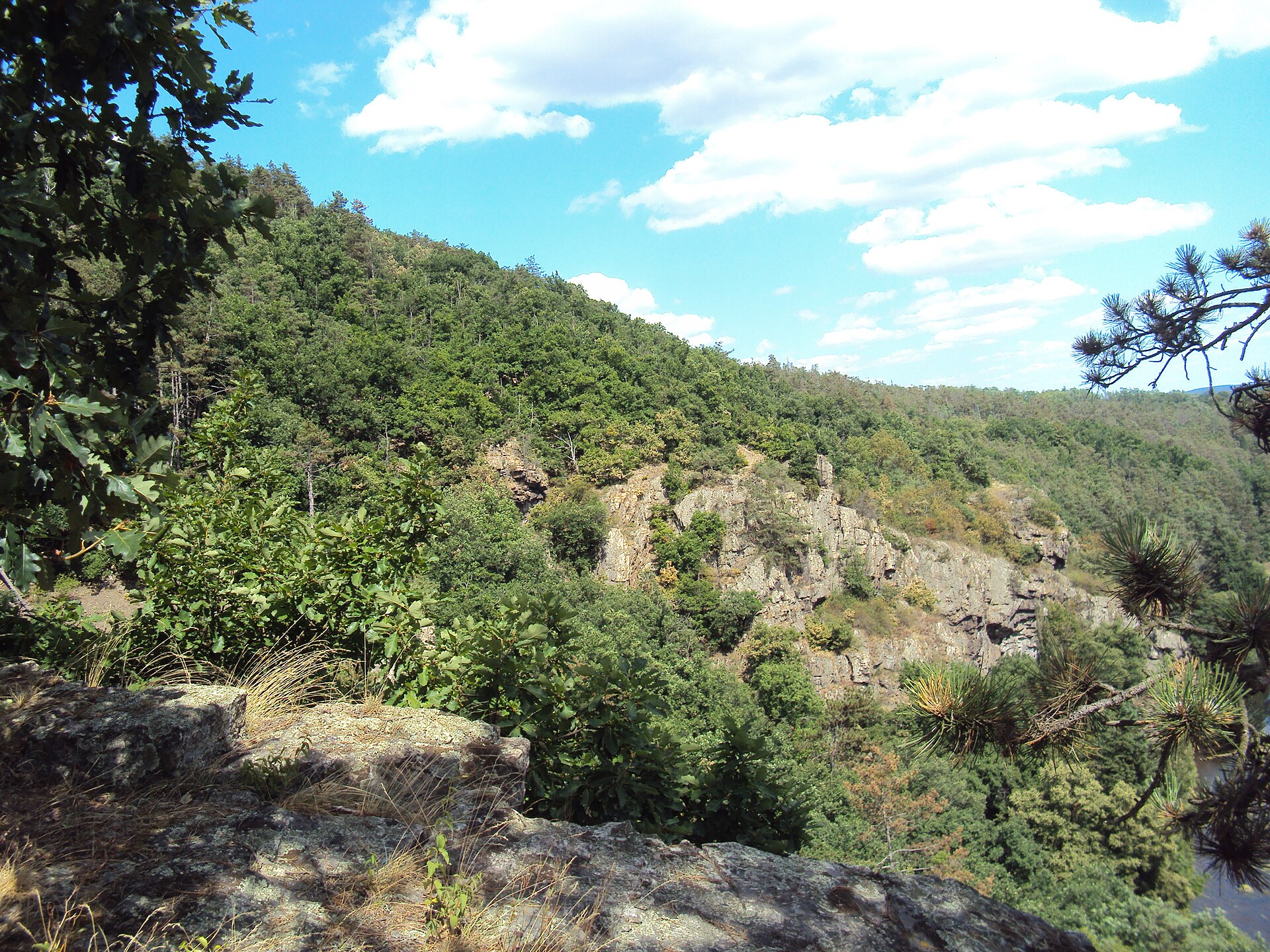
The protected area consists of two separate sections: one near the village of Rokytná, and another below the Church of St. Florian, which overlooks the town of Moravský Krumlov. At the heart of the reserve lie extensive rocky outcrops of reddish-brown basic conglomerate, a sedimentary rock dating back to the Permian period. These distinctive rock formations gave the reserve its name — "slepence" is the Czech word for conglomerate.
Why the name "slepence"?
The reserve's name directly reflects the local geology. Conglomerate is a sedimentary rock made of rounded pebbles and gravel cemented together by mineral binder; here, the reddish-brown coloring comes from iron oxide deposits typical of Permian-age formations. The exposed rock faces create a striking landscape that has long drawn the attention of geologists and naturalists studying the geological history of Moravia.
What plants and animals live here?
The reserve is renowned for species adapted to warm, dry rocky and steppe habitats. Among the plants, the Moravian pink (Dianthus moravicus) — an endemic species found nowhere else — stands out, alongside the great pasque-flower (Pulsatilla grandis) and rock bitter-cress (Cardaminopsis petraea), both suited to the harsh conditions of rocky substrate and a dry microclimate.
The invertebrate fauna is equally notable. The praying mantis (Mantis religiosa), a species usually associated with warmer southern European climates, is abundant here. Visitors may also encounter the southern festoon butterfly (Zerynthia polyxena), recognizable by its intricate mosaic wing pattern, as well as the owlfly Libelloides macaronius. Among beetles, the reserve hosts the jewel beetle Anthaxia hungarica hungarica and the great capricorn beetle (Cerambyx cerdo), a large longhorn beetle considered threatened in much of Europe.
What conservation status does the site hold?
Beyond its status as a national nature reserve at the Czech national level, Krumlovsko-rokytenské slepence is also included in the European Natura 2000 network as a Site of Community Importance. This means the site's natural values — both geological and biological — are additionally safeguarded under European Union environmental protection rules.
Frequently asked questions
Where exactly is the reserve located? In southern Moravia, Czech Republic, within the cadastral territories of Moravský Krumlov and Rokytná.
How large is the protected area? The reserve covers 86.6 hectares, split into two separate sections.
What is the main natural attraction of the site? The distinctive rocky outcrops of reddish-brown Permian conglomerate, together with the rare steppe and rock-dwelling flora and fauna, including the endemic Moravian pink.
Since when has the area been protected? It was declared a national nature reserve on 1 June 2005.
Nearby places

Earn badges for the places you visit
Download NextOnTrip, discover new places and check off your trails.