About this place
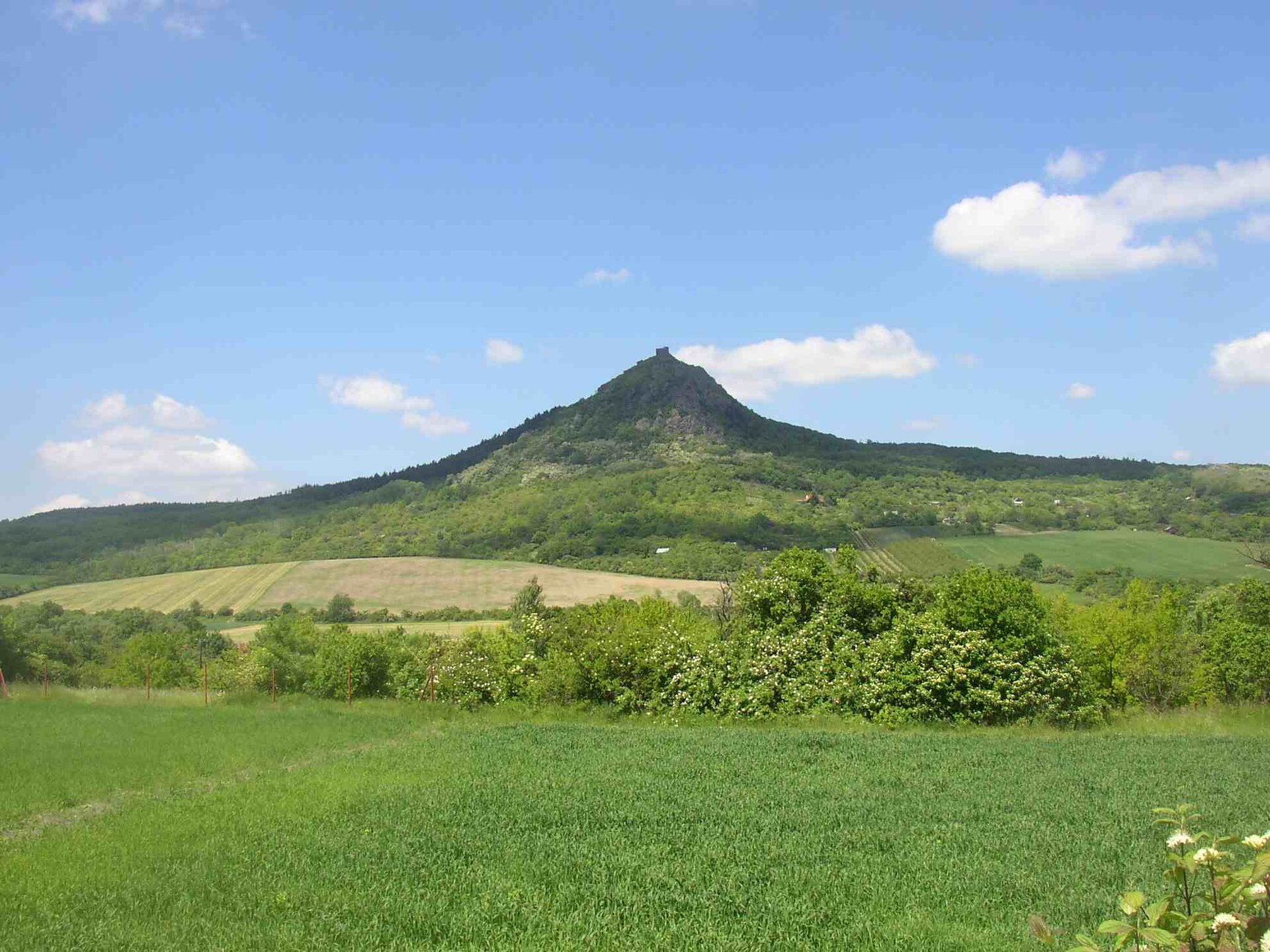
Košťálov is a ruined medieval castle overlooking the village of Jenčice in northern Bohemia, in the Litoměřice District. Its remains crown a volcanic basalt hill known as Košťál, one of the distinctive peaks of the Bohemian Central Uplands (České středohoří), and can be seen from a considerable distance as the natural landmark of the surrounding countryside.
Where is Košťálov and what does the landscape look like?
The castle stands a few kilometres west of Lovosice, in a landscape typical of the Bohemian Central Uplands — steep, volcanic hills rising above the farmland of the lower Elbe valley. The village of Jenčice lies at the foot of the hill, while the Košťál summit itself, on which the ruins sit, reaches an elevation of just under 490 metres above sea level. The steep, rocky slopes gave the site natural defensive advantages for centuries, which is the main reason a stronghold was built here in the first place.
When was the castle built and what is its history?
Košťálov was most likely built in the first half of the 14th century, although its founder is not known by name. The earliest written record of the castle dates back to 1372. For a period the stronghold belonged to the Kaplíř of Sulevice family, an influential noble house tied to the surrounding estates. In 1422 the castle was besieged by Hussite forces, placing it within the turbulent period of the Hussite Wars that swept across much of northern Bohemia.
Košťálov remained the family seat until the mid-16th century, when its owners decided to move their residence downhill, to a more comfortable and accessible manor built at the foot of the slope. The castle on the rock then lost its role as a home and gradually fell into ruin.
What can visitors see on site today?
Of the original castle buildings, the best-preserved remains are fragments of a tower-like palace, with walls reaching nearly five metres in height in places. The rest of the structures have largely been destroyed, and the site today is valued above all for its scenic and panoramic character. A lookout point has been arranged at the top of the rock, offering wide views over the hills and valleys of the Bohemian Central Uplands — one of the main reasons visitors still make the climb.
What is Karel Hynek Mácha's connection to Košťálov?
The picturesque ruins already attracted visitors in the 19th century. In 1833 the castle was visited by Karel Hynek Mácha, one of the most important Czech Romantic poets, who sketched the view of the ruins in his sketchbook. This episode shows that Košťálov has long served not only as a historical relic but also as an inspiring feature of the local landscape.
Does the area around the castle also have natural value?
The southern slopes of Košťál hill, covering roughly six hectares, are protected as a natural monument. The reason for this protection is the preservation of diverse, heat-loving plant communities typical of the sun-exposed, rocky slopes of the Bohemian Central Uplands, including several protected species. As a result, a visit to the castle ruins combines historical interest with a walk through an area of considerable natural value.
Frequently asked questions
Can you climb up to the castle ruins? Yes, a path leads to the top of the hill, and the lookout point by the ruins offers a panoramic view of the Bohemian Central Uplands.
How old is Košťálov Castle? The earliest written mention dates from 1372, although the castle was most likely built earlier, in the first half of the 14th century.
Why did the castle become a ruin? In the mid-16th century the owning family moved to a more comfortable residence at the foot of the hill, and the abandoned castle on the rock began to deteriorate.
Is there anything else of note nearby? Yes, the slopes of Košťál hill form a protected natural monument, home to rare, heat-loving plant species.
Nearby places

Earn badges for the places you visit
Download NextOnTrip, discover new places and check off your trails.