About this place
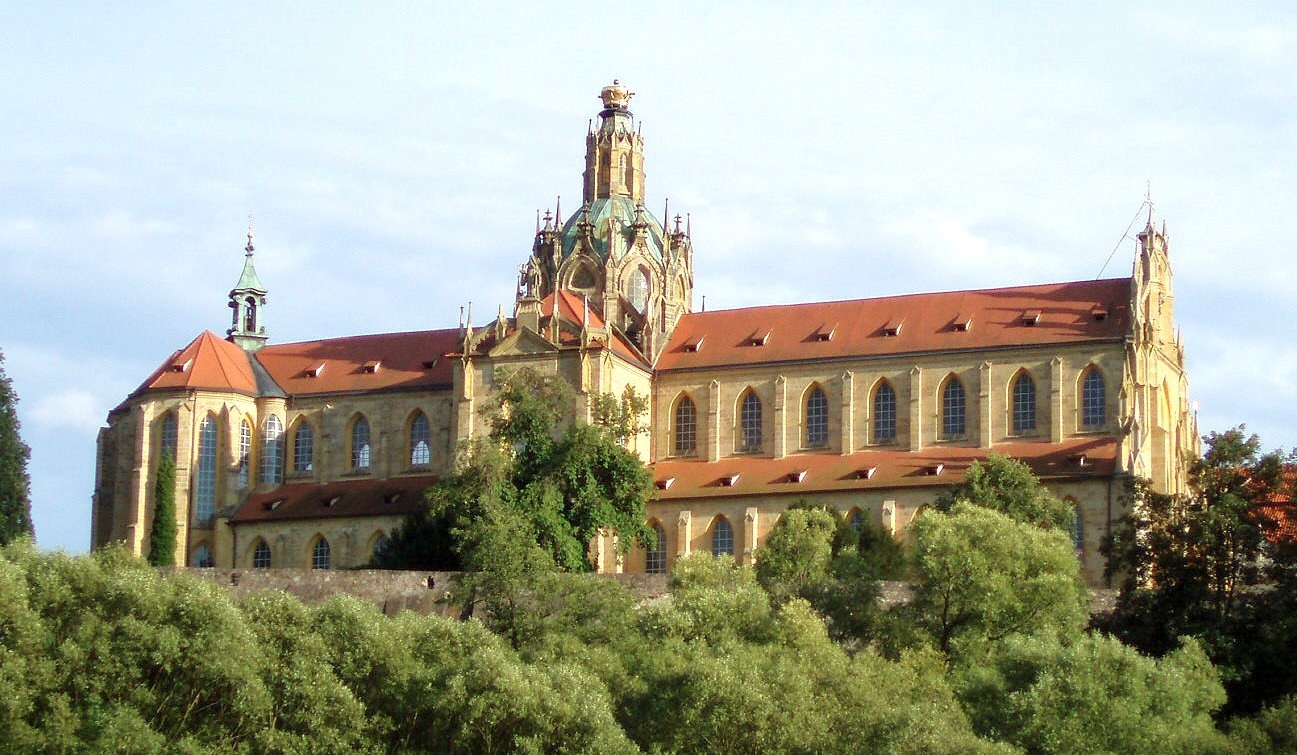
Kladruby Monastery, in the town of Kladruby in the Tachov district of the Plzeň Region, Czech Republic, ranks among Central Europe's most significant examples of Baroque Gothic architecture. The Benedictine abbey traces its founding to 1115, when it was established under Duke Vladislav I. By the early 14th century the community had grown into one of the wealthiest monasteries in the Kingdom of Bohemia, a status that later allowed it to commission building projects of national importance.
What makes the monastery church so distinctive?
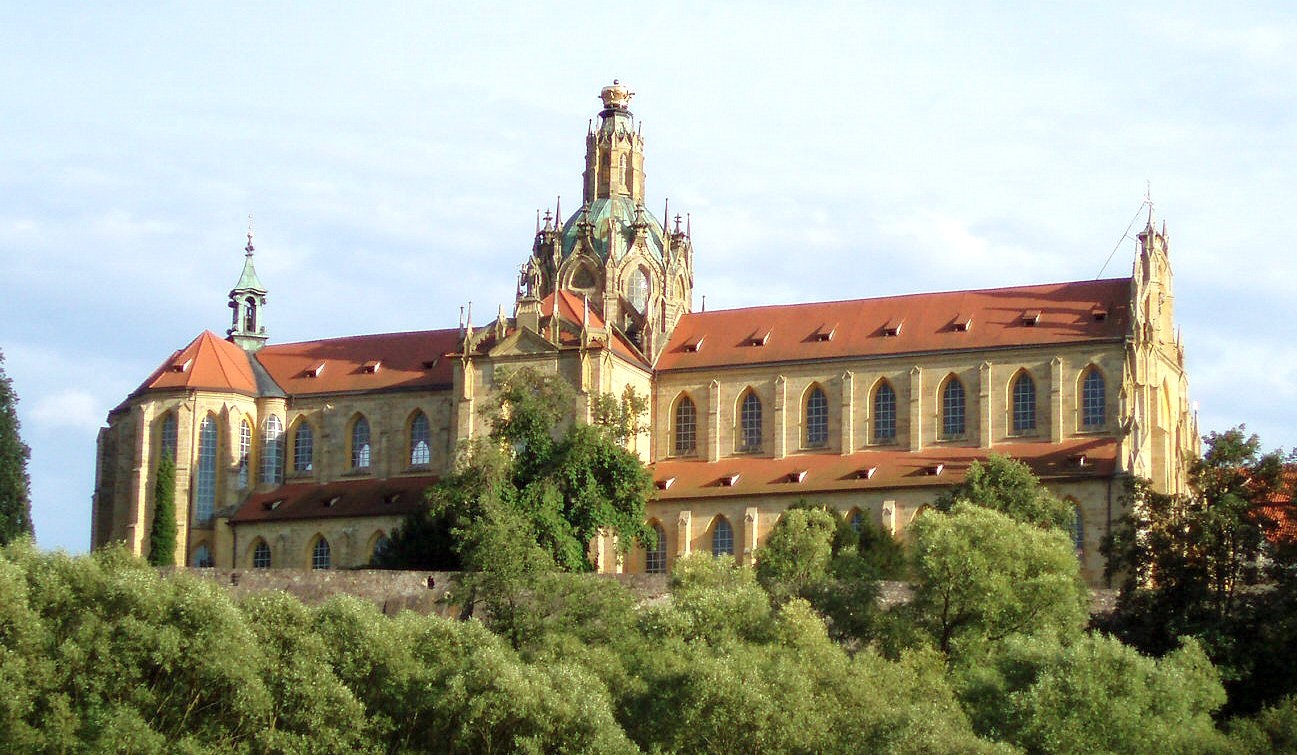
At the heart of the complex stands the monastery church dedicated to the Assumption of the Virgin Mary. The original Romanesque basilica was thoroughly rebuilt between 1712 and 1726 by architect Jan Blažej Santini Aichel, the creator of the distinctive Baroque Gothic idiom that fuses pointed Gothic ribbing and verticality with Baroque dynamism. His intervention gave the interior a highly symbolic, rhythmic character rarely seen elsewhere. The church's dome rises 46 metres and is crowned with a gilded Marian crown, echoing the building's dedication, while the church itself stretches 86 metres in length, making it one of the larger sacred structures in the region. The adjoining new convent building was designed by another leading Baroque architect of the era, Kilian Ignaz Dientzenhofer.
How did the monastery's role change after its dissolution?
The Benedictine community occupied Kladruby for centuries until the monastery was dissolved as part of the Josephine church reforms. The former monastic buildings then took on an entirely different, military purpose: from 1800 troops were quartered there and the complex served as a hospital and barracks, before being converted into an invalid home in 1818. This layered history — from a regional spiritual centre to a military and care institution — means the surviving structure carries traces of several distinct historical periods.
Why is Kladruby worth visiting for fans of Santini's work?
Kladruby is one of the key stops on the trail of Jan Blažej Santini Aichel's architecture, alongside sites such as Žďár nad Sázavou and Sedlec. The Baroque Gothic silhouette of the monastery church remains one of the most recognisable examples of the style in the Czech Republic, and the combination of monumental scale — an 86-metre length and a 46-metre dome — with intricate architectural detail makes an impression at any time of year. For anyone interested in sacred architecture or Central European history, the site traces a clear line from a medieval Romanesque basilica to Santini's Baroque mastery.
Frequently asked questions
When was Kladruby Monastery founded? The Benedictine abbey was founded in 1115 under Duke Vladislav I.
Who rebuilt the monastery church? Jan Blažej Santini Aichel redesigned the church in its current Baroque Gothic form between 1712 and 1726.
How tall is the church dome? The dome reaches 46 metres and is topped with a gilded Marian crown.
What happened to the monastery after its dissolution? The buildings were taken over by the military, serving as a hospital and barracks from 1800 and as an invalid home from 1818.
Who designed the convent building? The new convent building was designed by Kilian Ignaz Dientzenhofer.
Nearby places

Earn badges for the places you visit
Download NextOnTrip, discover new places and check off your trails.