About this place
Kasteel van Moerkerke is a castle located in Moerkerke, a village within the municipality of Damme in the Belgian province of West Flanders, once part of a defensive belt guarding the area around the Zwin inlet together with Lissewege, Damme and Oostkerke.
How did the castle originate?
The oldest core of the site was a fortified residence, or donjon, built around 1100 on an artificially raised mound known as a motte. The structure belonged to the lords of Moerkerke and formed part of a chain of fortifications protecting the surrounding countryside from incursions coming through the Zwin.
Who controlled the castle in the medieval period?
The estate was originally held by a family that took its name from the village itself, calling itself Van Moerkerke. In the 14th century ownership passed to the Van Praet family. The year 1302, remembered for the Battle of the Golden Spurs, brought turmoil to the castle as well: because its resident at the time was sympathetic to the French cause, a plot was hatched against him. Toward the end of the 14th century, troops from Ghent plundered the castle, a reminder of how unsettled this corner of Flanders could be.
What changed in the 16th and 17th centuries?
A major turning point came in 1587, when the property was sold at public auction to Clemens of Castile, a Spanish nobleman. Around 1595 he had the castle almost entirely rebuilt on the foundations of the earlier structure. This rebuilding marked a decisive shift in the castle's character: from a defensive stronghold it became primarily a residential seat, effectively losing its earlier military purpose.
How did ownership shift during the 18th century?
In 1700 the estate passed to Pierre de la Villette. Since he died without children in 1716, Pierre-Louis d'Hanins became the new owner. It was the d'Hanins family who, in the 19th century, initiated another substantial rebuilding, this time in a neoclassical style, giving the building an appearance quite different from its 16th-century form.
Where does the castle's current eclectic look come from?
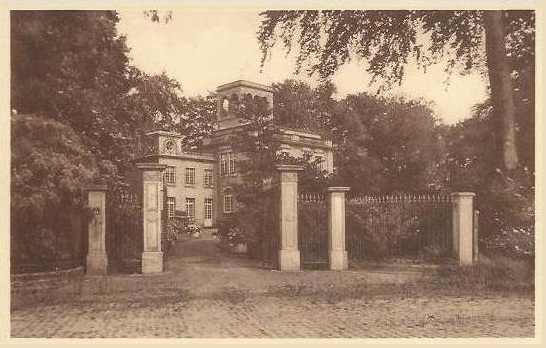
The estate's fortunes changed again in 1842, through the marriage of a great-granddaughter of Pierre-Louis d'Hanins to baron Auguste de 't Serclaes. From that point the property belonged to the de 't Serclaes de Wommersom family, who carried out yet another thorough reconstruction. It was this work, completed in 1912, that gave the building the eclectic appearance it retains today, layering elements from different historical styles accumulated over centuries of rebuilding.
What happened to the castle in the 20th century?
In 1922 the Xaverian Brothers established a school inside the building, opening a new chapter in its history: from an aristocratic residence it turned into an educational institution. Ownership changed again in 1964, when the estate was purchased by colonel Van den Broeck.
Where exactly is the castle located?
Kasteel van Moerkerke stands in the village of Moerkerke, part of the municipality of Damme in the Belgian province of West Flanders, at approximately 51.2447° N, 3.3407° E.
Frequently asked questions
What was Kasteel van Moerkerke originally? It was a fortified residence built on an artificial mound, or motte, around 1100, forming part of the defensive belt around the Zwin.
Why did the castle lose its defensive role? The rebuilding carried out around 1595 under Clemens of Castile turned it into a residential seat at the expense of its military features.
When did the castle acquire its current appearance? Its present eclectic form dates from 1912, following a reconstruction carried out by the de 't Serclaes de Wommersom family.
What was the castle used for in the 20th century? From 1922 it housed a school run by the Xaverian Brothers, and from 1964 it became the private property of colonel Van den Broeck.
Nearby places

Earn badges for the places you visit
Download NextOnTrip, discover new places and check off your trails.